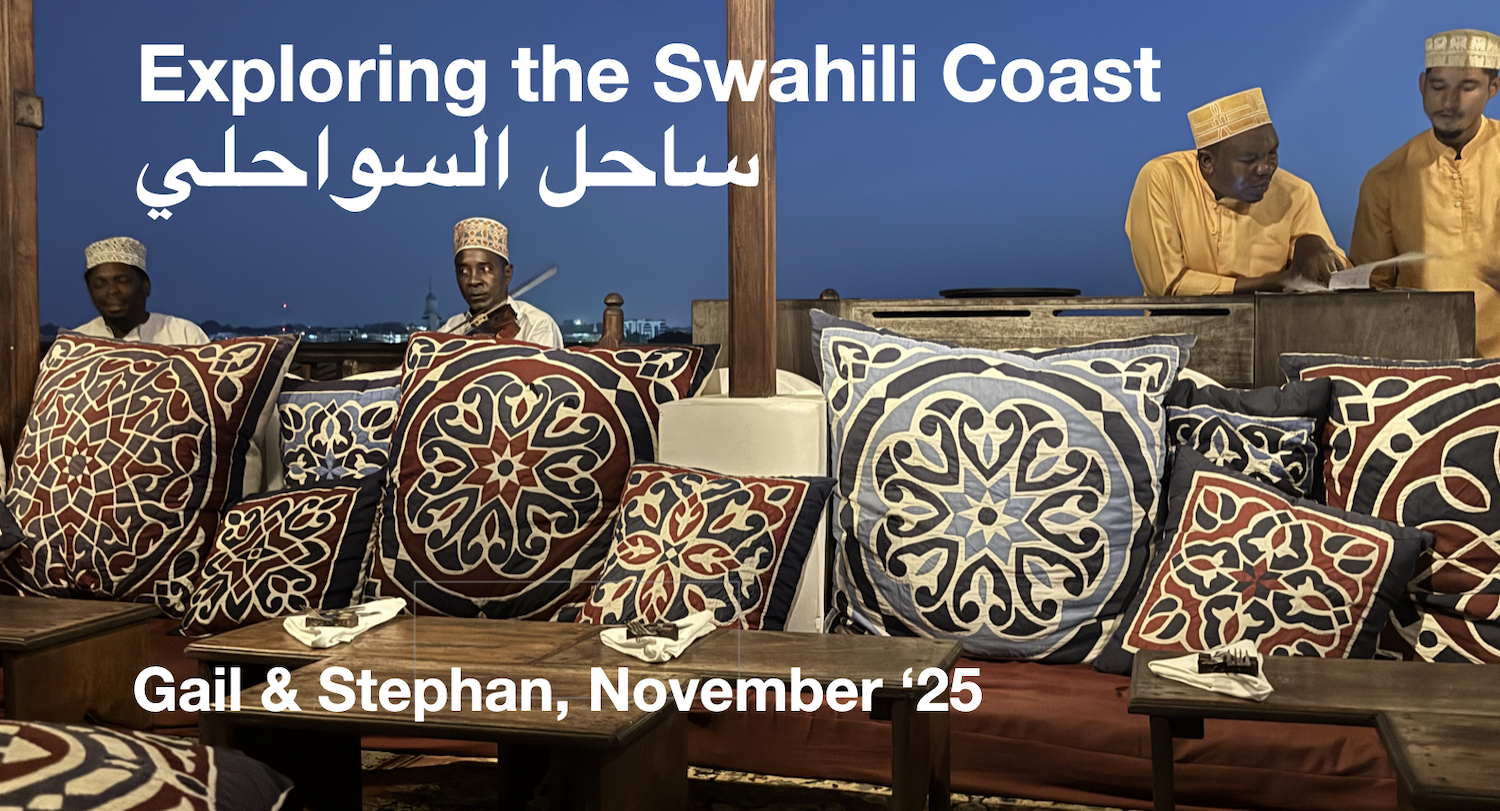
“Nonno”
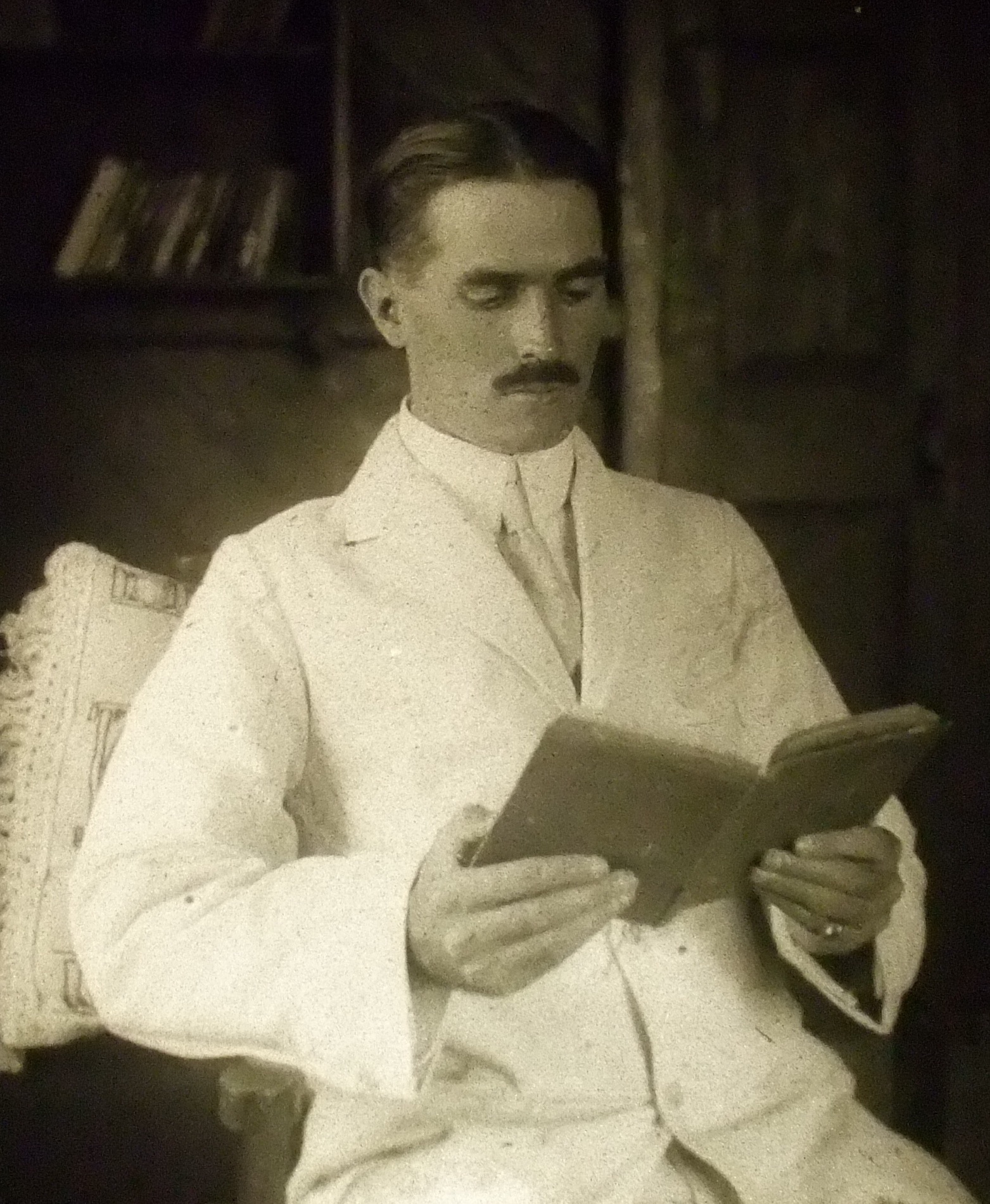
Stephan’s “Nonno,” his grand father, was a formal guy, unforgiving but generous with his grand-kids who kissed the gold ring on his right hand. A patriarch.
By the time he died when Stephan was nine, he had been a highly successful entrepreneur and executive inventing and building new brands. From setting up factories to produce milk, chocolate and baby formula in Germany and Switzerland to building a glass factory in Italy.
Nonno was an early 20th century gentleman who spoke seven European languages...as well as Arabic and Swahili. What?
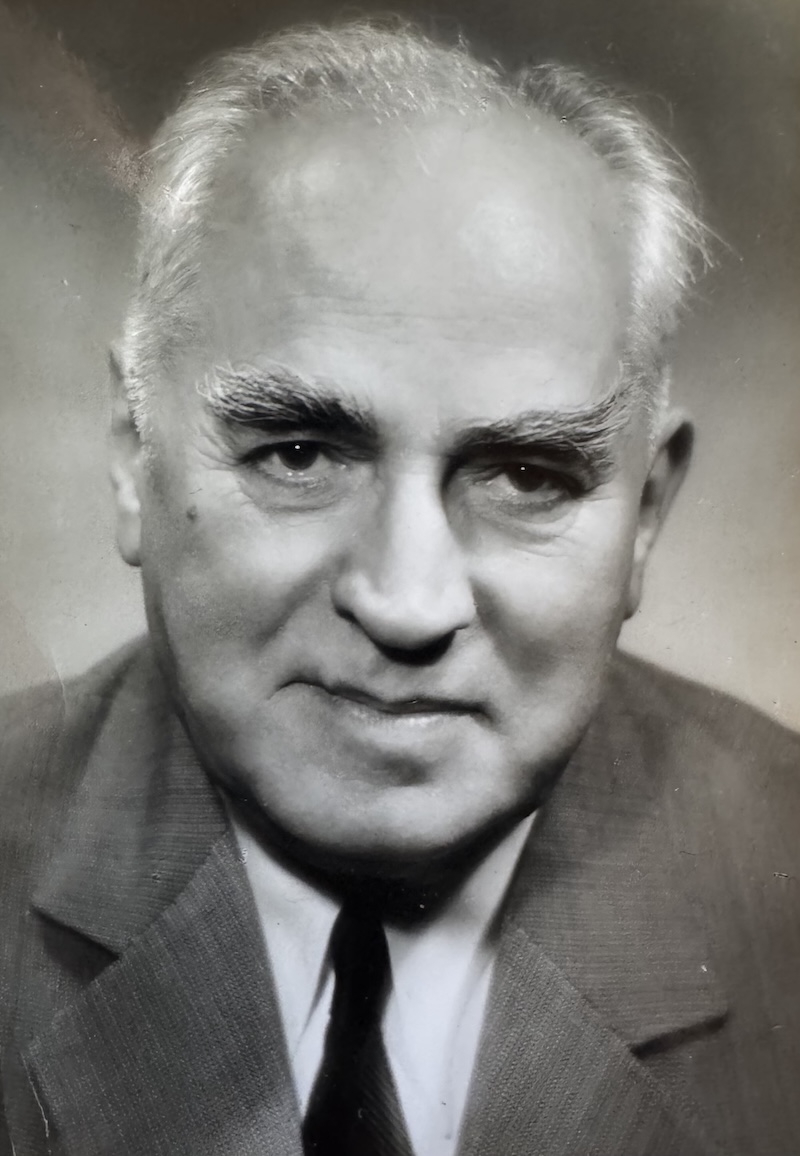
It turns out Nonno, Jacob Friedrich Muth, worked for a London trading company in Aden (Yemen) and the Swahili Coast of East Africa during his mid-20s—from 1910 until 1914 when the First World War broke out. He oversaw the company’s business with animal skins including exotic pelts for the leather trade in Europe.
His work took him deep into the interior of what would become Uganda, Kenya and Tanzania. But he was based in Mombasa and Dar Es Salaam.
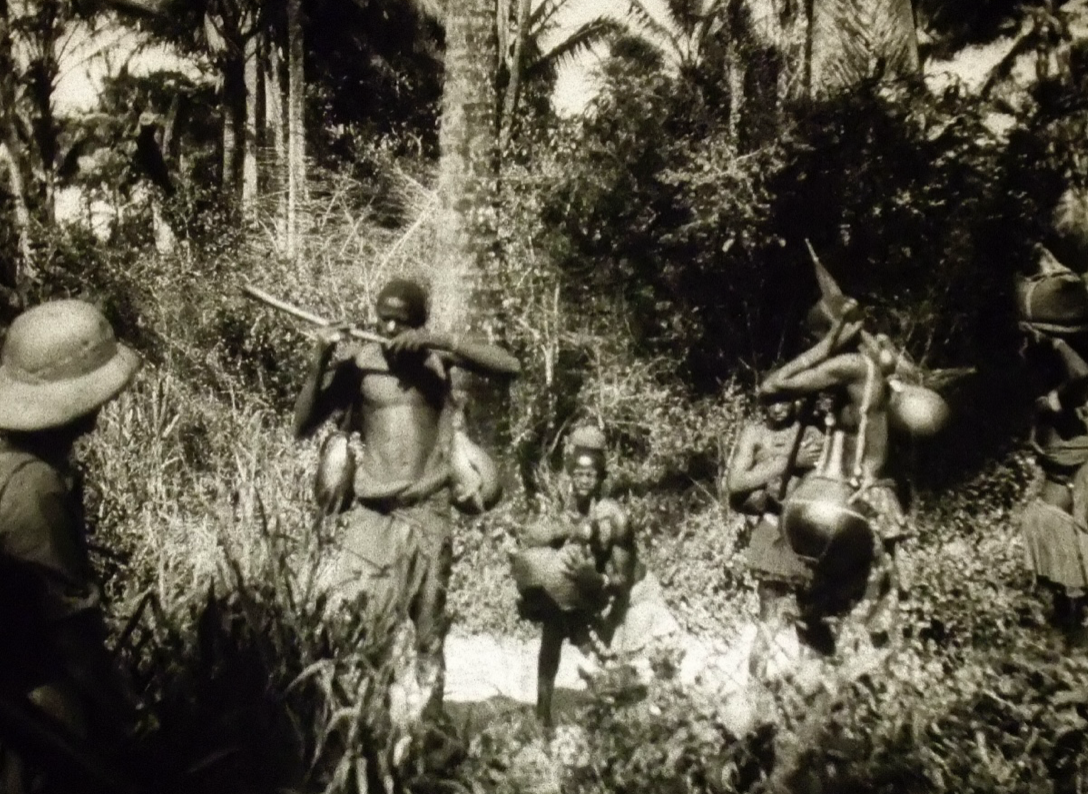
He left behind hundreds of photographs of historic ports, buildings, people in towns and countryside. Colonialists and African indigenous.
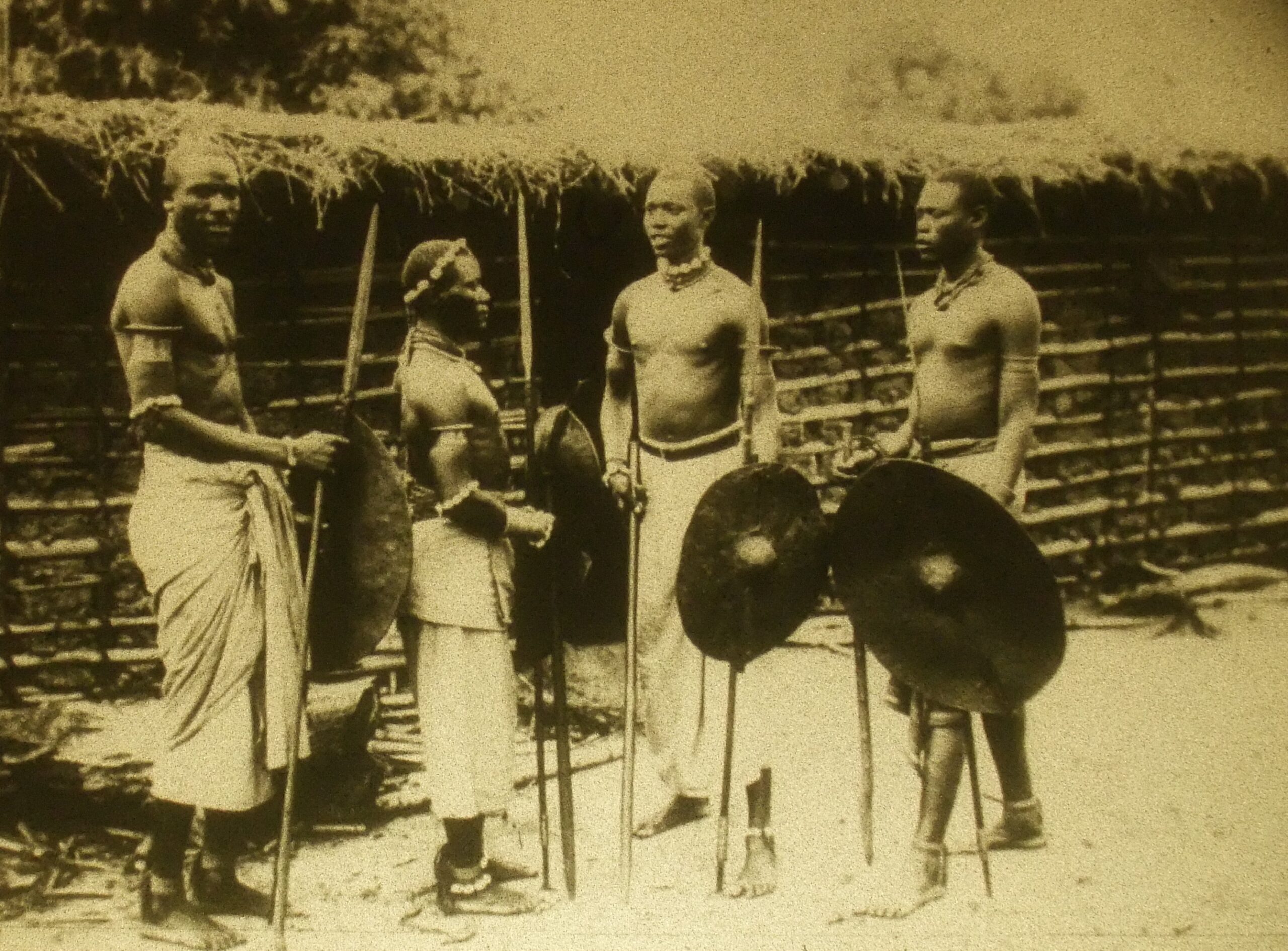
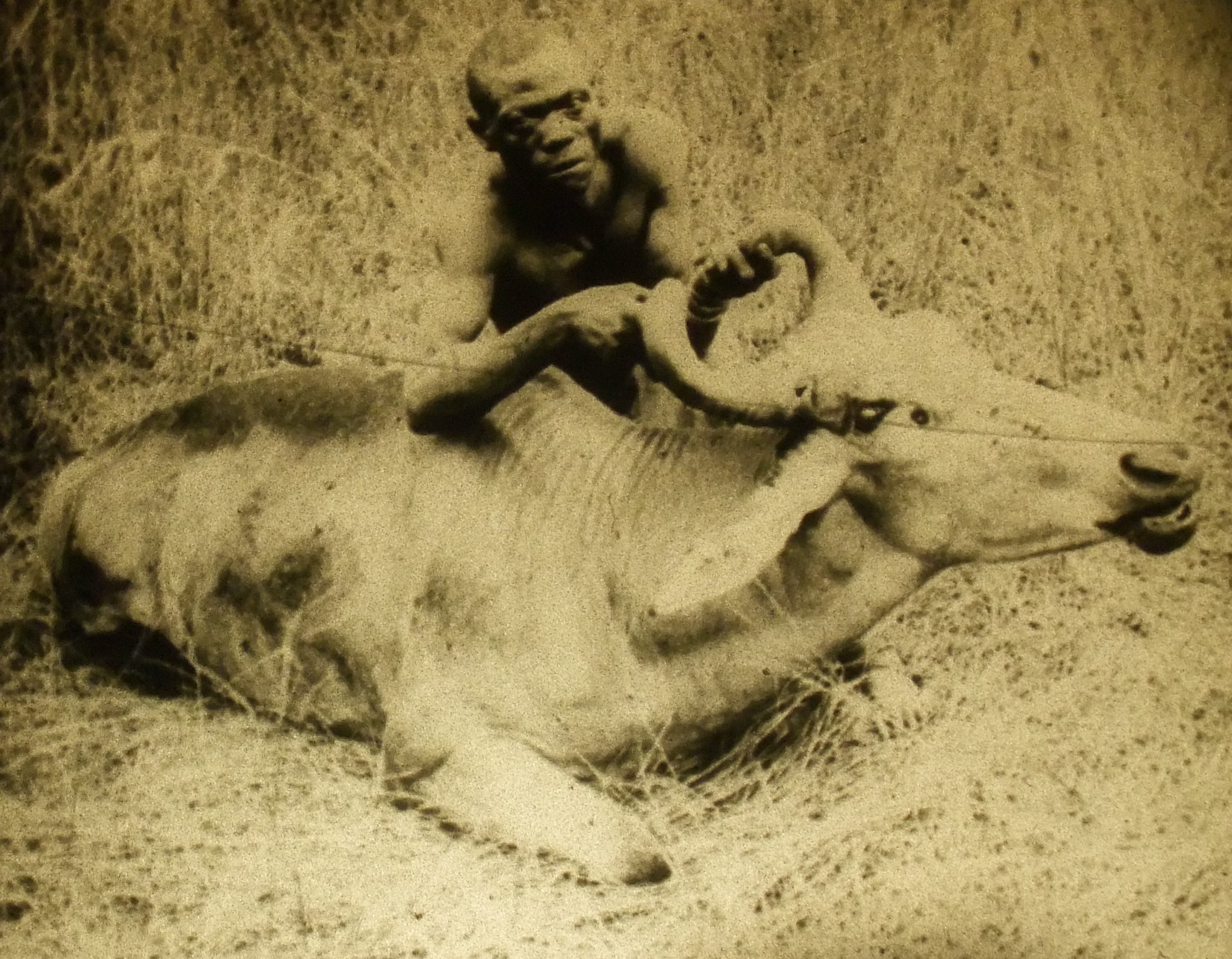
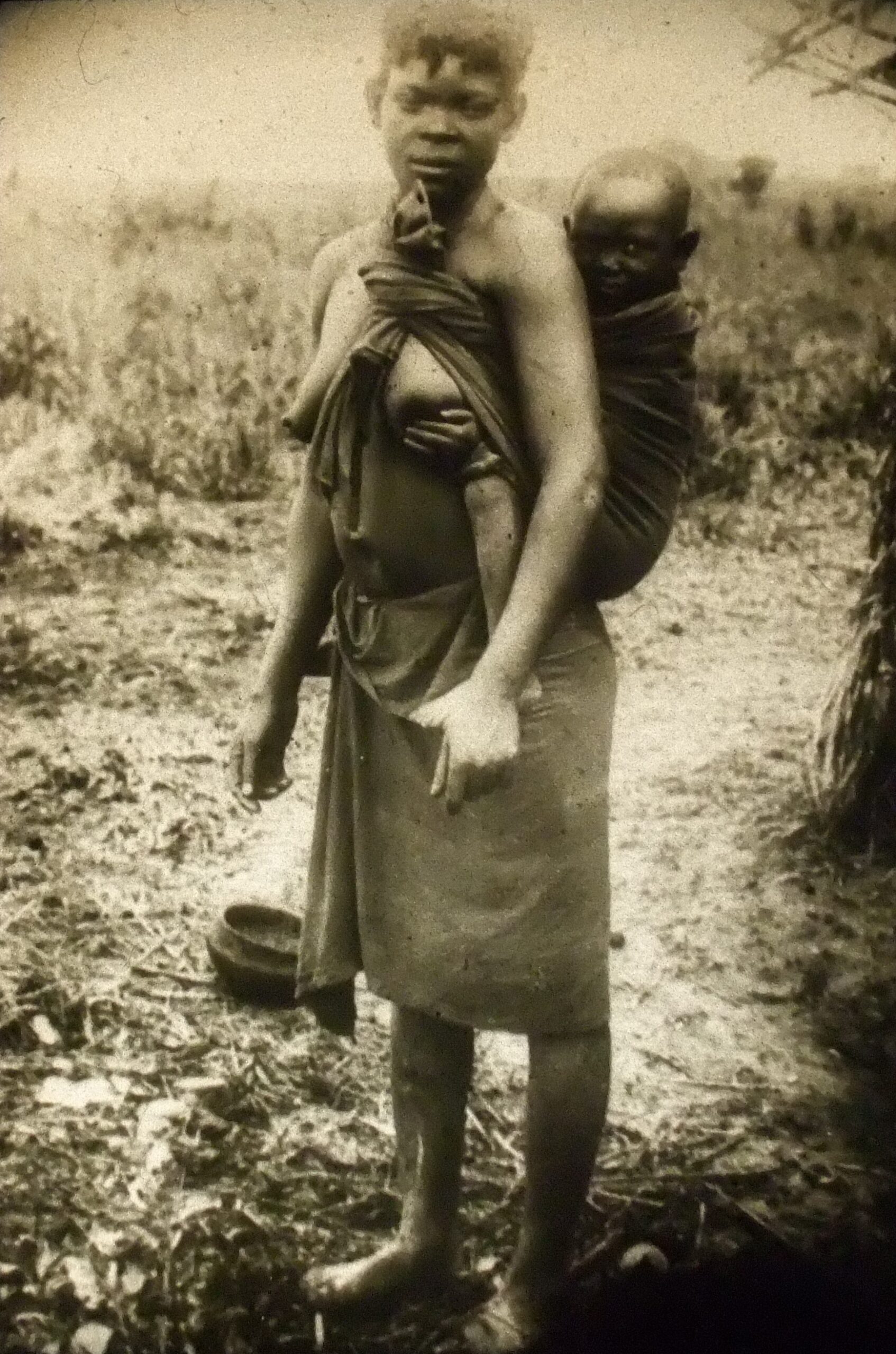
Those photos—that history—inspired our travels to the Swahili Coast.
The story doesn’t end there. Nonno was captured as a prisoner of war in Uganda, when WWI broke out (he had to take up arms against his colleagues and friends) and then spent the next six years in a prisoner-of-war camp in India while his British employers paid his salary. That’s another story rich with daily diaries, love letters and war commentary.
We’re off! To Lamu Island part of Kenya.
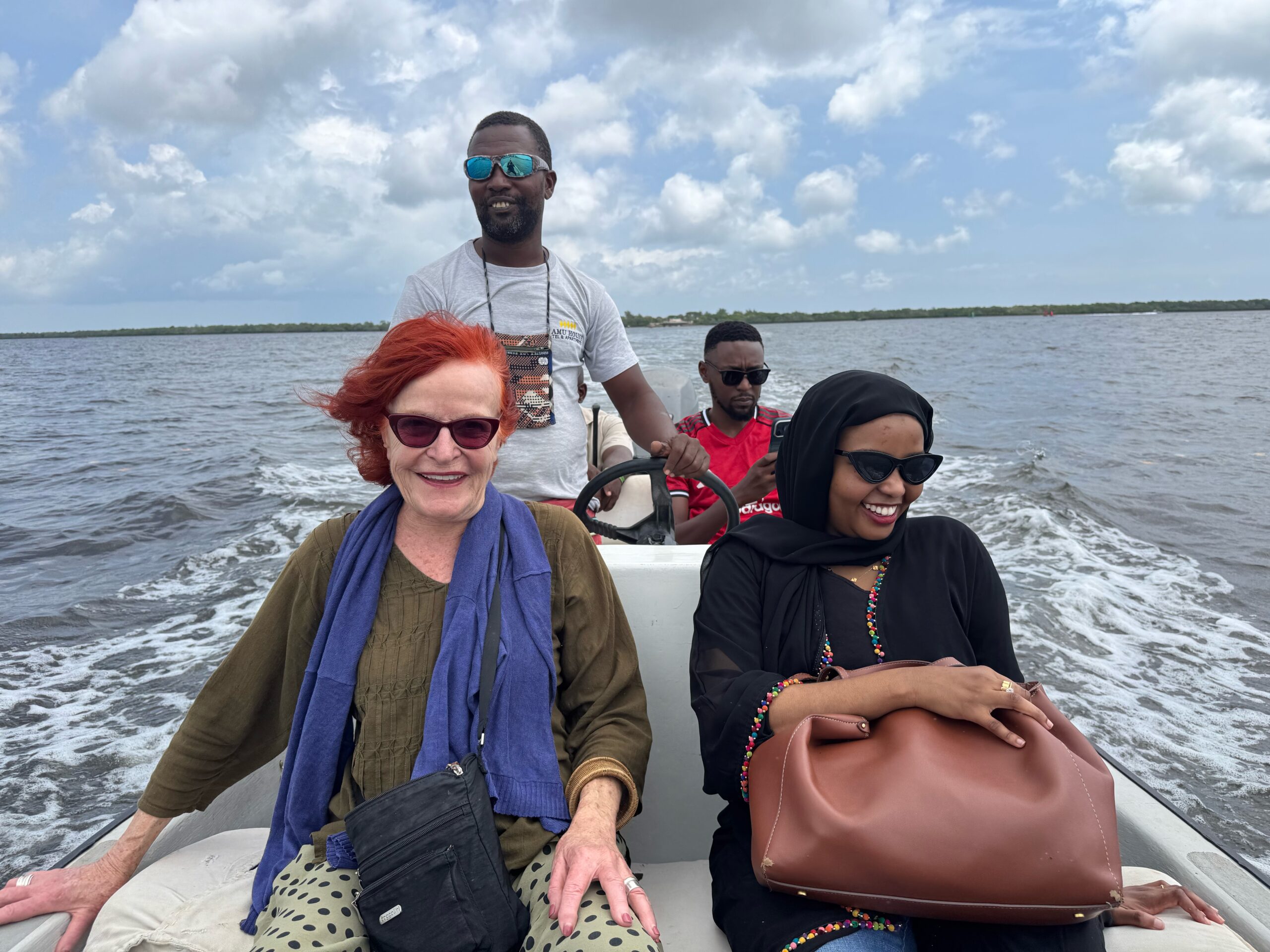
You get there by boat from the airport on another island. We’re close to the Somali border. Stories of Somali pirate violent attacks on tourists back in 2011 linger in our minds. But here we are!
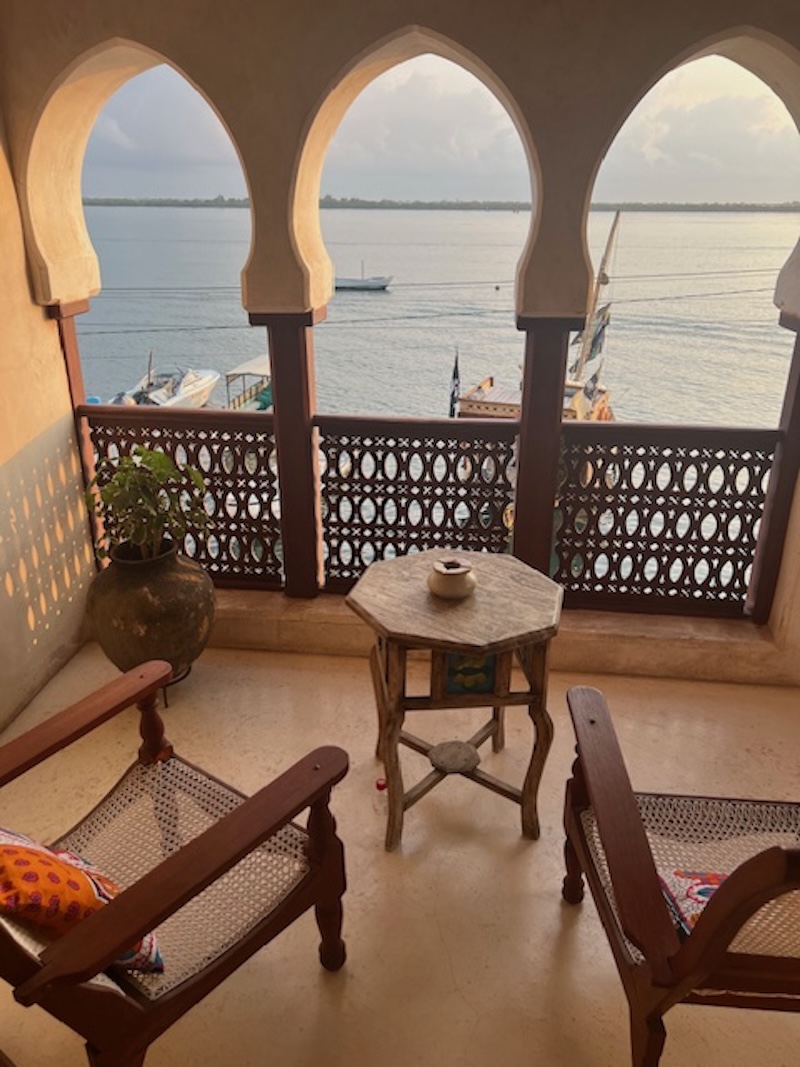
Lamu Island & The Swahili Coast
The Swahili coast stretches from Somalia in the north to Mozambique in the south. It has endured 2000 years of colonization by Persians, Arabs, Indians, Portuguese, Omanis, Germans and Brits trading everything from humans to gold, ivory, mangrove poles and spices.
The feel here on Lamu Island, which has preserved the cultural mix, is African-Arab.
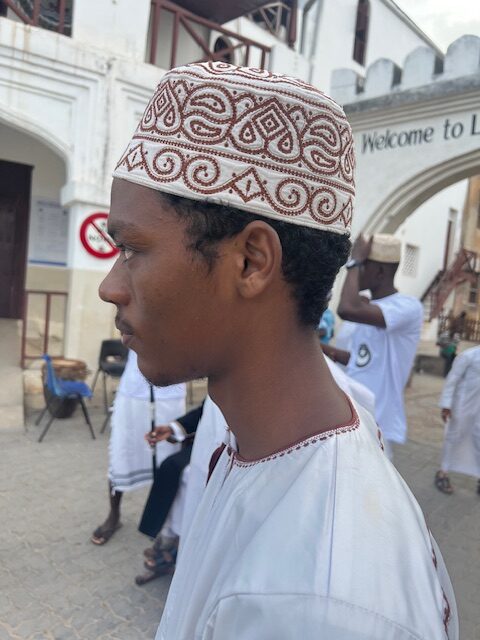
There are 25 mosques on this tiny island. Indian and Arabic music wafts through the alleys while Fela and western rock-pop play quietly in the tourist joints.
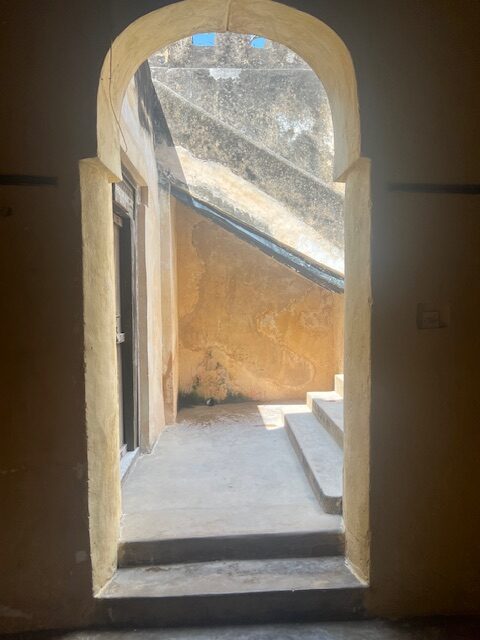
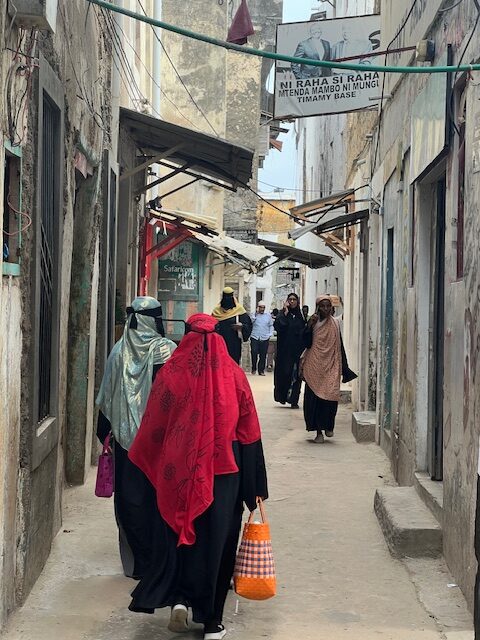
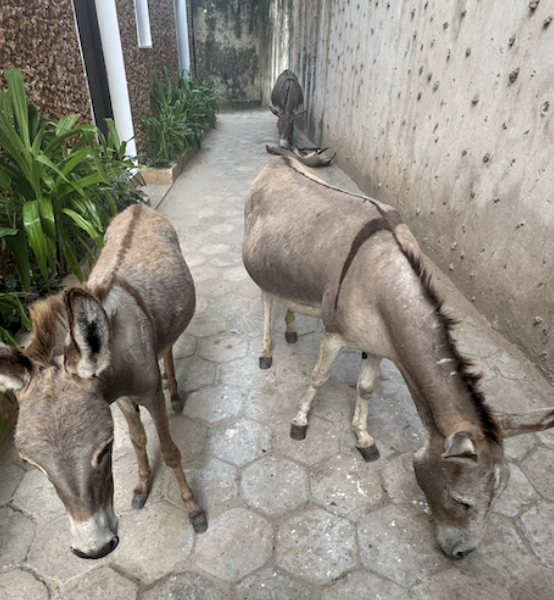
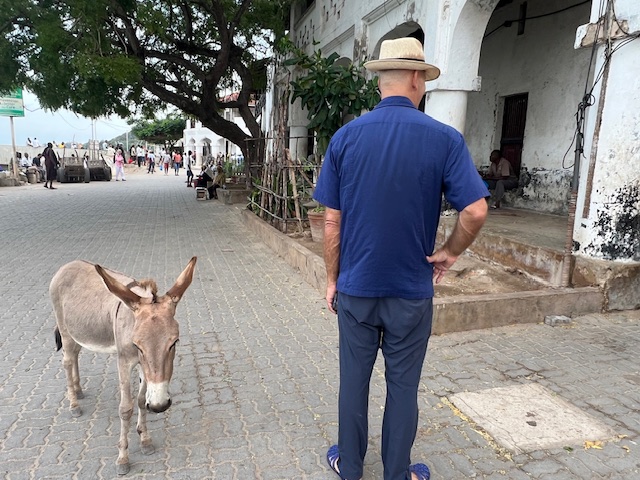
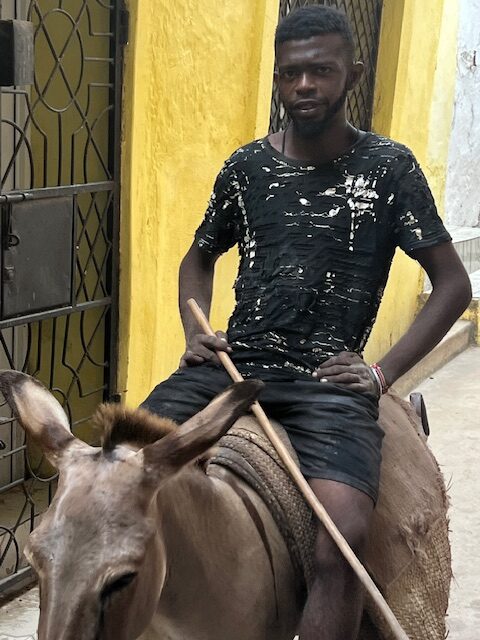
No cars. Donkeys are revered and used as transport for people and goods.
The Dhow and the Triangle Trade
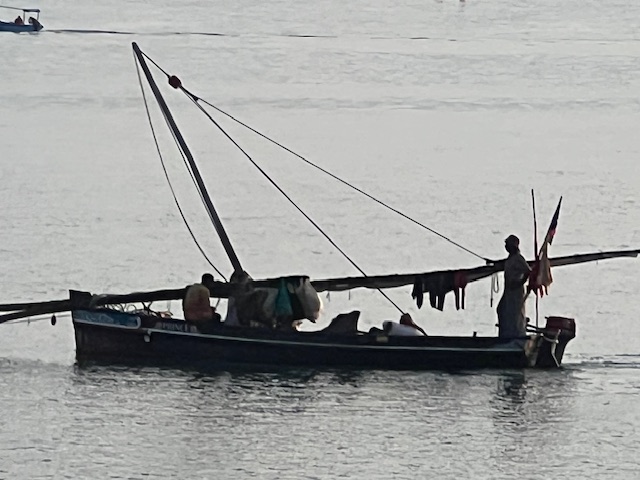
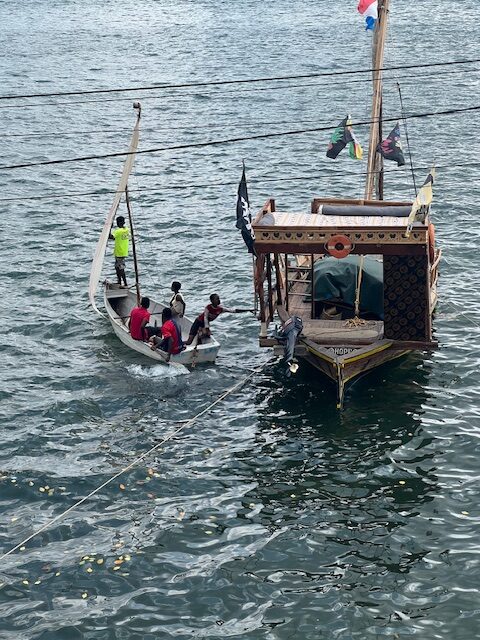
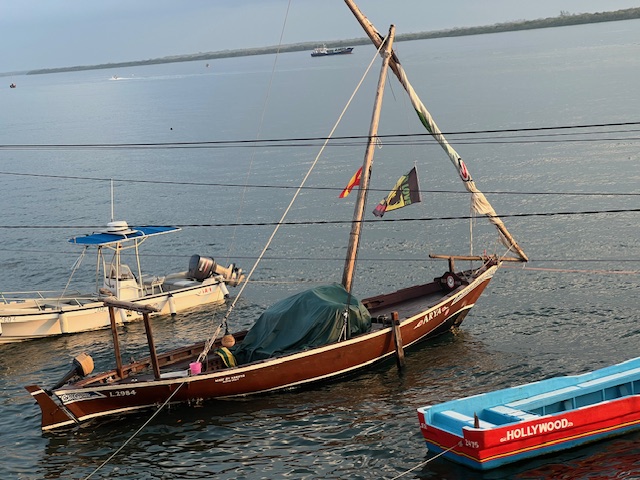
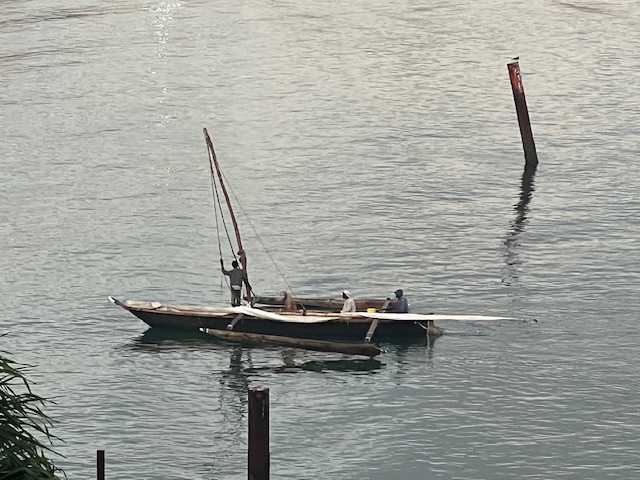
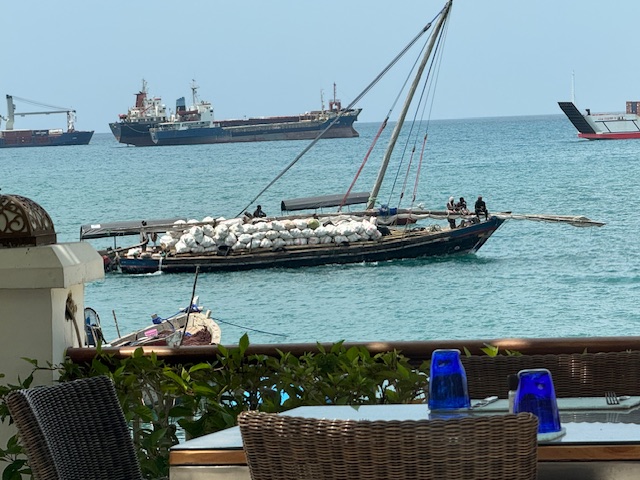
Boats are the real public transit system in this mangrove archipelago. The famous Dhow sailing boat has been used for perhaps a thousand years or more to ply the Indian Ocean with the trade winds taking them to and from the Arabian peninsula, India and the Ocean islands. Curries, coconut sauce & fish are on the menu.
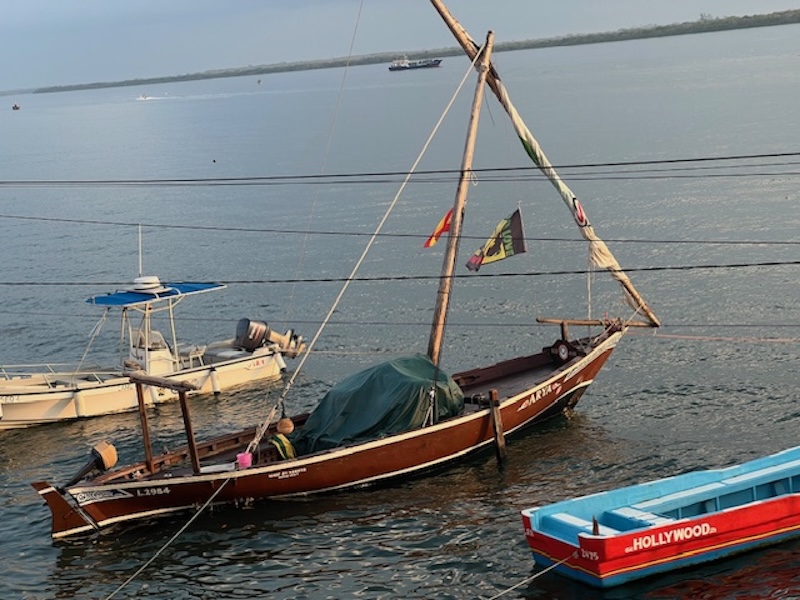
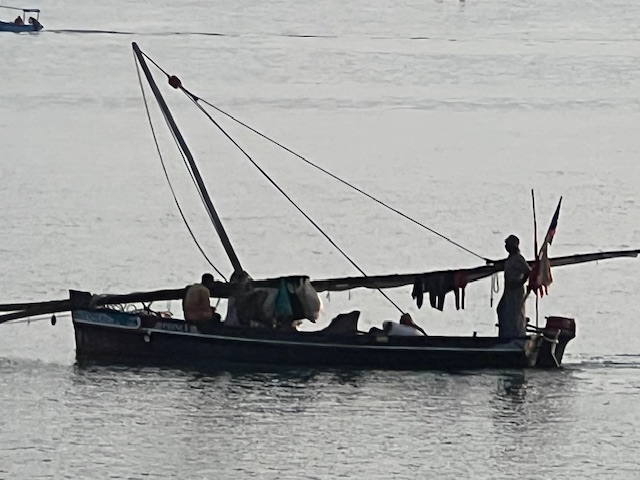
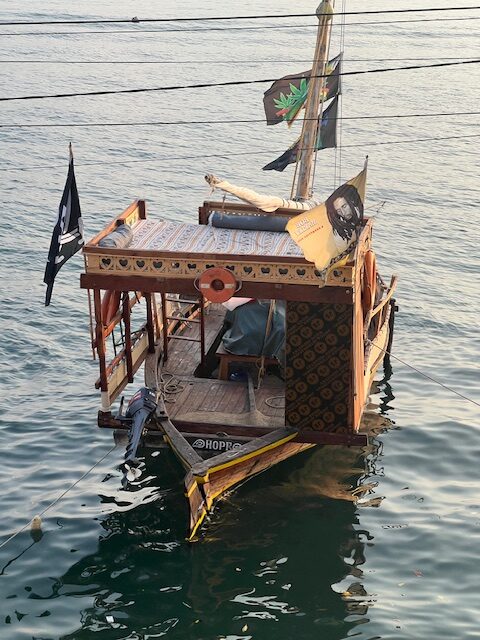
The famous dhow sailing boat—Lamu version—is called Mashua.
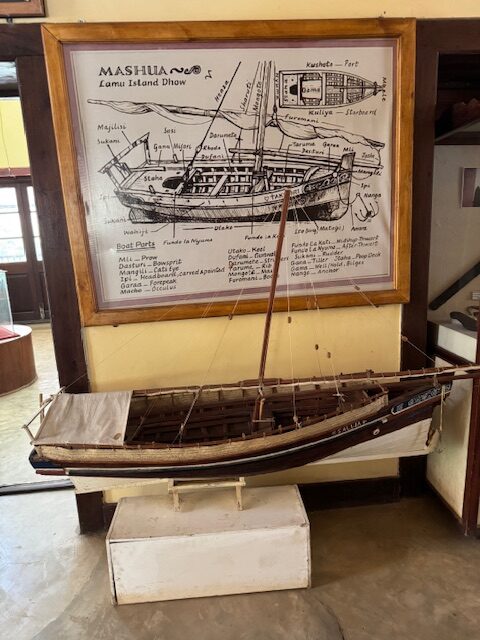
The cultural and socio-economic role of the dhow has inspired scholarly deep dives into its centrality to trade in goods and knowledge, migration and the religious dominance of Islam on the Swahili coast.
That scholarship explores arguments about the moral contradictions of the cosmopolitanism created by the trade between the East African coast, the Arabian peninsula and India, because it also included the lucrative slave traffic begun by Arabs with participation by Africans, Indians and Europeans.

A modern day version of that slave trade points to Kenyan government complicity in trafficking women for highly exploitative domestic work on the Arabian peninsula. The Nairobi Standard republished a version of this article while we were travelling: New York Times.
Now traditional dhow boats are being replaced by outboard and inboard engines and fiberglass. And contemporary goods travel by plane and freighters (mostly from China).
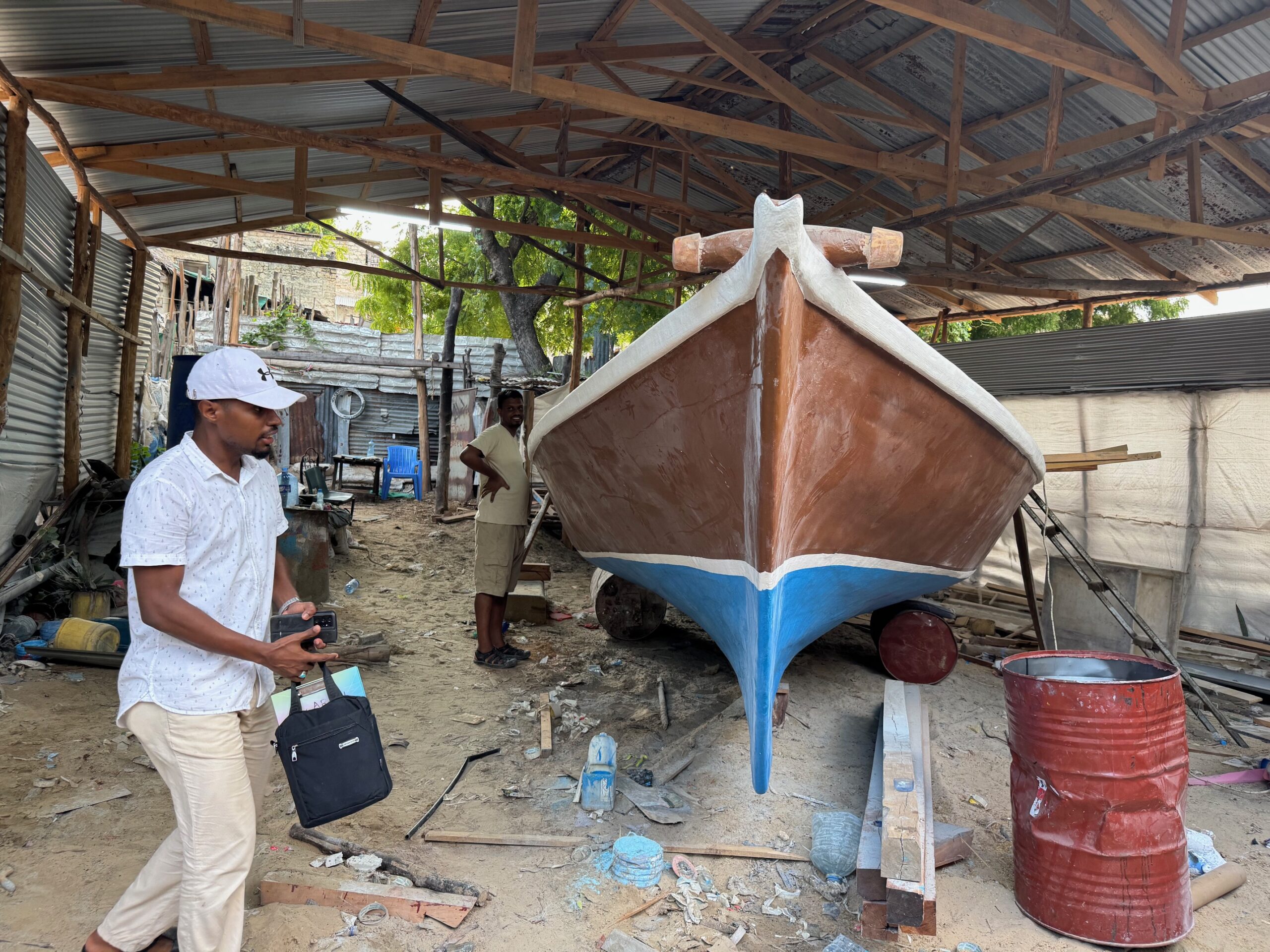
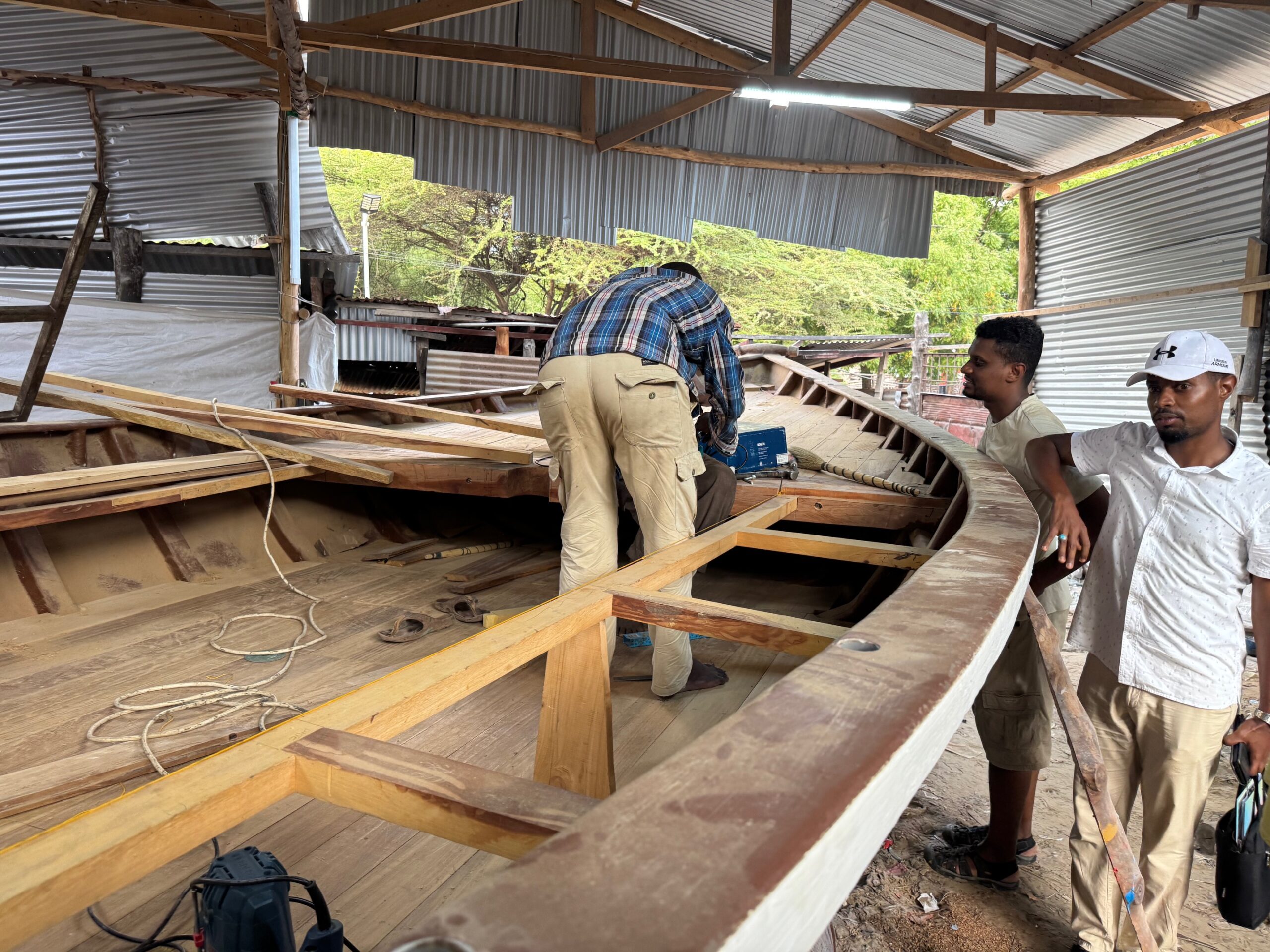
We were fortunate to meet Mohamed who led us to his workshop where he is building a traditional dhow. He and his team are using fiberglass for the hull exterior and the traditional woven mangrove for the interior.
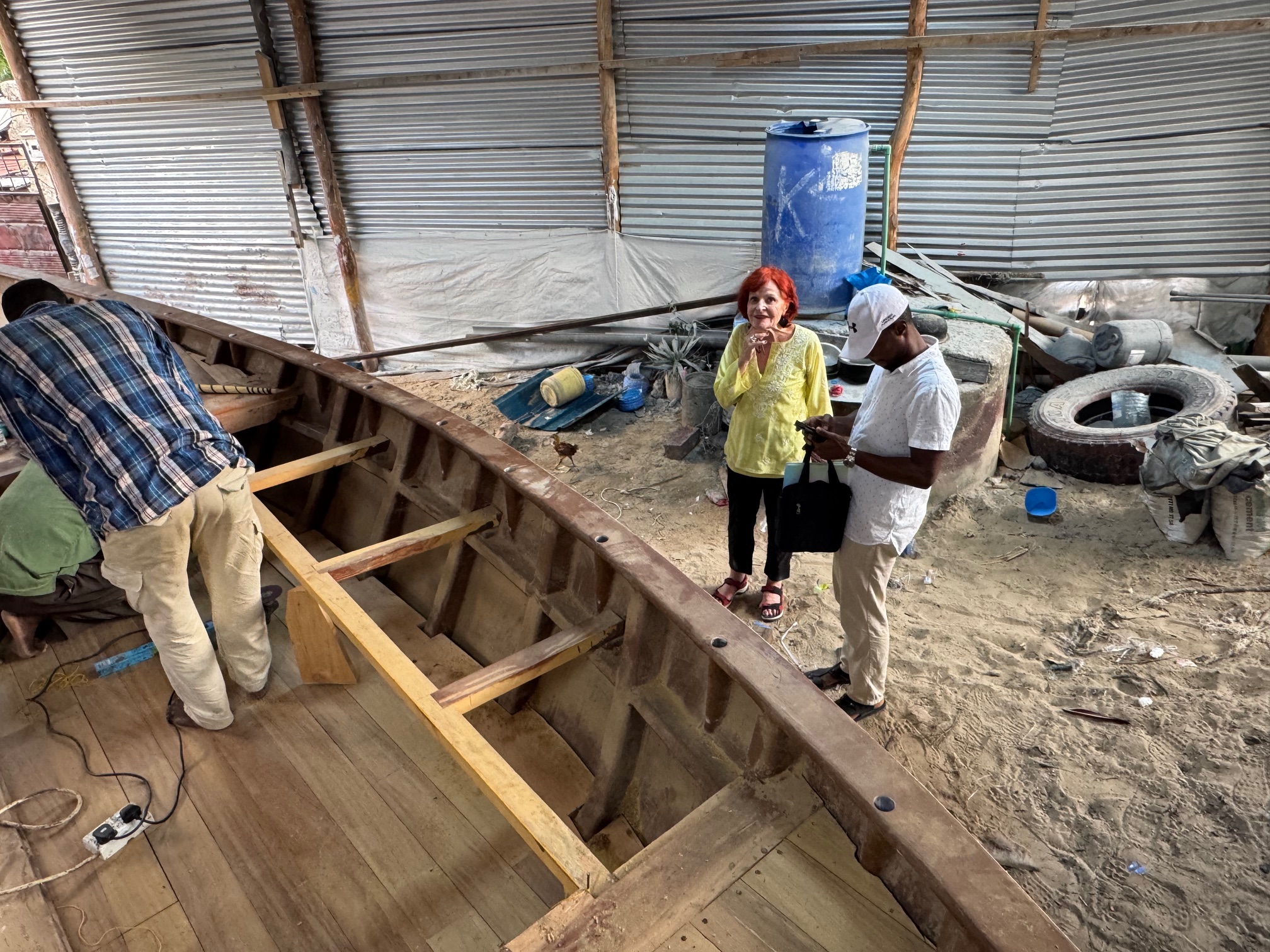
Gail grew up on Vancouver Island where fishing and sailboat culture is huge. Her step-father, an avid fisherman, built a small outboard-motor boat in the basement one winter and she remembers the swearing and shouting, the stress and frustration, over the challenge of steaming wood planks to bend in clamps and vices. The craftsmanship of boat-building is formidable. An art of dreams and the sea.
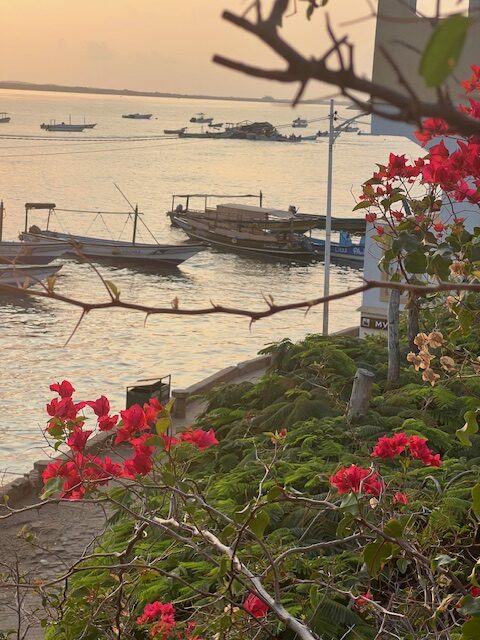
It’s 96 degrees and humid. We’re two degrees south of the equator.
The mangroves (so essential in dhow making and trading) are now giving way to a new industrial port built by the Chinese or tourist hotels and fancy houses built by Arab, African and European elites.
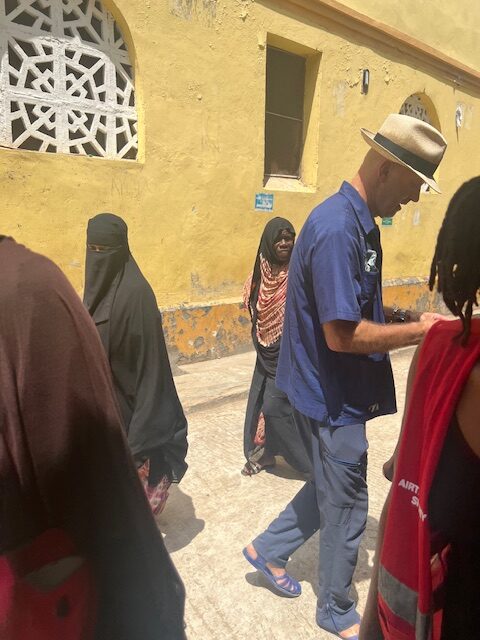
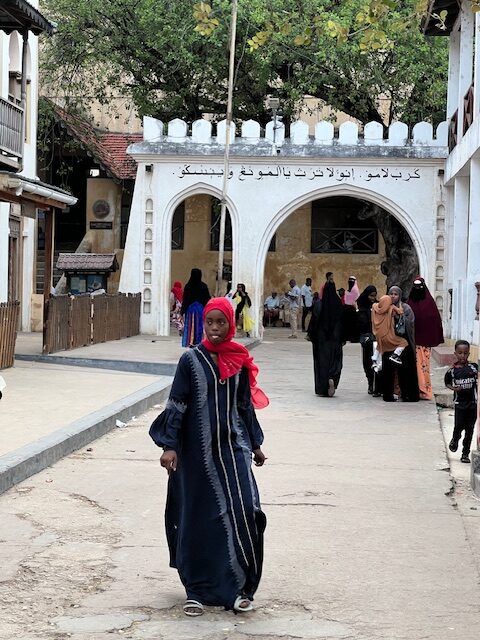
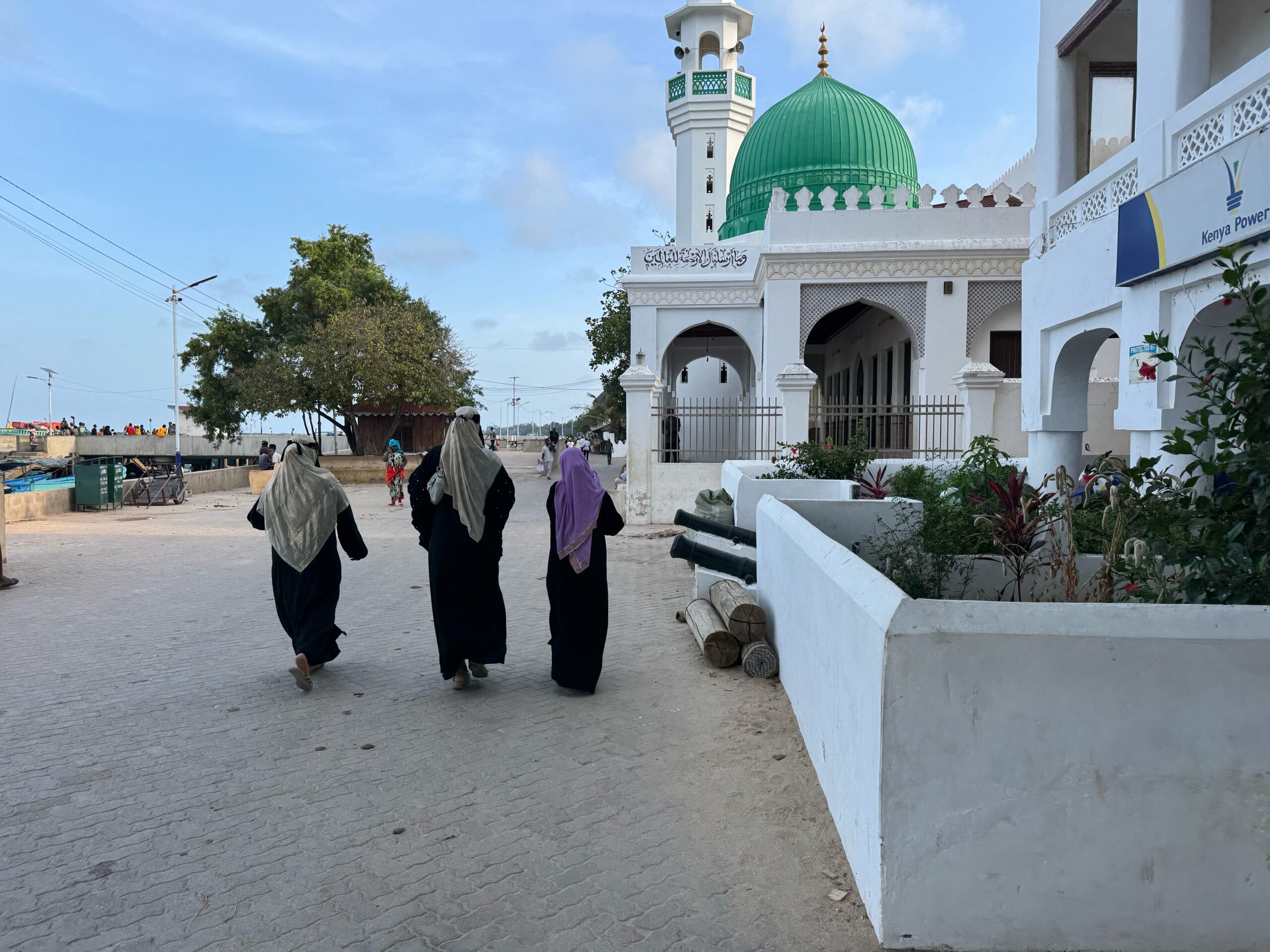
In Lamu Old Town, where we stay, we are fascinated by the African-Arab expression of Islam. And how to wear black in the heat!
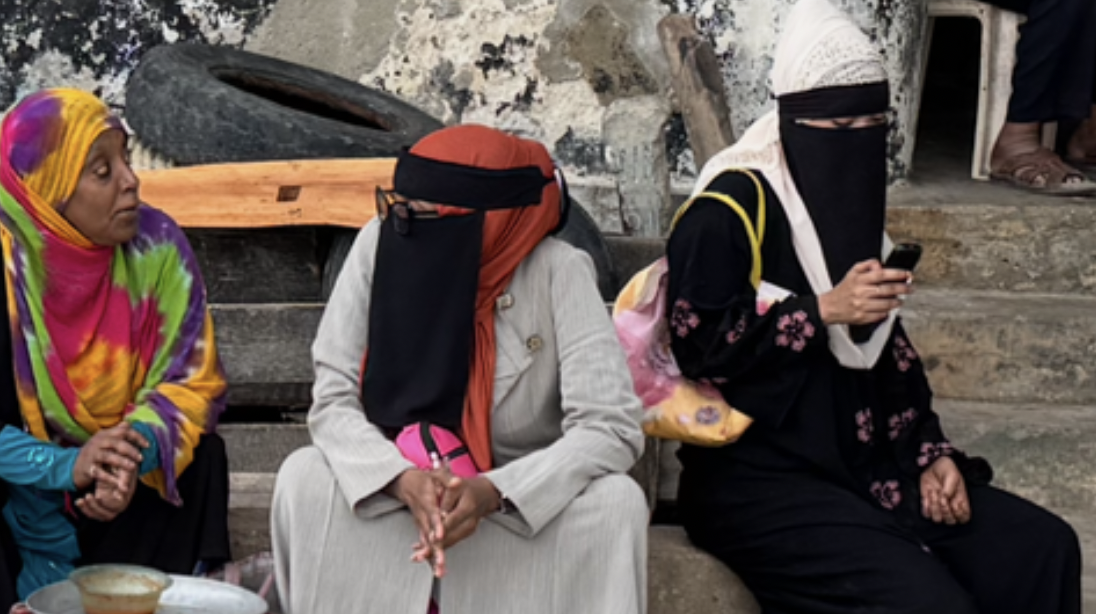
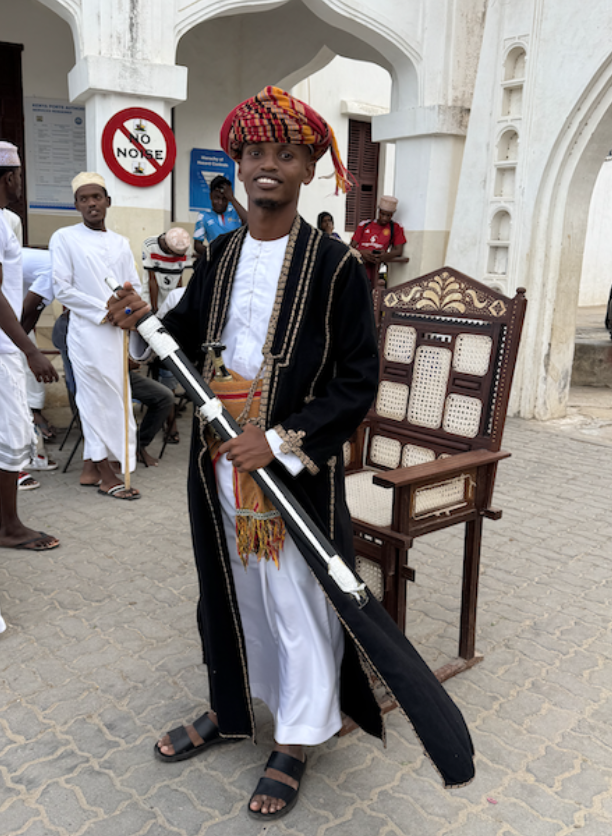
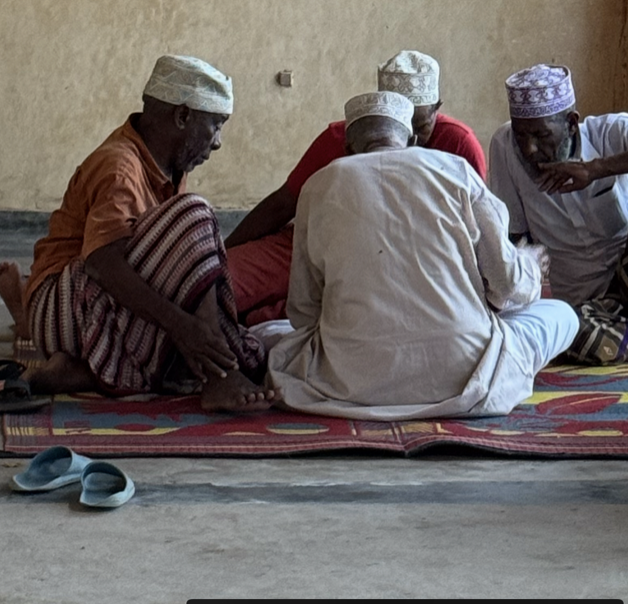
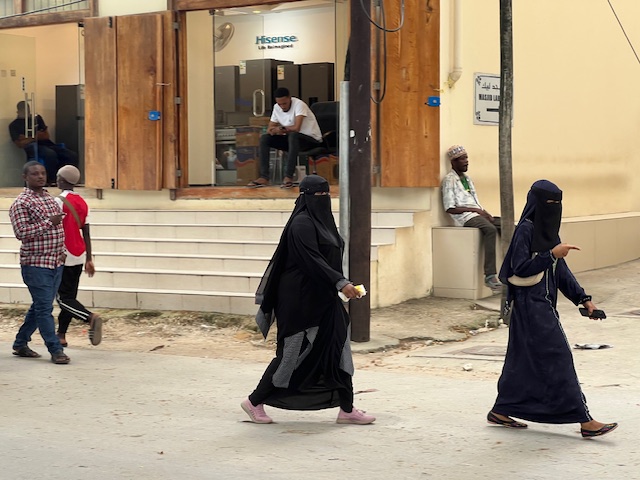
Some 90% of the population is Islamic. Almost all women are covered in caftans, hijabs, and burkas. They float through the alleys like black and brightly colored swans.
Swahili and Us!
“Safari” is rooted in the Arabic word “safar“ meaning long expeditions for trade and migration before it was associated with modern wildlife tourism. “Safari” became the Swahili version of that term (reminding us that Swahili is a melange of Arabic vocabulary and African Bantu grammar spoken by some 200 million people in Africa).
We are on a safari to history and culture, people and language.
Struggling with our first greetings and words in Swahili means we are torturing locals who fortunately have a great sense of humor almost everywhere!
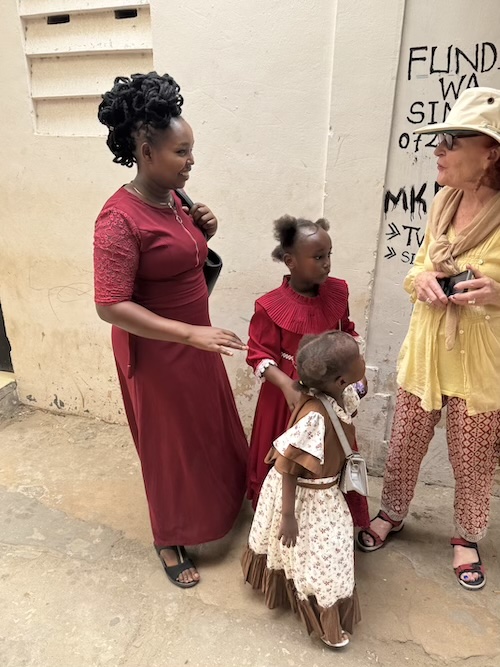
Habari za Asubuhi (Good morning!) does not just roll off our tongues. We spend all day repeating and repeating. Then it’s afternoon and it changes: Habari za Mchana. We keep repeating.
Jambo. Mambo. Hi there. What’s up? Nzuri. Good or beautiful. Tafadhali. Please. Asante Sana. Thank you very much. Karibu. Welcome!
Well…our safari also includes birds.
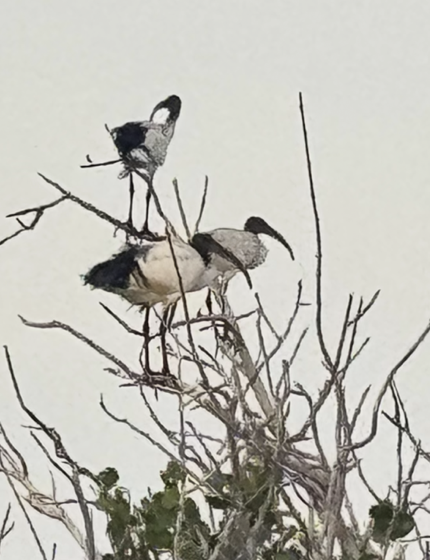
Out on a boat one day we spot these African Sacred Ibis! (Threskiornis aethiopicus) or in Swahili: Kwarara Shingo-nyeusi.
Native to much of Africa, it is especially known for its role in Ancient Egyptian religion, where it was linked to the god Thoth associated with wisdom, magic and knowledge. Isn’t it fun to learn that on Google?
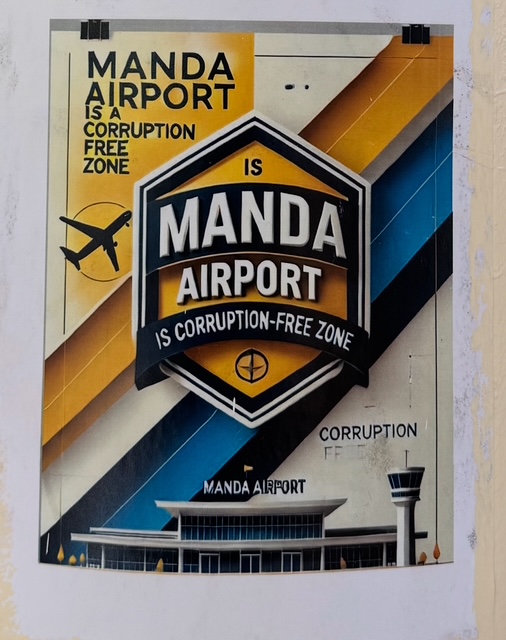
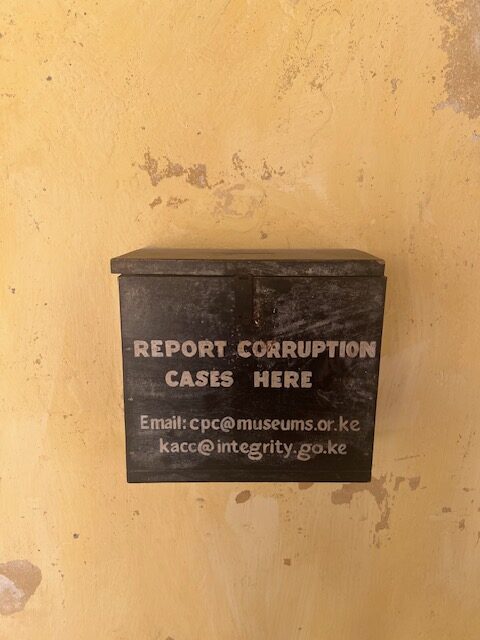
Back at the Lamu airport on Manda Island we are reminded that anti-corruption signs have followed us from Nairobi to the coast.
Next Stop, Malindi
Although it is only a three-hour drive down the mainland coast to Malindi, we are warned it is too dangerous to drive this close to the Somali border. So we take a steam-bath plane for 30 min. to this historic town, an important Swahili Coast port in centuries past. There was not much colonial architectural evidence left.
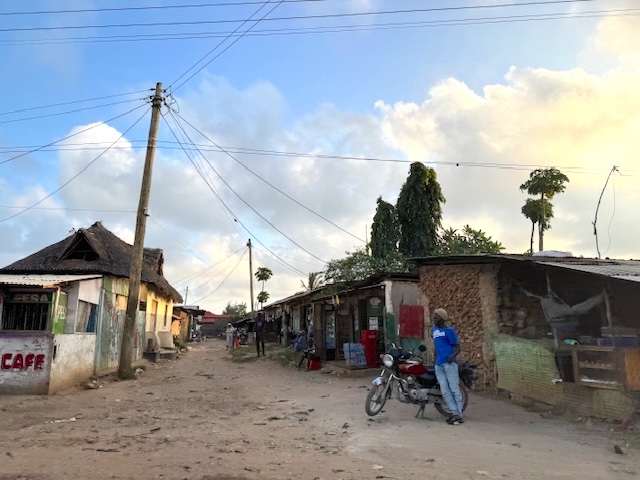
Malindi, colonized by Arabs, Indians and Portuguese has been coping with yet another wave of colonialists. Called “Little Italy” it became a hub for Italian tourism starting in the 70s with Italians buying up beach side properties, building villas, condos, resorts and restaurants.
Of course, this foreign land ownership is miniscule compared to the Kenyan landholdings of British settlers and their descendants and businesses—some 6 million acres of the most arable land, only 2 million acres less than during the height of British colonialism.
Gail thinks she may be too sensitive to this colonial phenomenon as the grandchild of British and Scottish settlers on the Canadian prairie who were either given land or sold land cheaply by the Federal government. Land that was the territory of the Cree, the Assiniboine along with six other First Nations in Saskatchewan where she was born. Stolen land. This sordid history is now well known.
We cannot calculate the land owned by descendants of the original colonialists in the Americas: the British, French and Spanish. The creation of immigrant countries has confused and complicated the original sin. And governments keep indigenous nations tied up in courts refusing to return land.
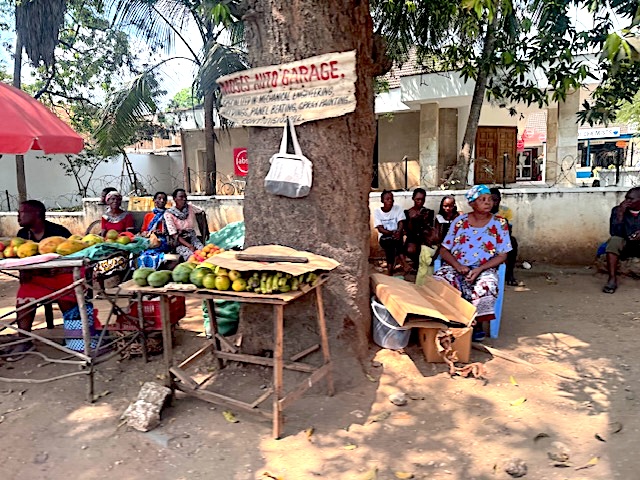
Back to the Italians on the Swahili coast! Some have lost their enthusiasm for Malindi and are now clustering in other communities down the coast with direct weekly flights from tiny Verona to Mombasa. In Malindi we discovered Italian-speaking locals—tourist trinket hustlers and restaurant waiters.
From a local we learn that tensions have arisen with “special” dispensations circumventing Kenyan property regulations for Italians buying land and constructing resorts and condos.
Yet the stressed living conditions for many locals was visible. A type of apartheid? or just old-fashioned inequality?
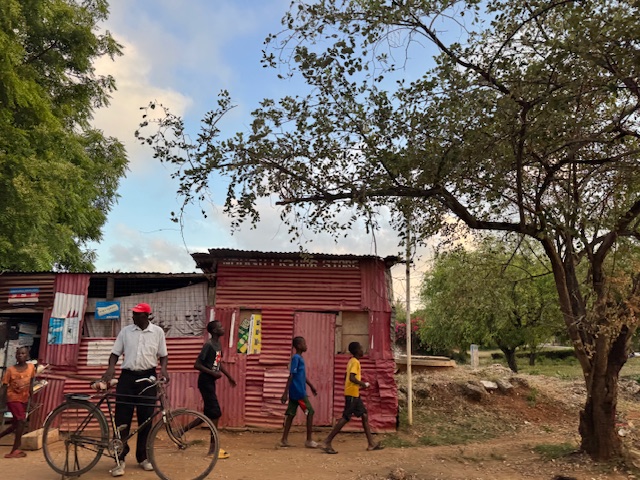
We are learning some uncomfortable facts about demographics and unemployment in Kenya: at least 70% of the population is under 34 and among the working aged youth there is almost 70% unemployment.
The huge Chinese infrastructure projects—from super toll highways to long distance railroads and industrial ports all involve bringing laborers from China.
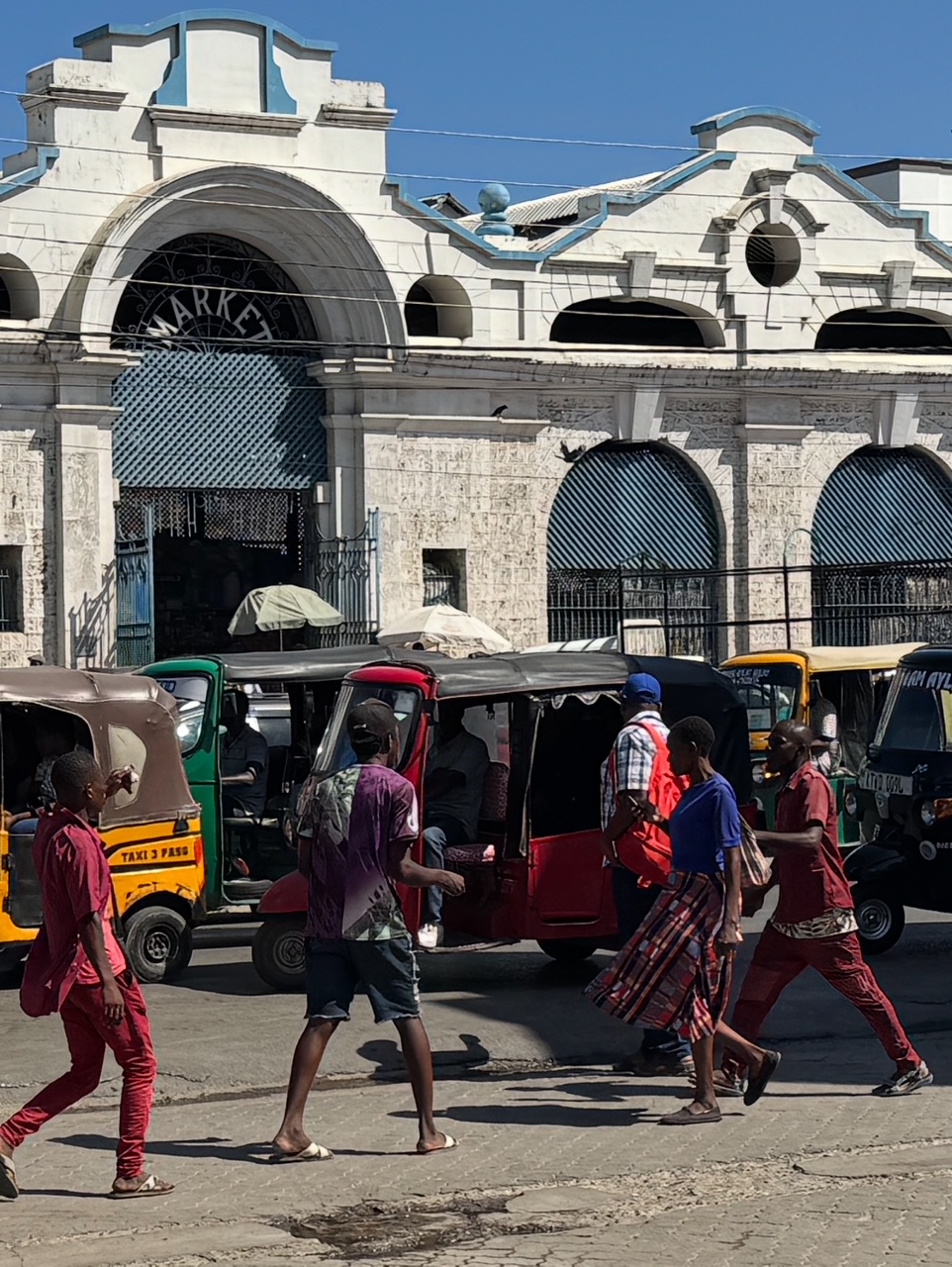
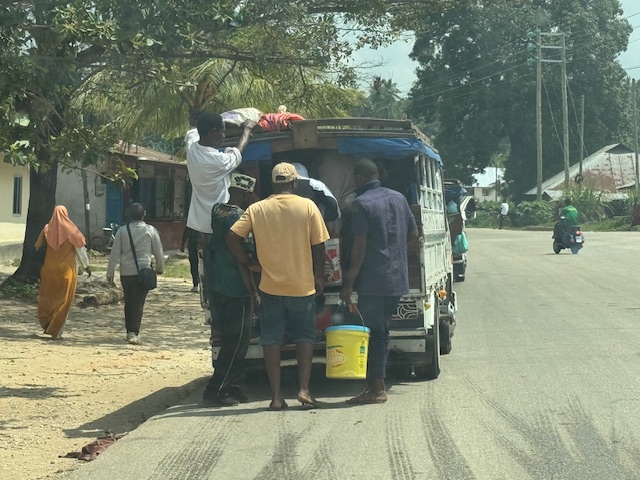
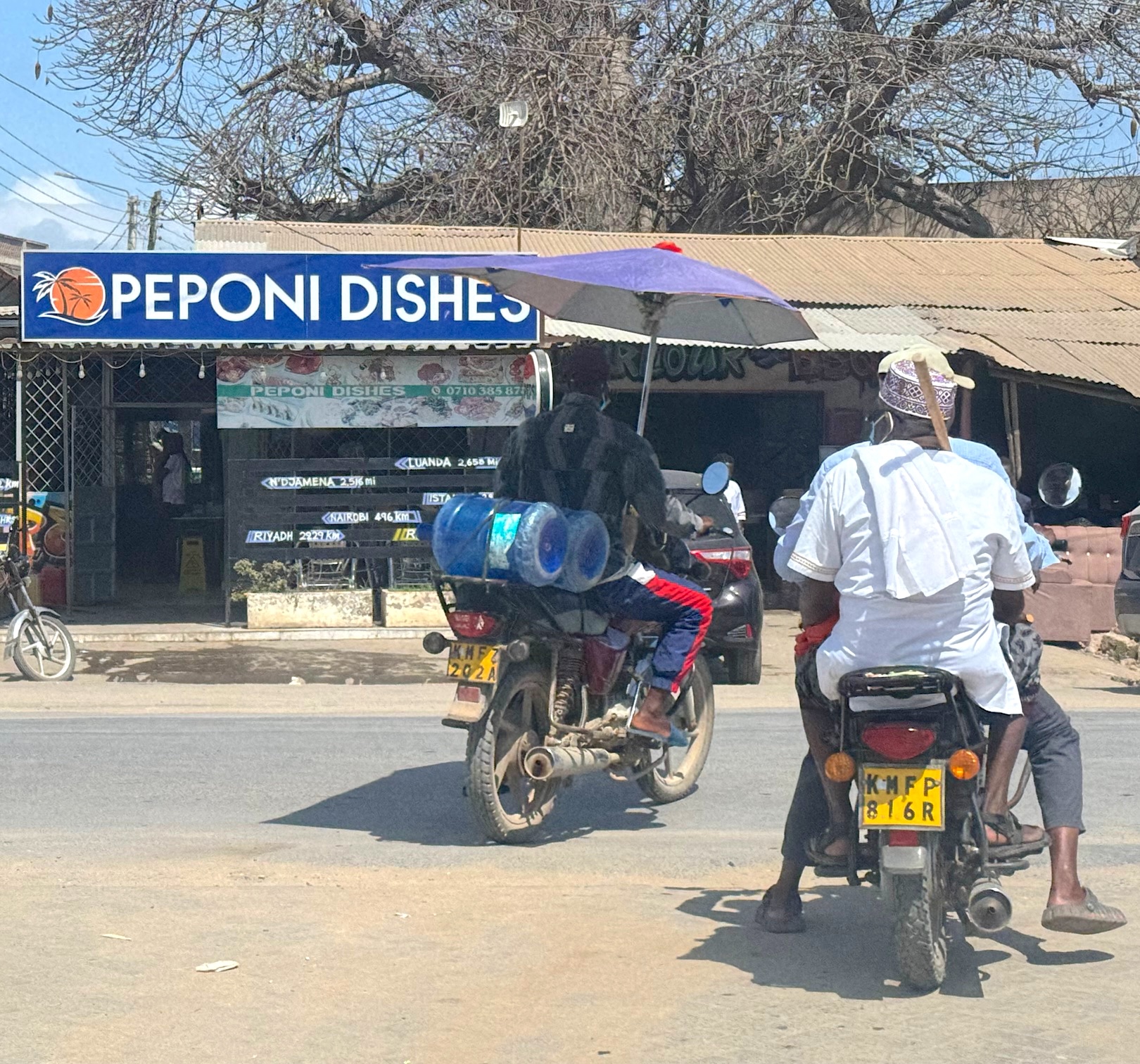
Meanwhile, here’s the most popular public transportation system in coastal towns—the motorbike-taxi. Called boda boda throughout Kenya.
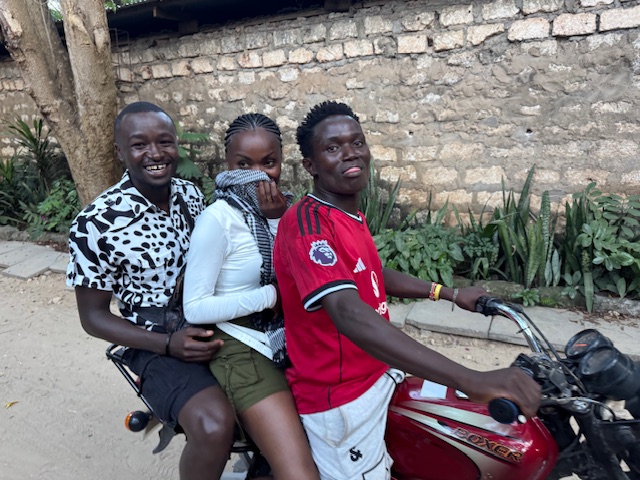
Is Tourism Continuing Colonialism?
Meanwhile we check into one of the four high-end hotel/resorts in Malindi (we are staying in a variety of hotel types on the coast as part of our research), all owned by Italians. We feel uncomfortably like new colonialists. Although the guests seem to mostly be from Germany at this off-season time of year.
An African guest from Nairobi explained that not so long ago Black Africans were barred from this part of town. And she worried that Kenyans had been too welcoming and friendly to foreigners historically to their own detriment.
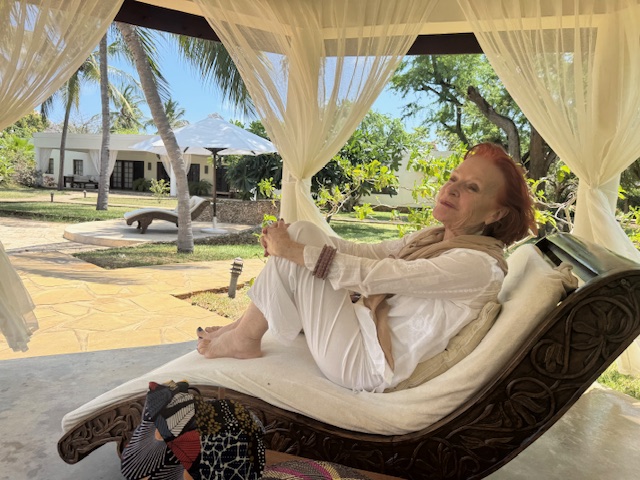
Mulling this over we head to the local Malindi museum for some enlightenment.
We are reminded of the long history of slavery on this coast starting with the Arabs who remained the most resistant to ending it.
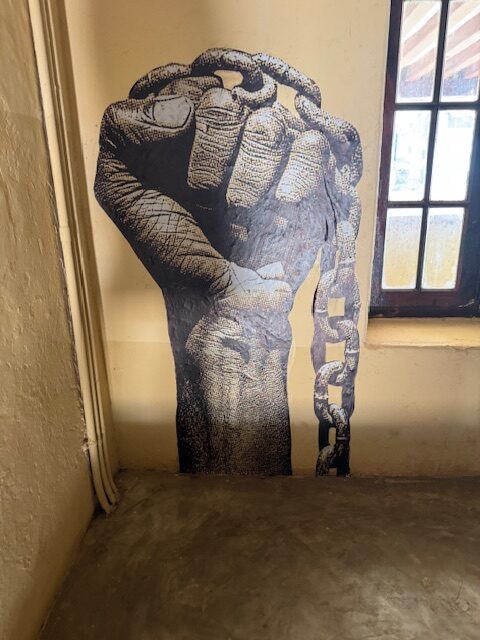
We learn about the nine related Bantu tribes in this region, and their interwoven languages, that comprise an important ethnic cluster called Mijikenda, who migrated down the coast from Somalia in the 16th and 17th centuries. They settled in the coastal forests here, creating sacred spaces.
In the hotel and restaurants we meet young staff who come from these different tribes and speak sometimes eight or more languages.— at least several tribal languages, plus Swahili, English and Italian!
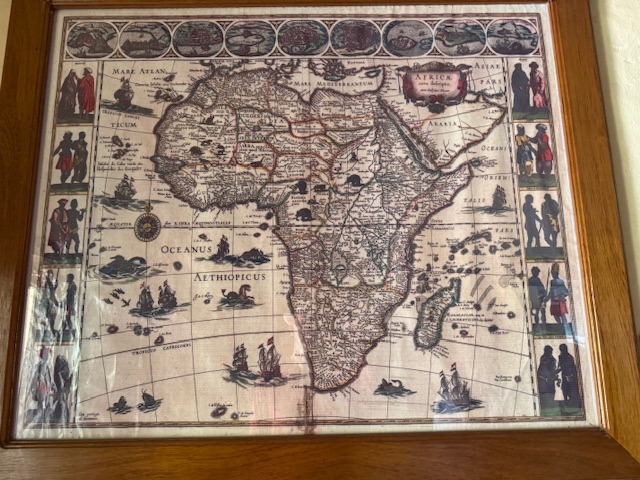
At the museum Stephan is fascinated by a rendering of the continent in the 1630s by a Dutch cartographer based on information—real and imagined (“like all map-making” Stephan says)— from the Portuguese who had been trading in the abundant gold resources on the west African coast since the 1300s. They come a bit later to the East coast. And find more gold and a profitable slave trade to exploit.
The map perpetuates the Mercator projection which aids navigation but distorts and minimizes Africa’s size and scale compared to the northern continents on the globe.
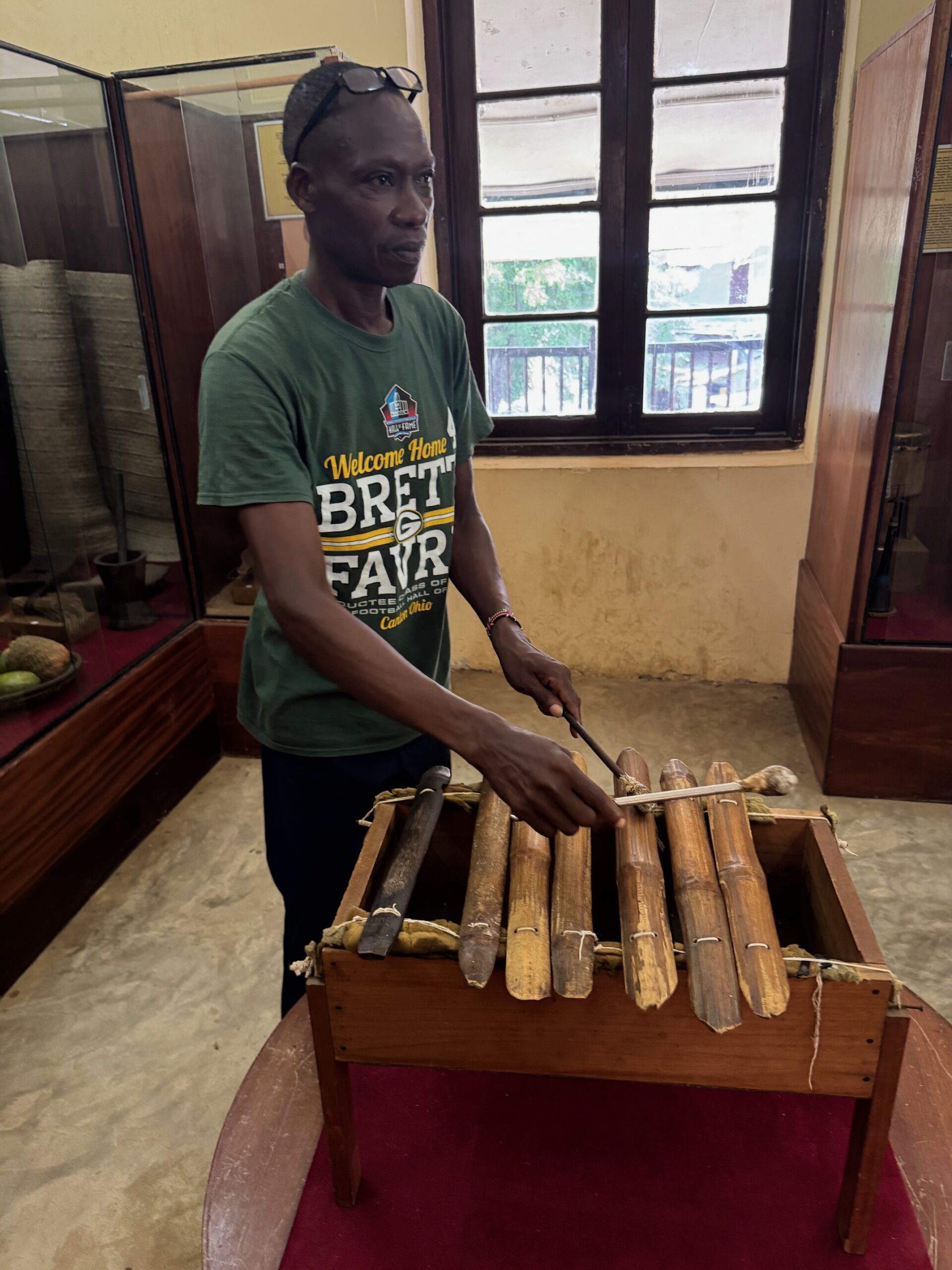
Gail’s more fascinated by the marimba. We always thought it originated in southern Mexico—Chiapas and Oaxaca— and Guatemala. But here it is an instrument made from gourds brought by enslaved Africans to the new world!
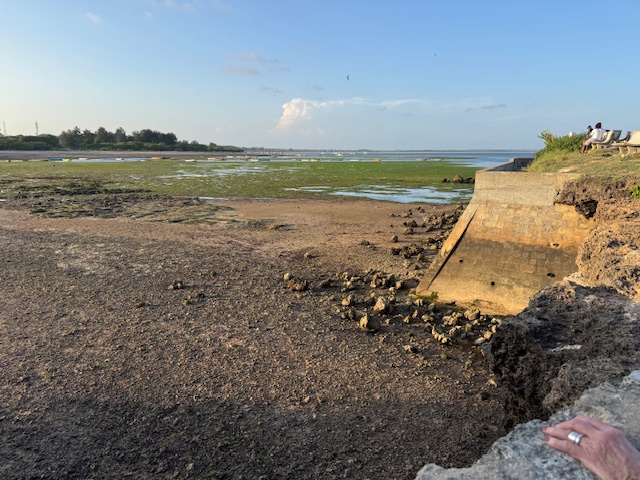
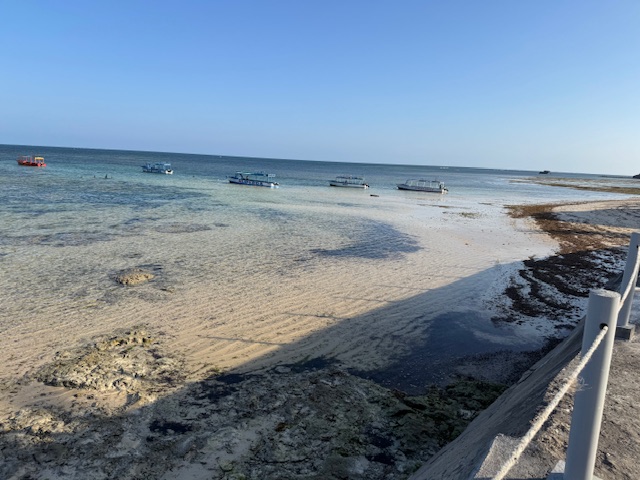
Yes, yes, yes. We’re on the Indian Ocean and that makes most people think of beautiful turquoise beaches with palm trees. But this is a surprising coast. The tides go out perhaps a kilometer or two, the sand is rippled with sharp coral stones and seaweed. There’s a coral reef off the coast where tourists are often taken by boat to swim, snorkel and scuba dive on the other side.
On the Road from Malindi to Mombasa
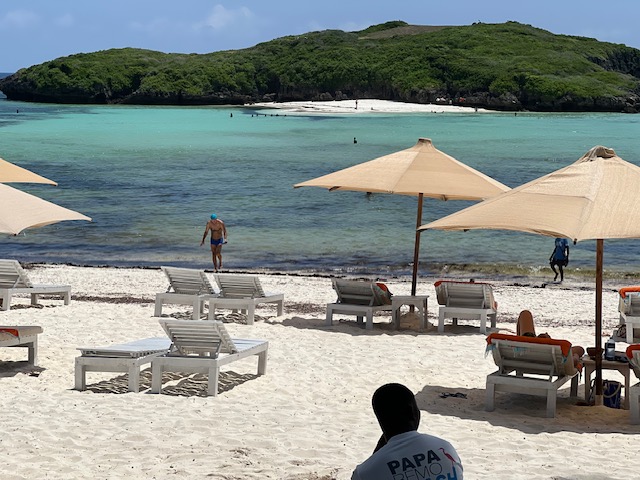
As we drive from Malindi to Mombasa we stop at the new Italian colony—Watamu with its Jacaranda Beach. It seems that the most beautiful beaches are mostly controlled by private properties—hotels, restaurants, resorts. We found an Italian lunch place with those iconic chaise lounges and umbrellas staking a claim to the beach. And the swimmer in the family got to wade out through seaweed to swim. Here he is emerging!
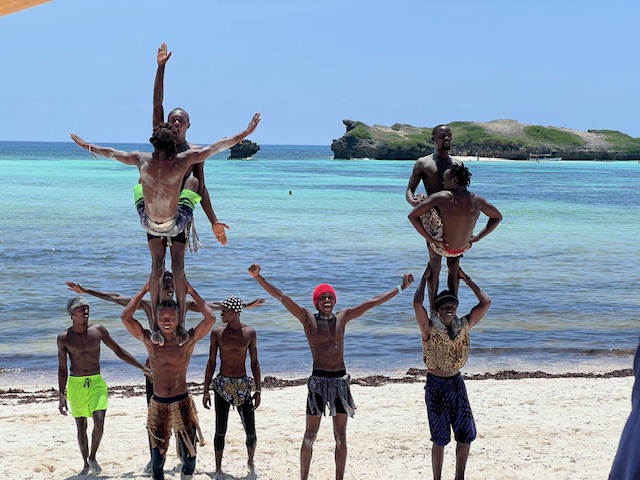
And here’s the beach entertainment.
The Fathomless Mysteries of Archeological Ruins
We make a side visit to some medieval ruins at Gedé en route to Mombasa—remains of a 12th to 17th century Swahili town including coral stone mosques, palace and pillar tombs.
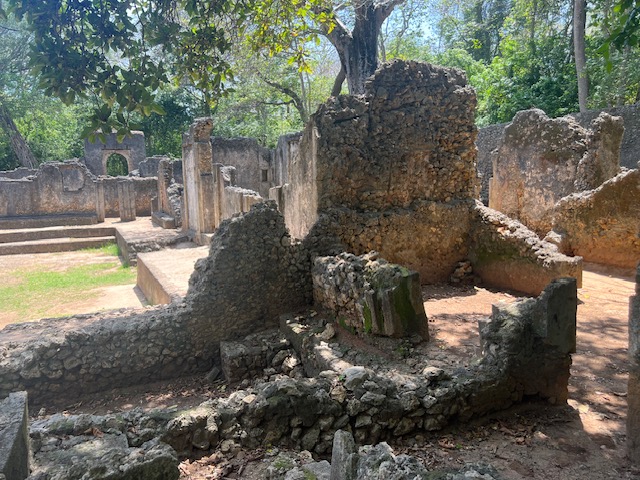
Now a UNESCO site it was once occupied by 2500 people. Mysteries surround this ancient trading town engulfed by forests. It is certain to have played a role in the slave trade. As with many archeological ruins of ancient civilizations, the first question becomes: Why was it abandoned? Two theories here. Attacks by Portuguese in the 17th century and evidence that they ran out of potable water (similar to abandoned ancient towns in Mexico like Monte Alban and Teotihuacán).
As with many ruins this one is steeped in indecipherable mysteries that either involves finding a book to explicate or suffering through a tedious guide, but who did point out the graves of the Sultan’s multiple wives.
Sometimes ruins can offer up delightful surprises.
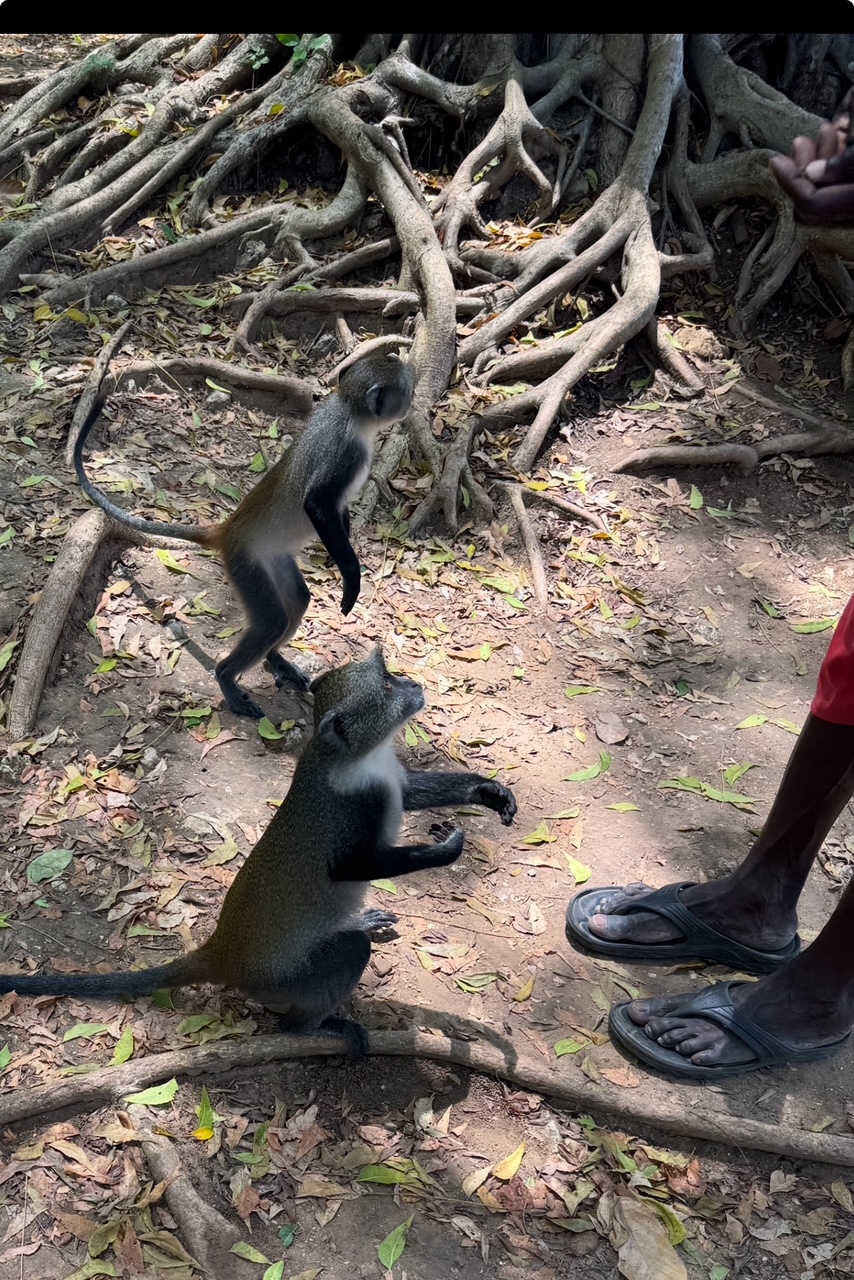
These Sykes monkeys roaming the tree tops remind us of our visit to the National Museum in Nairobi with its extraordinary selection of skeletons that reveal our human origins. Our ancestors—homo sapiens— walked out of Lake Turkana and the Rift Valley on the Kenya/Ethiopian border one and a half million years ago. We are all African.
We check through Nonno’s photos and find that he encountered more intimidating animals in this region.
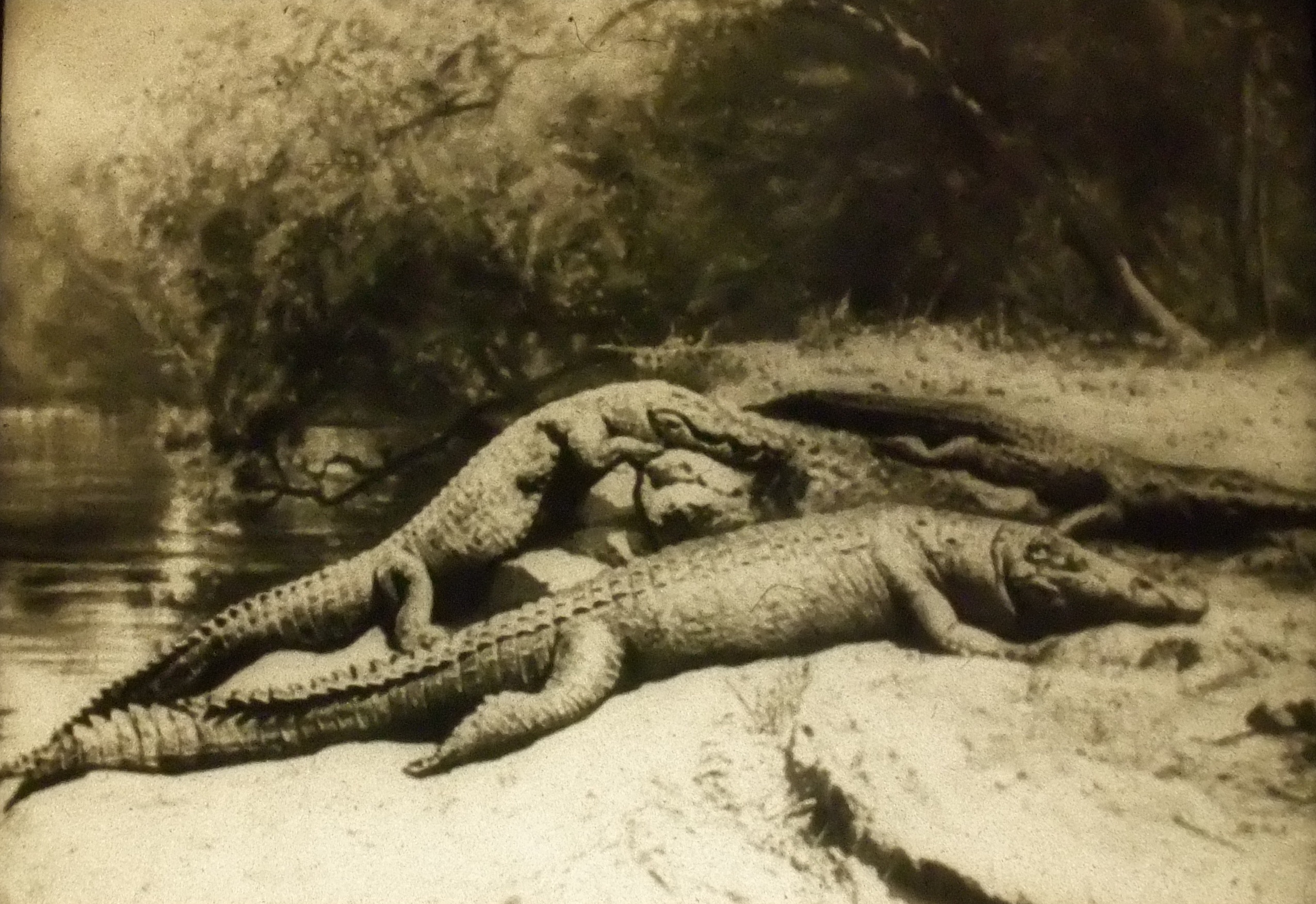
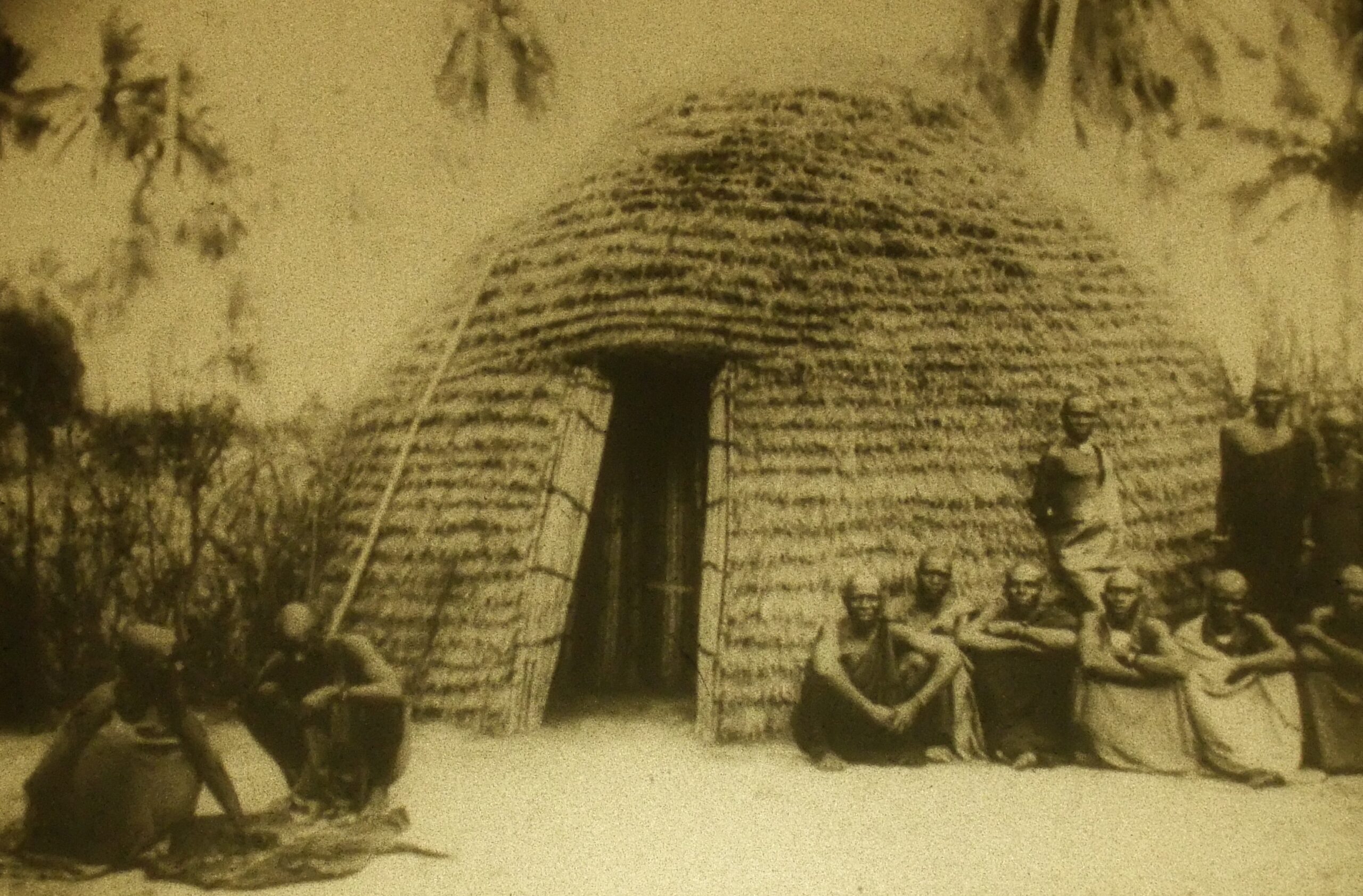
Nonno’s photos from his time on the coast between 1910 and 1914 include many images of indigenous peoples.
Since we’re not scholars we’ve done some on-line digging and found that this photo most likely comes from the Mijikenda Bantu tribal region on the mainland of Kenya’s Swahili coast. This was the typical dome shape of their grass houses.
We couldn’t see any from our car window driving down the coast. It might have taken a deeper exploration.
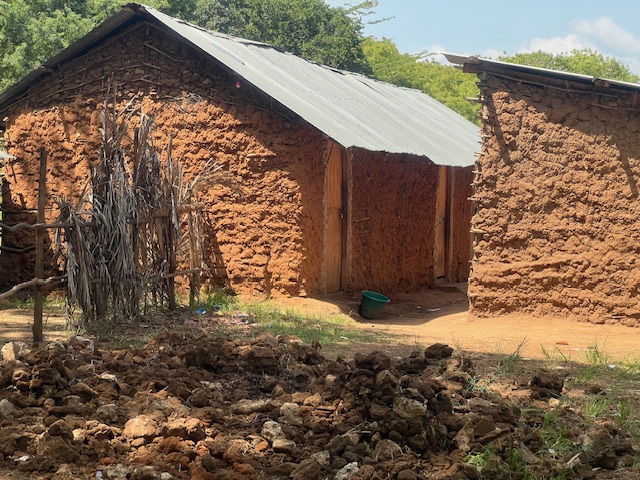
We did catch sight of houses using traditional building materials in the daub and wattle technique—local slender branches or bamboo used for framing then plastered with an adobe-like mix of local earth and donkey or cow dung for durability! Similar to Mexico. Now most feature tin roofs not the traditional thatched grass or coconut palm leaves.
Mombasa—the first capital of British East Africa
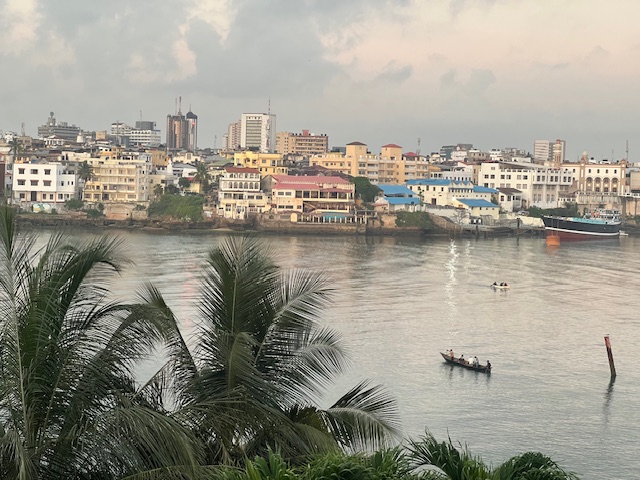
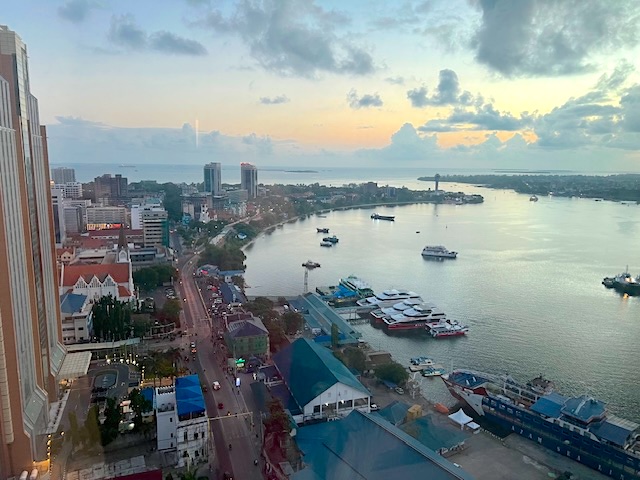
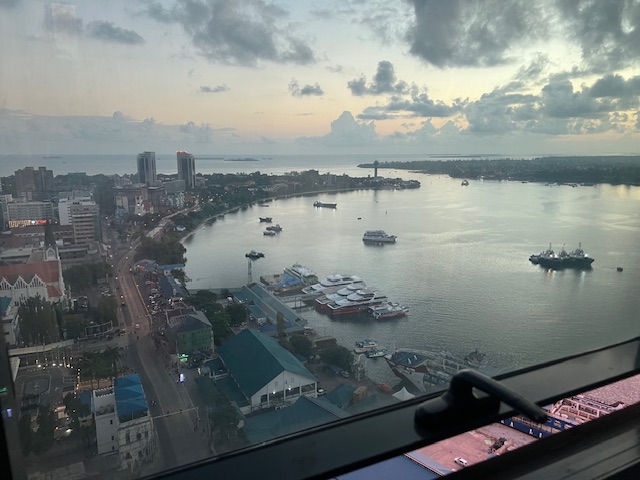
Our hotel in Mombasa offers a view of the old port harbor with its colonial buildings that we are eager to compare with the photos taken by Stephan’s grandfather.
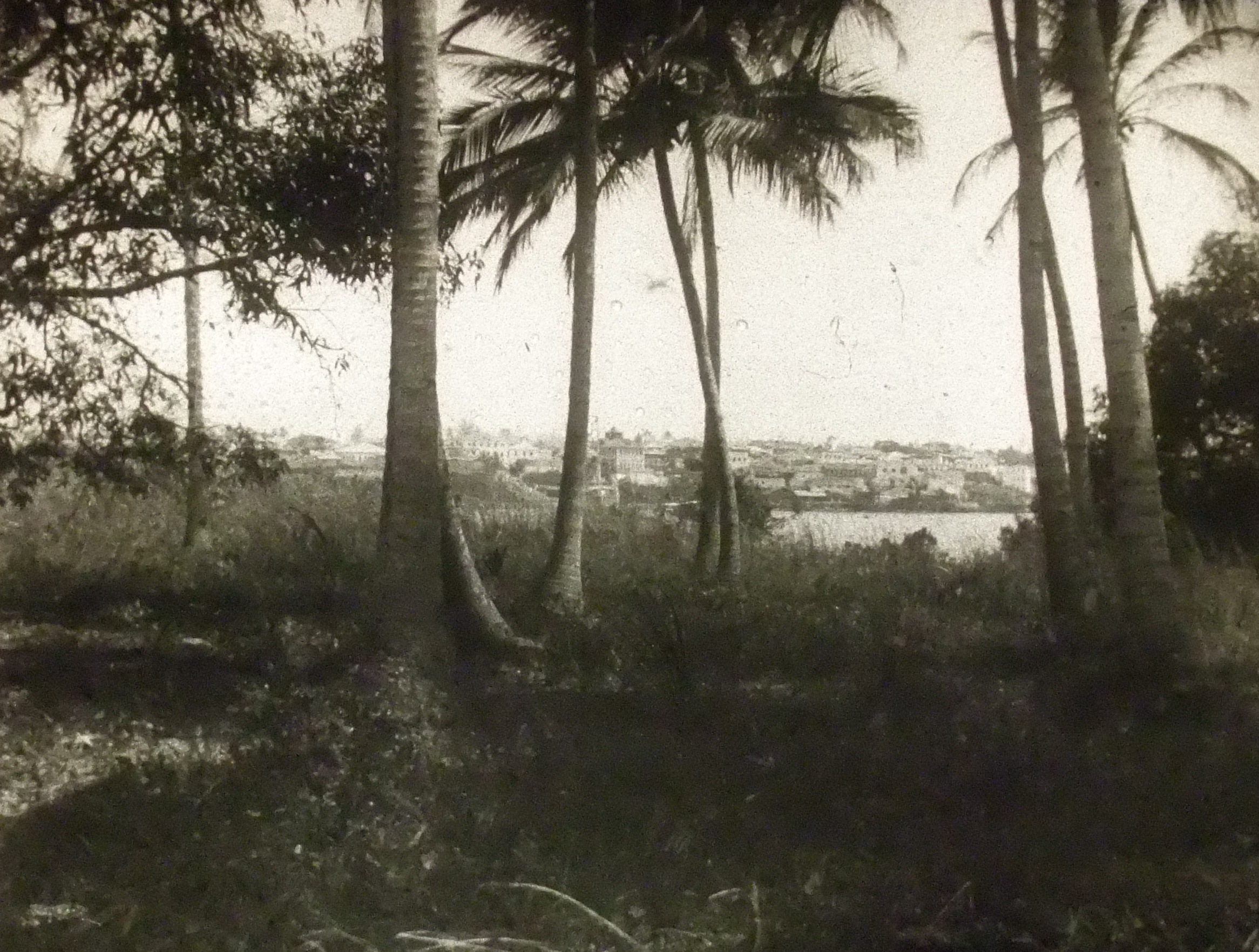
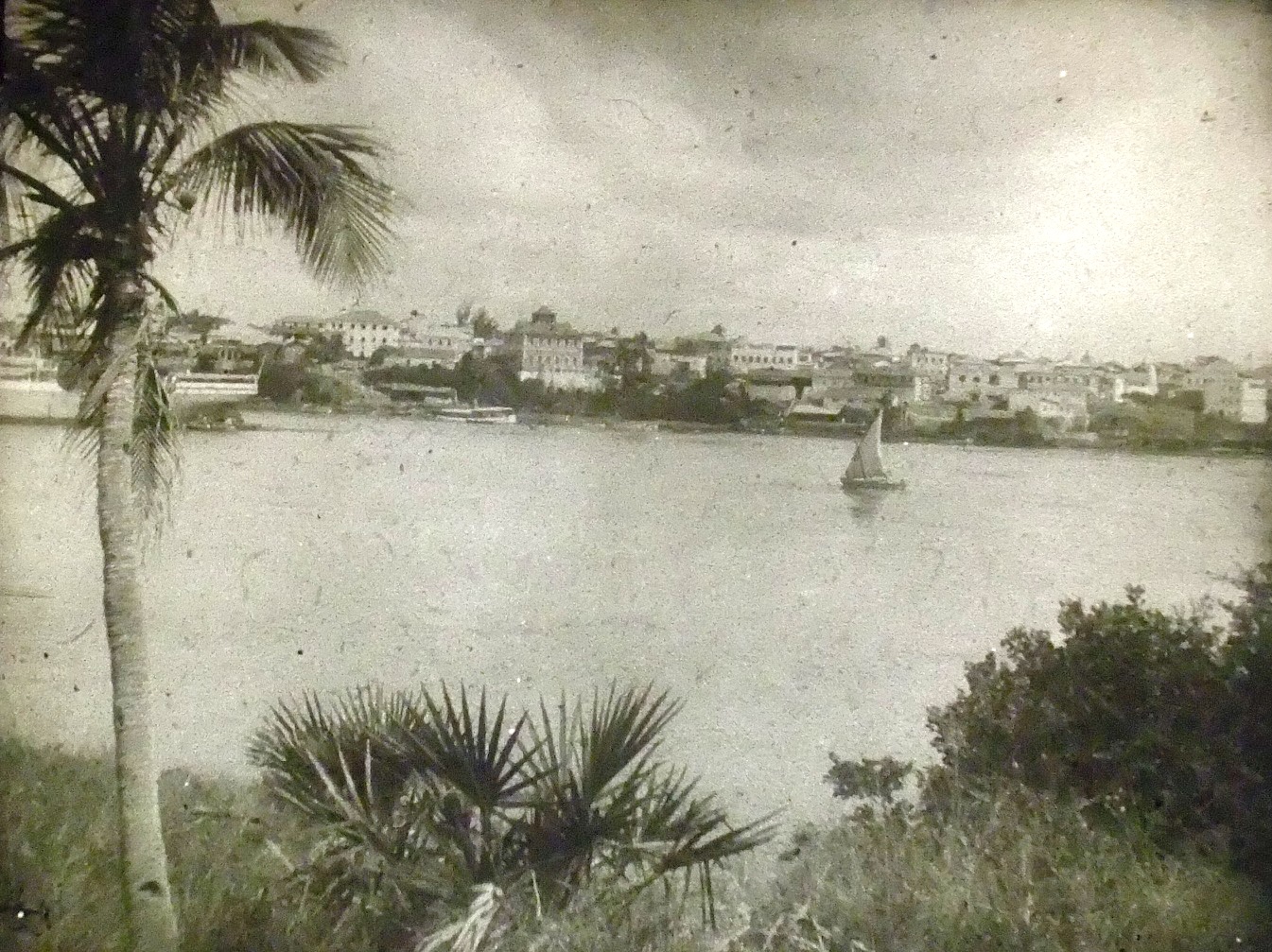
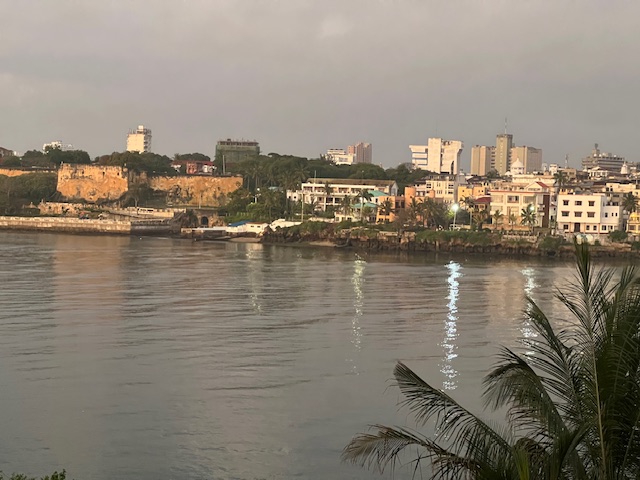
The building on the left is the famous Fort Jesus constructed by the Portuguese more than 500 years ago. The building to the right is the old Mombasa Club. We will visit both in the Old Town since they showed up in Nonno’s photos.
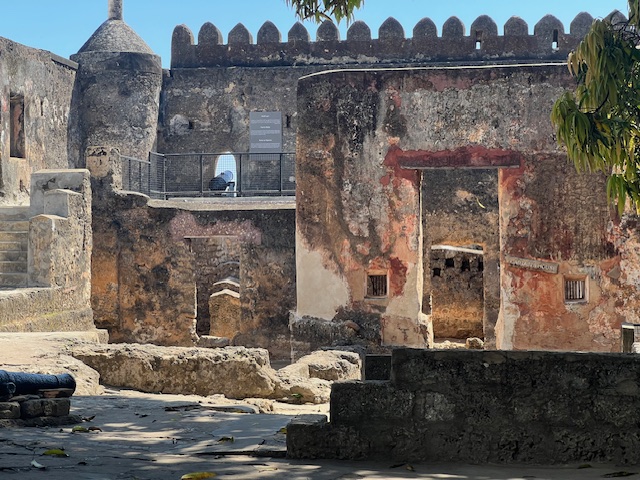
Fort Jesus—think about the hubris of that name—when you build your fortification on a foreign land, replacing the Gods seems to be the first act of colonialism. We reflect on Chinua Achebe’s famous novel: Things Fall Apart about the consequences of Christian missionaries in Nigeria.
The Portuguese who built this labyrinth didn’t last long. Only a hundred years. They were pushed out by the Omanis who reigned until it came under the Zanzibar Sultan’s control who leased it to the British as a protectorate in the late 19th century.
Yes, it is dizzying to keep track of the colonial bosses on the Swahili coast!
Imperial Reckoning
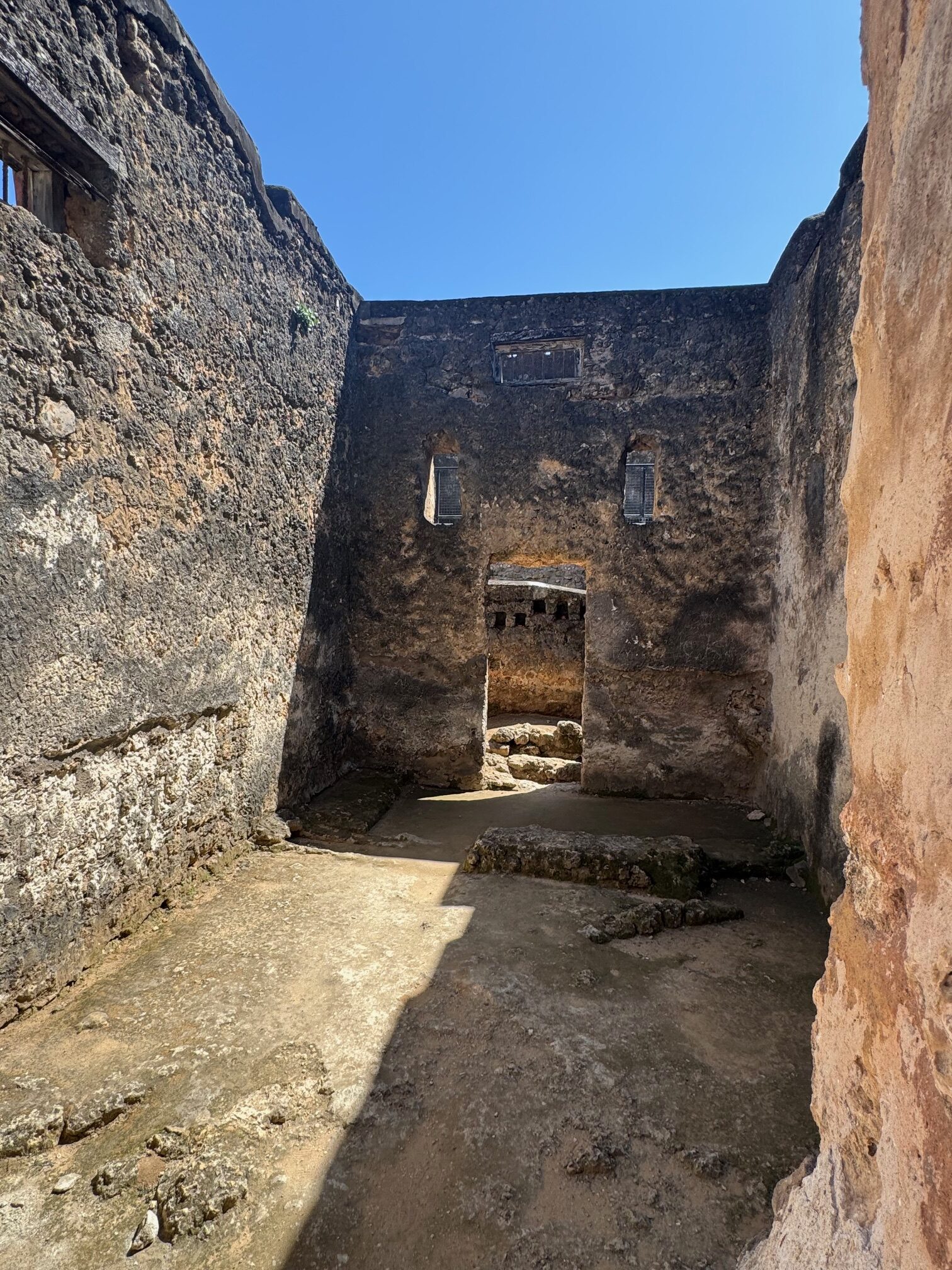
Our guide tells us that Fort Jesus was used as a concentration camp and prison for years and that brings up the painful history of the more than 100 concentration camps and “protected villages” that the Brits built all over Kenya during the 50s to punish Black resistance and perpetuate White rule. They operated as forced labor, and torture campus until the early 60s when Kenyans finally achieved independence.
We have read the recent book on the Mau-Mau rebellion and persecution which exposed that period of British led genocide of the Kikuyu, Embu and Meru tribes —from land confiscation to maiming and murders in the concentrations camps.
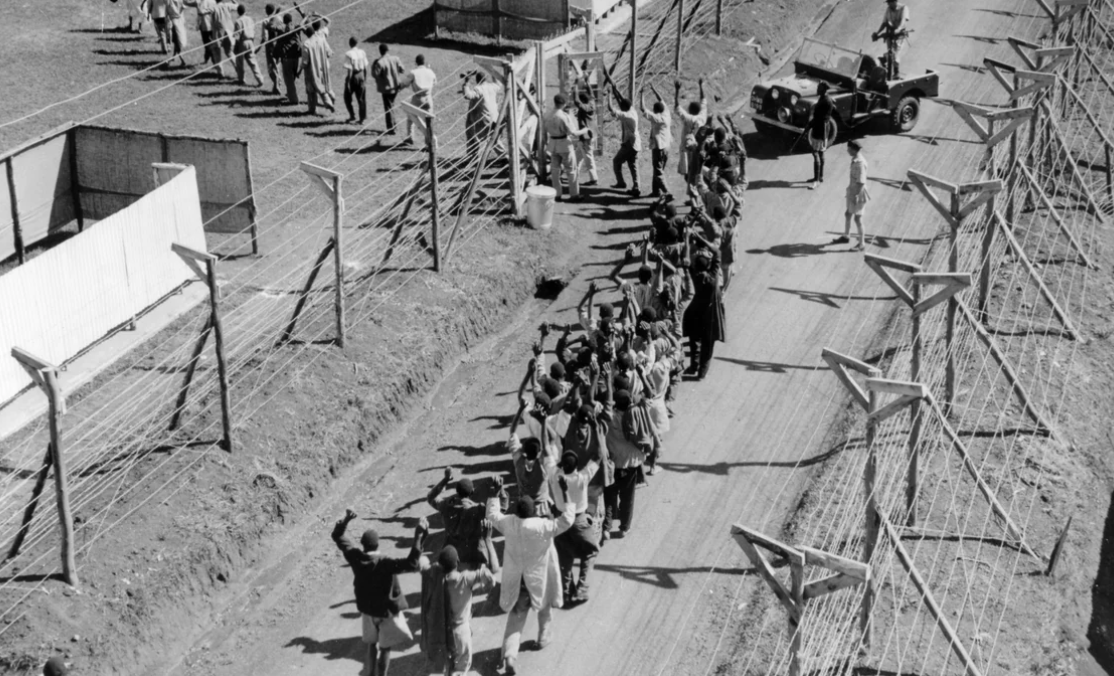
Photo from www.Kenyahistory.com
It began because the Kikuyu dared to rise up in the 40s to oppose British rule. And yes, they killed some settlers. They paid a very dear price. When Jomo Kenyatta became the Prime Minister of the new independent Kenya in 1963, the Brits burnt or buried the documents of their immoral deeds. But not all. And Kikuyu, Embu and Meru survivors and their descendants have a long memory.
A Pulitzer prize winning book on the subject: Imperial Reckoning: The Untold Story of Britain’s Gulag in Kenya by Caroline Elkins.
But we’re now seeking cheerier stuff nearby—The Mombasa Club.
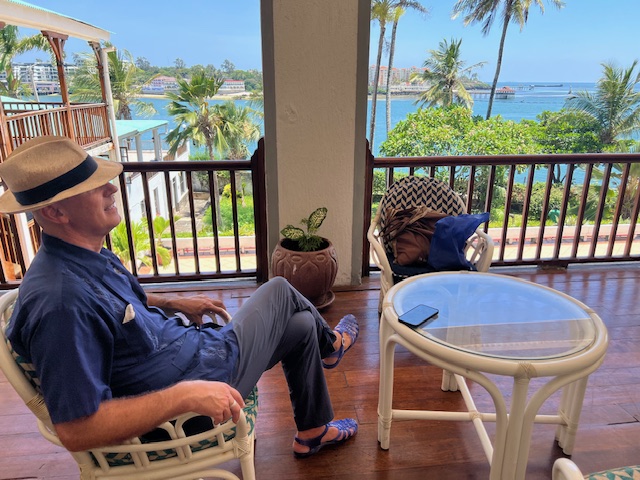
The Mombasa Club was a British creation to cater to colonial elites and administrative officials. A Christian men’s social club. We believe Nonno was a member given his managerial role for a distinguished London company. He photographed it.
Mombasa Club policies of membership were so racist that they wouldn’t even allow Indian generals, who had fought for the Brits in WWI, to enter let alone become members. They also turned away the Prince of Ethiopia, Jews and Muslims. Colonial Christian ladies were permitted entry during daylight hours.
We had to fast-talk our way past the guard in the parking lot and the receptionist at the door. Stephan pleaded to meet the manager after explaining that his grandfather was probably a member more than a hundred years ago.
Today, the board of the Mombasa Club is all Black Kenyans and eventually Stephan had a warm reception and great conversation with the current manager, Anna Sakwa.
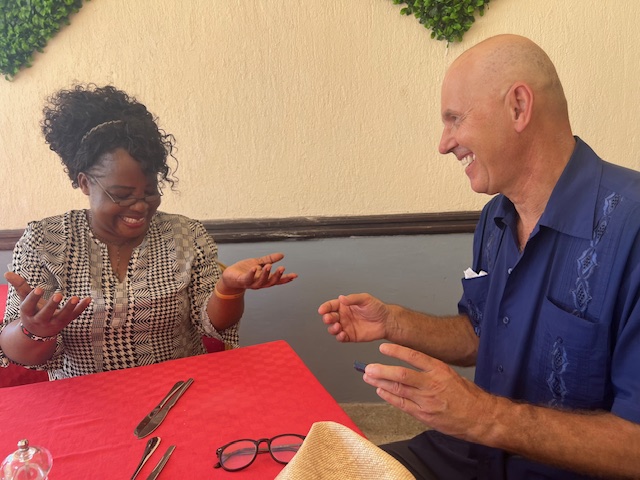
Anna explains that “Mombasa” comes from the Swahili word “Mwambaze” which means: How can we help you?
But then we read somewhere that Mombasa meant “Island of War” since it was conquered, occupied, colonized by so many nationalities over the last millenium.
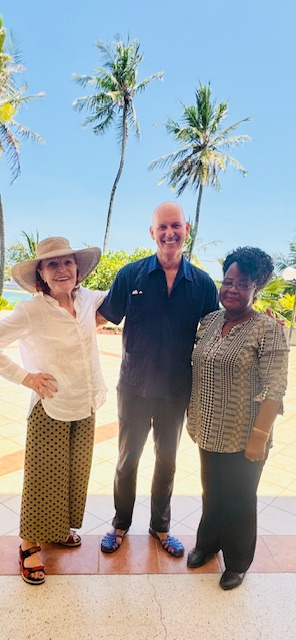
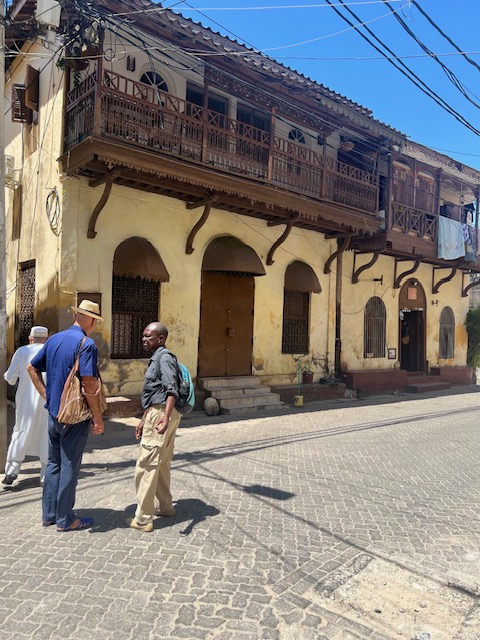
The famous Africa Hotel in Old Town Mombasa. Where Black Africans could stay during the colonial era. Shea, our guide for the day, was a font of information. One observation he shared was that corrupt practices were included in the curriculum of higher education.
Reality Check #One:
Normally, Stephan and I tackle new places, new environments with energy, curiosity, a sense of adventure and lots and lots of walking. But here, in Mombasa, we can barely drag ourselves to walk a block of this vast city. The heat and humidity are sapping our vitality and enthusiasm.
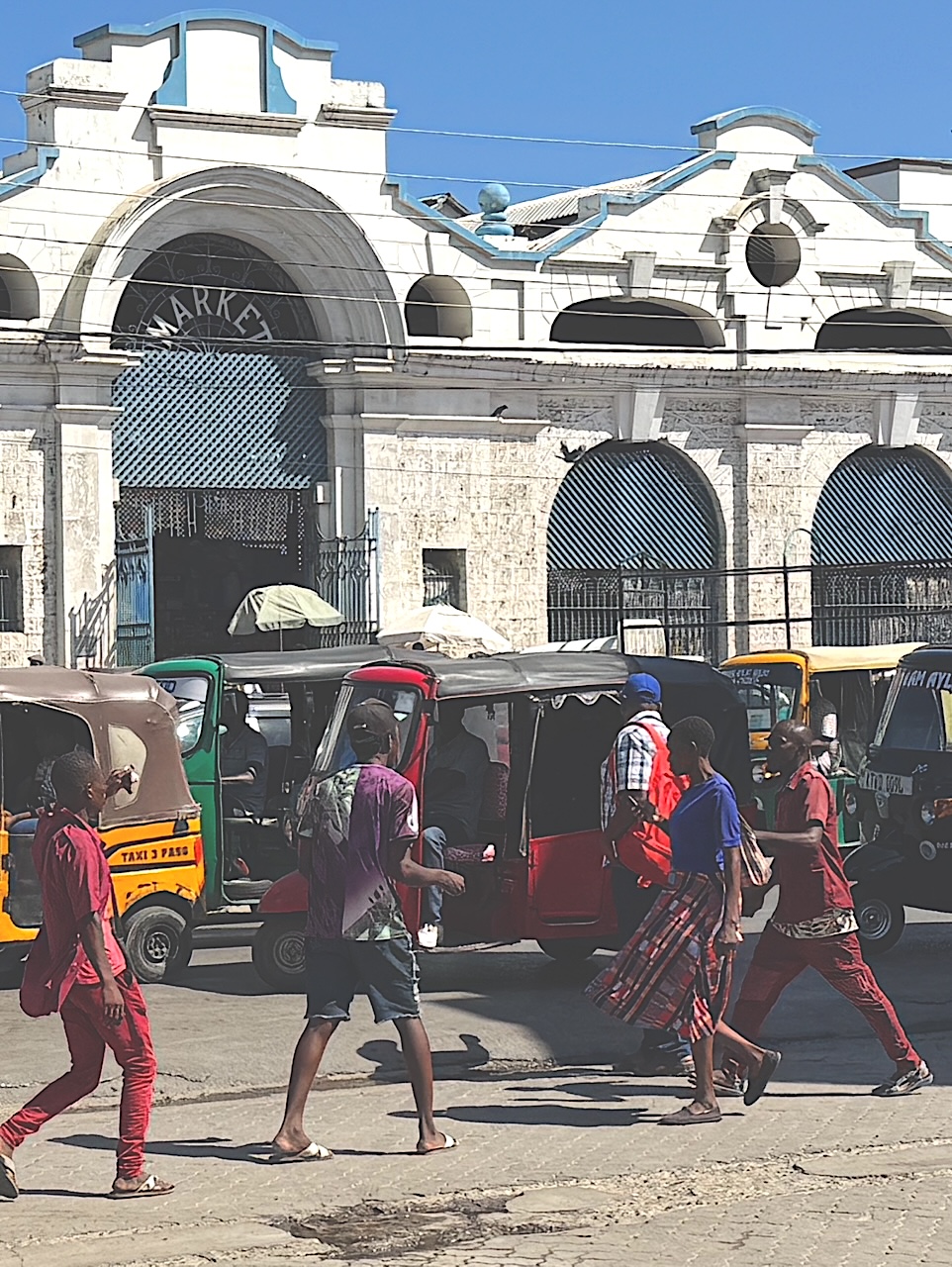
The traffic and challenge of crossing chaotic streets buzzing with motorbikes, tuk-tuks, cars, vans and trucks feels daunting. We’re getting old!
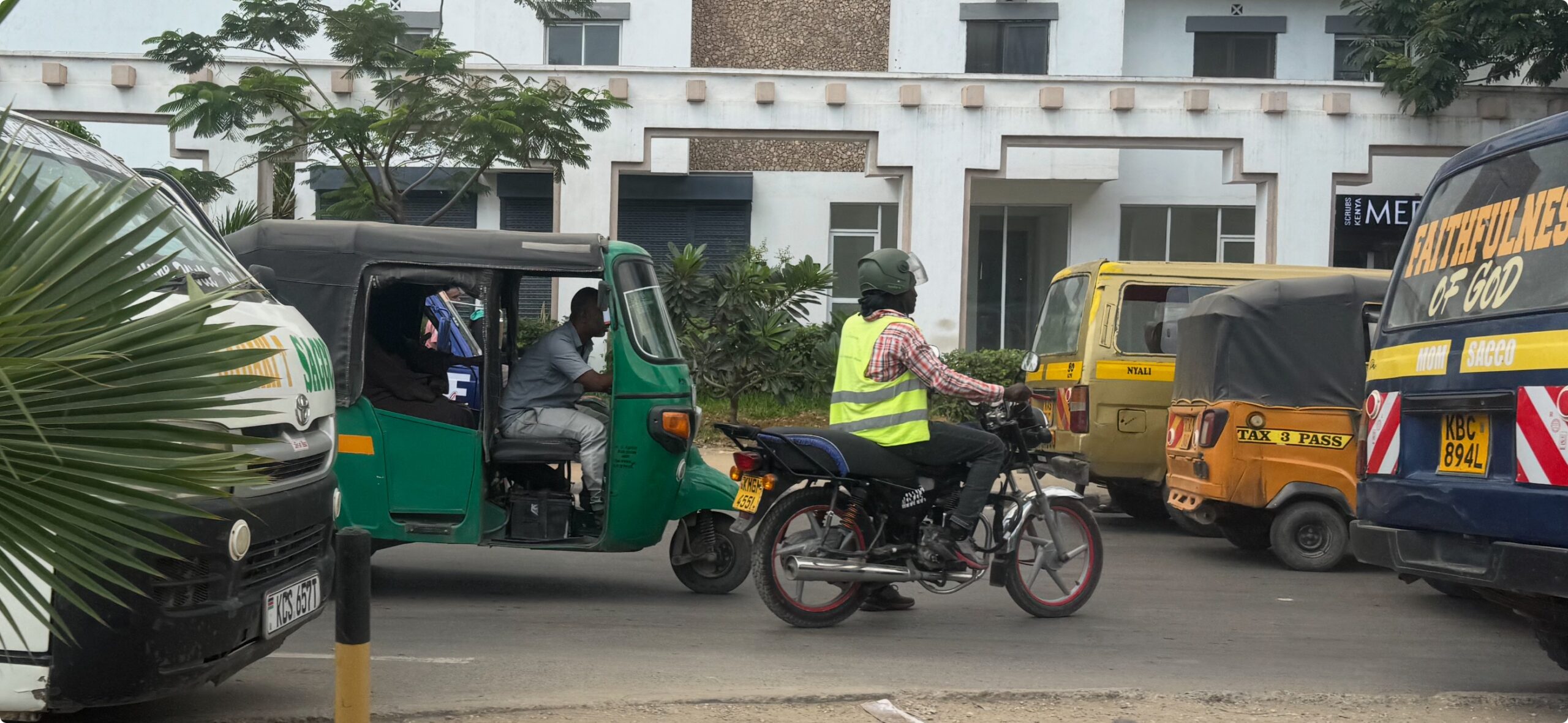
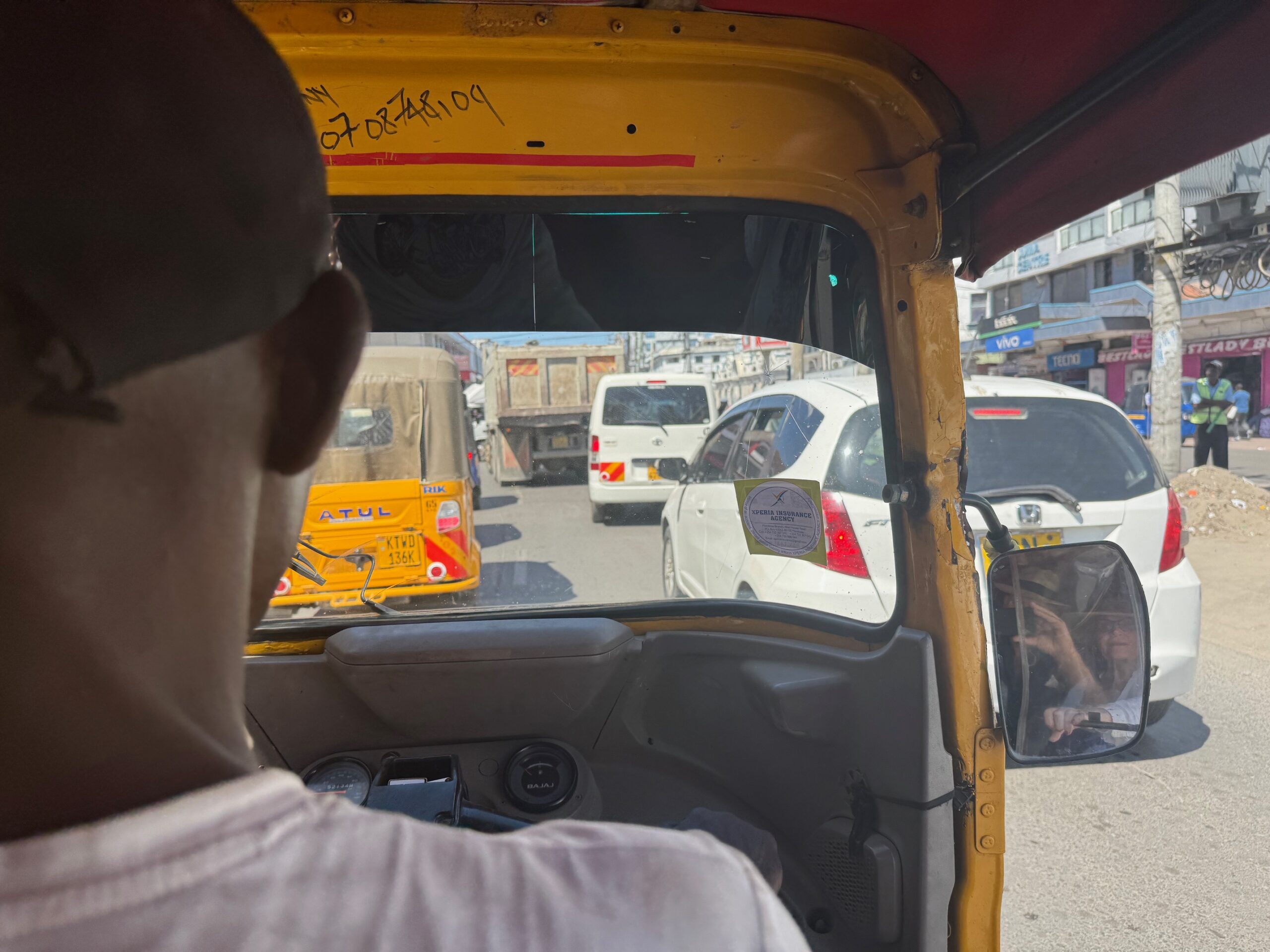
We just want to return to the air-conditioned comfort of our hotel. Which leads to the question: During Nonno’s time here were there electric fans? We google it and learn there was some electricity here and there. And the Japanese started mass producing electric fans in 1909…so…maybe…?
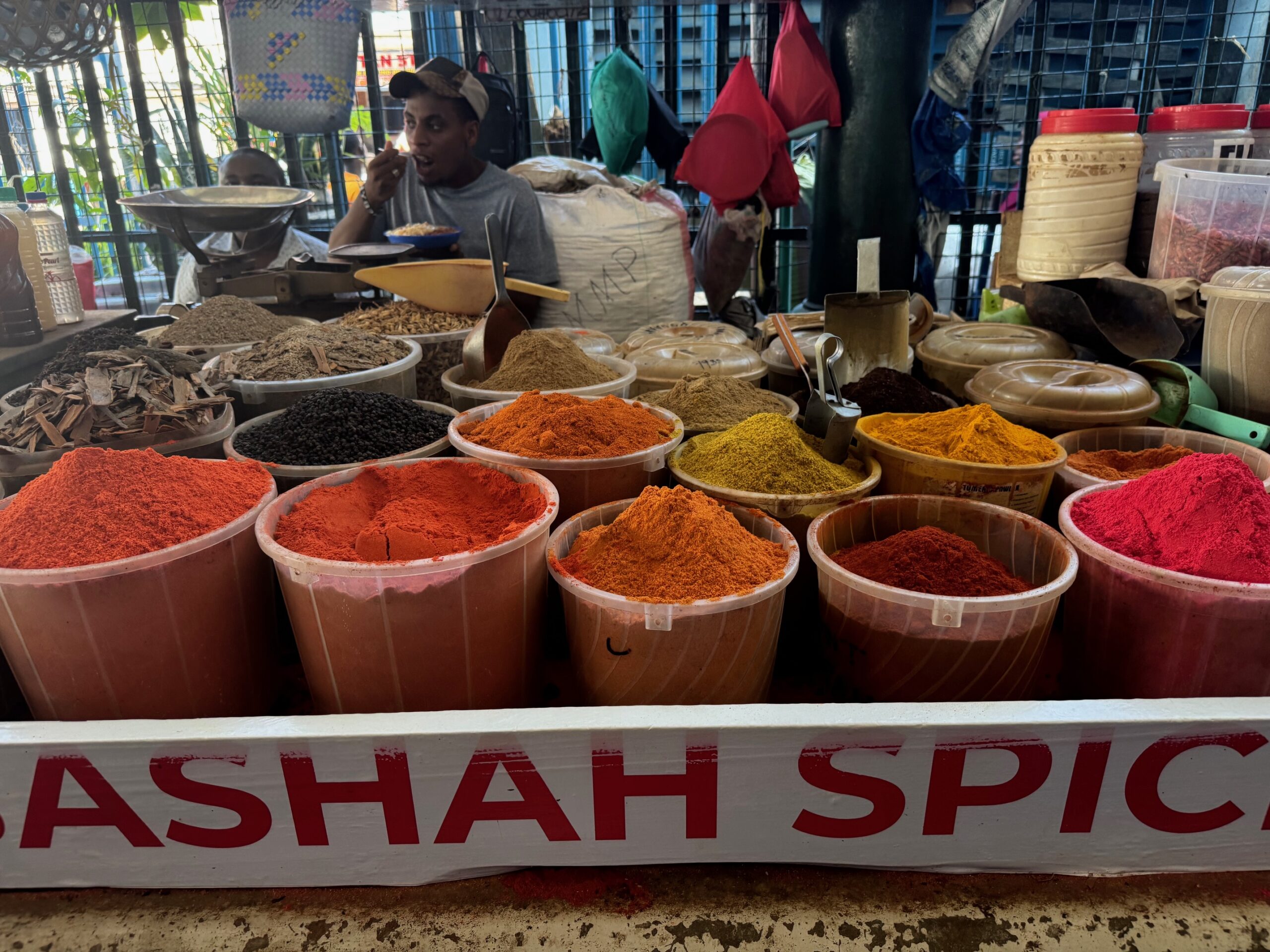
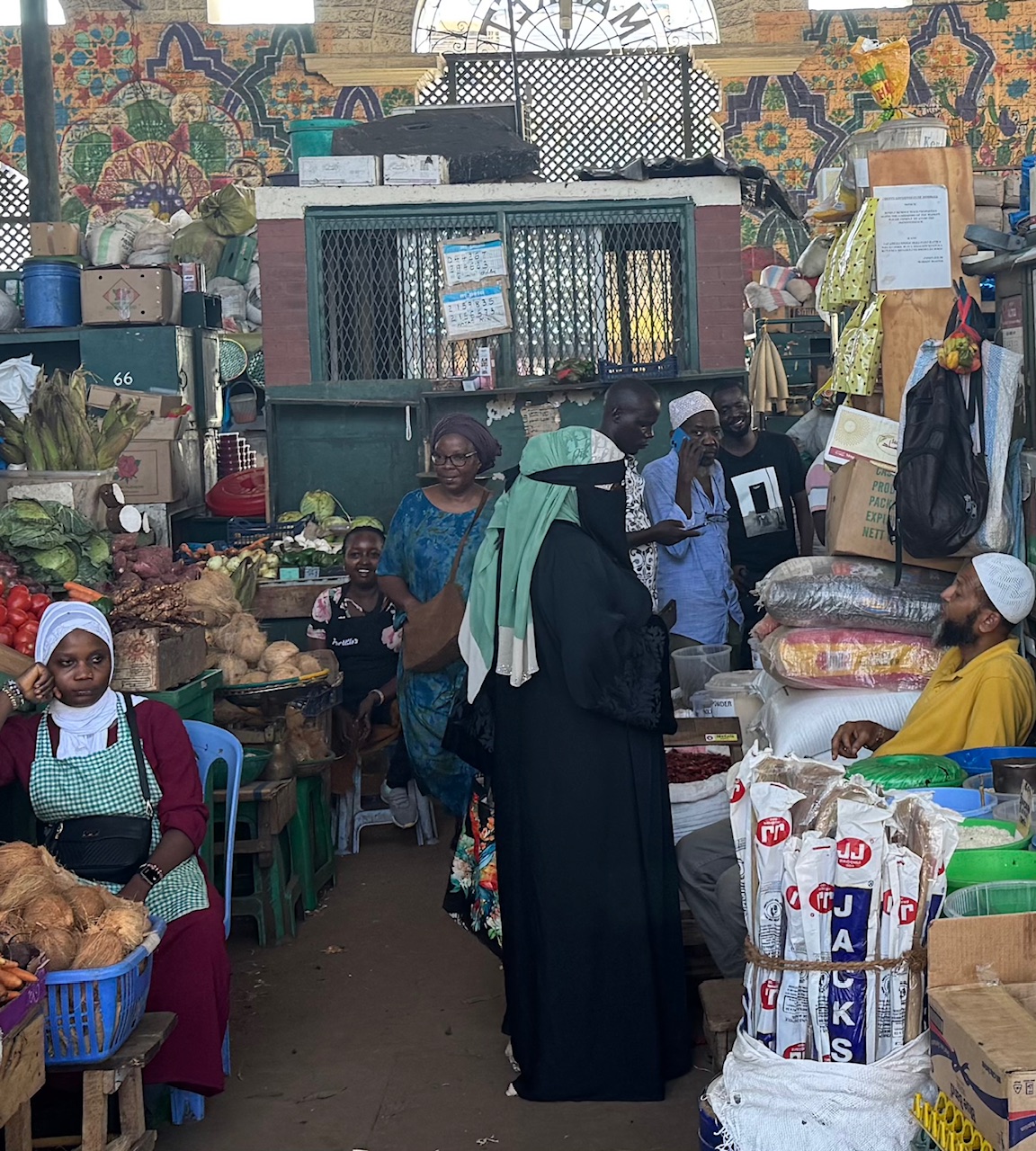
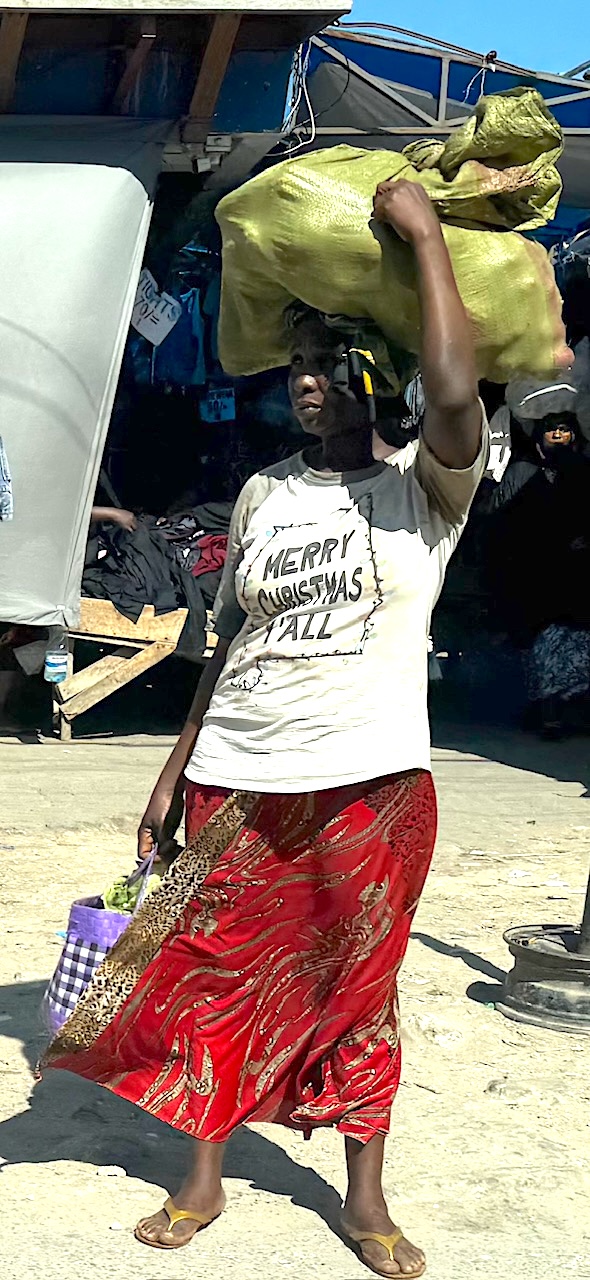
The Famous Spice Market. We’re Tourists After All
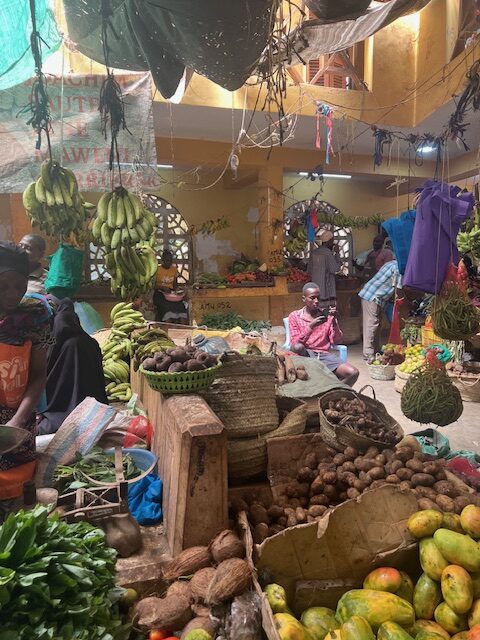
On our way back to our privileged luxury of cool air…we make the obligatory tourist stop at the famous spice market and after buying mango tea we pretty much wilt.
Reality Check #2:
Stephan and I are an odd couple. Stephan is 16 years younger than me. Together for almost 45 years, we forget just how odd we look together until we travel. Then we register the confusion, the curiosity that people express encountering us. We have lots of funny—and infuriating—stories about that over the years.
Here at our Mombasa hotel restaurant the breakfast chef has given Stephan a Swahili name: “Katanga,” the young one. Ha! We have forgotten the Swahili name I was given. Something like beautiful lady. The Kenyans we meet are mostly playful and welcoming and kind.
Good Bye Mombasa!
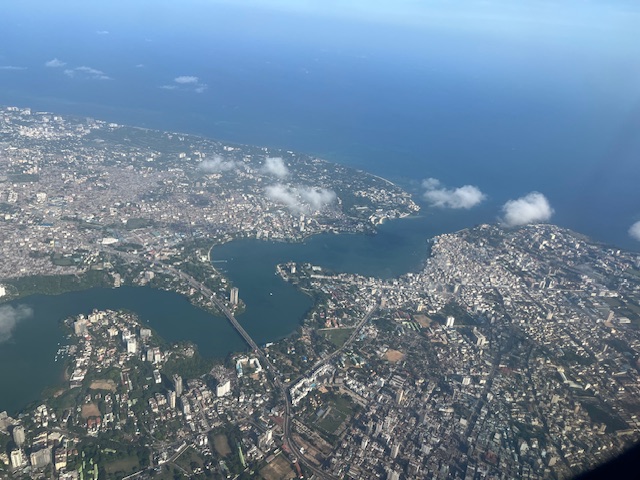
We haven’t learned much about this historic port city of the Swahili Coast that was displaced as the capital by Nairobi when the Brits built the famous railroad from Mombasa to Nairobi (and beyond to Uganda) in the last years of the 19th C. Railroads were big missions by the Brits in Africa, India and Canada to get the raw materials out…and manufactured goods in. It replaced a system of thousands of porters carrying huge loads on their heads back and forth between interior and coast. The first steamship on Lake Victoria was carried in parts by porters from the Coast!
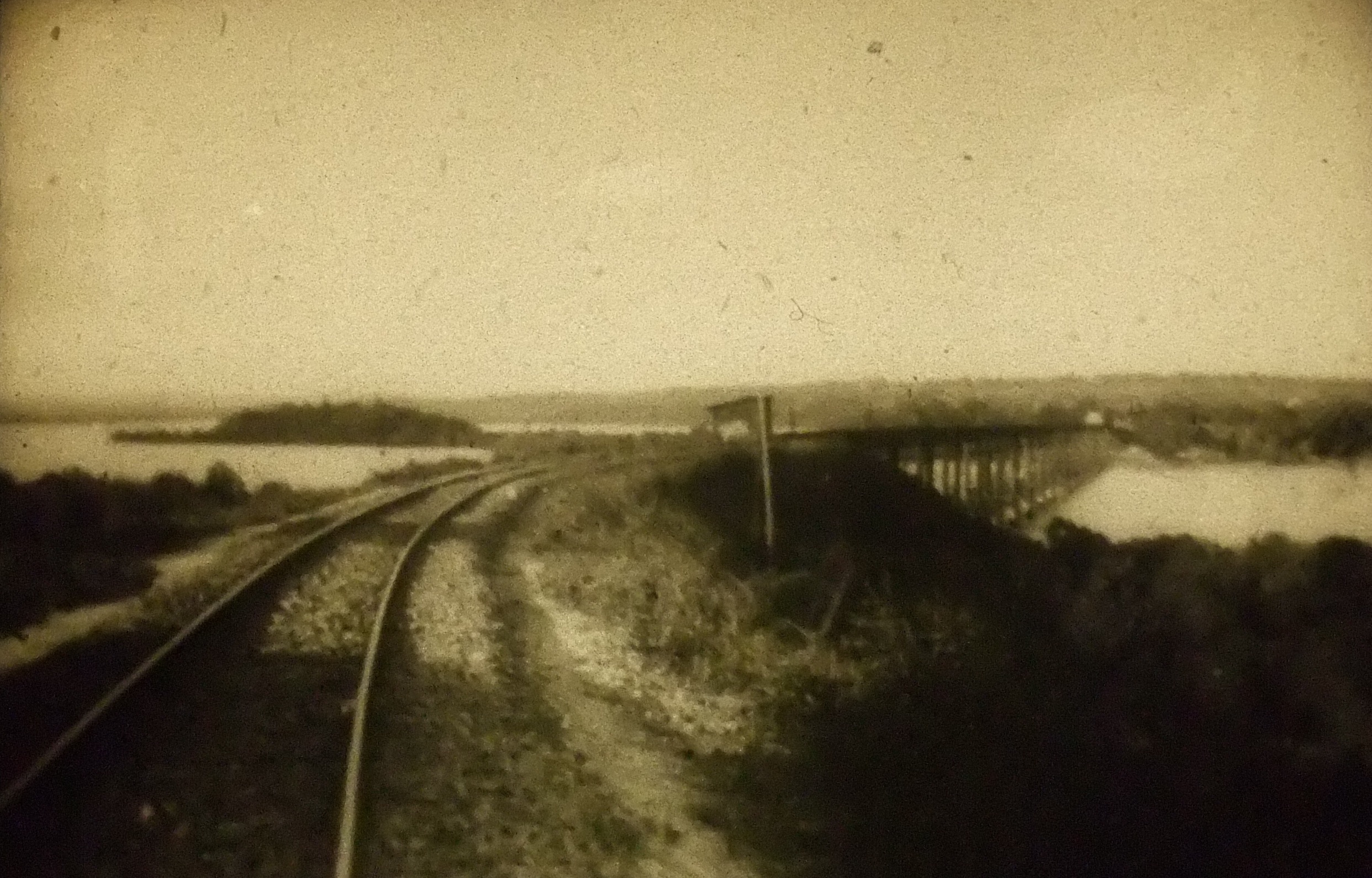
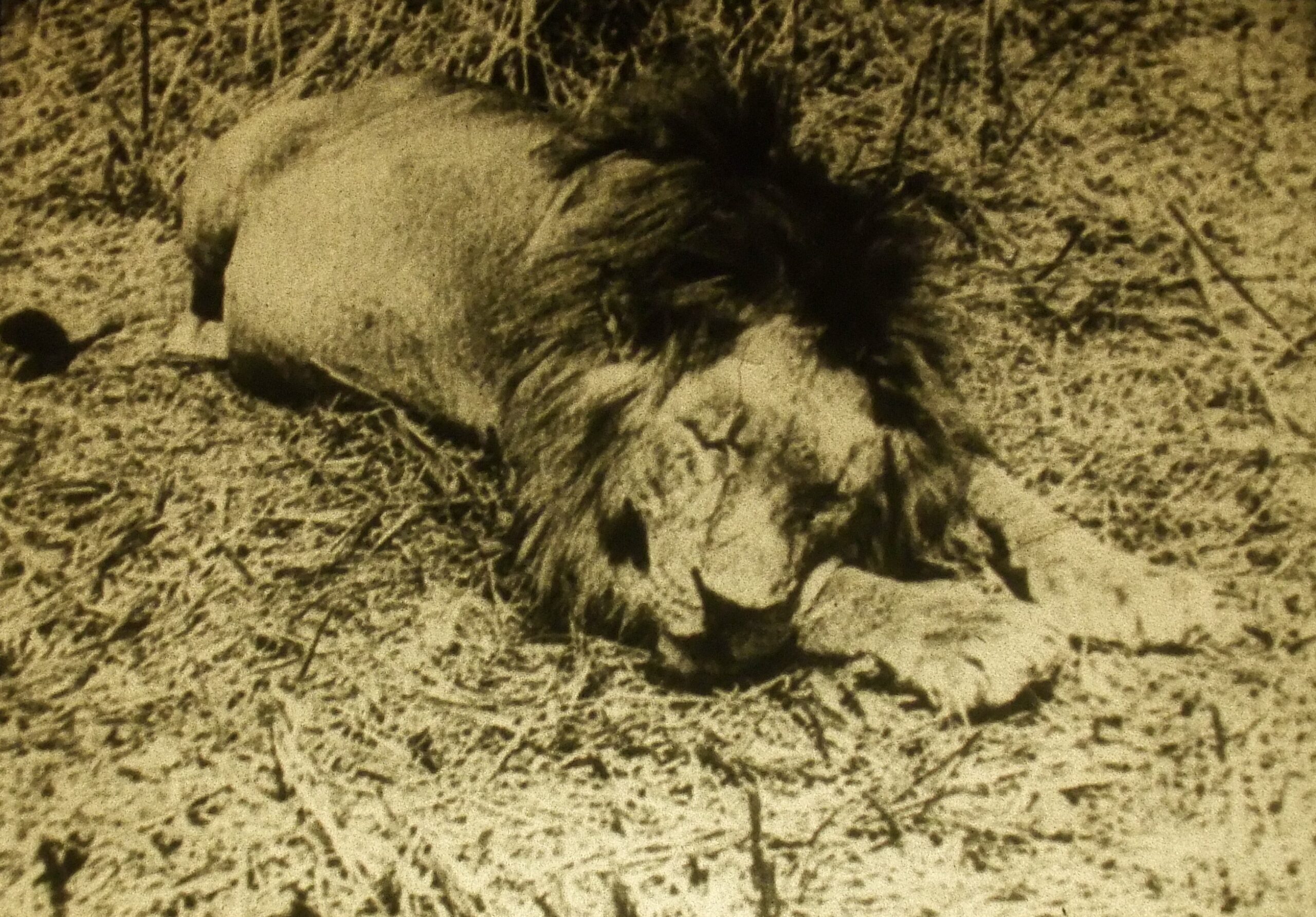
The Brits brought almost forty thousand Indian laborers to work in insane heat and dust and the most dangerous stretch of land where some two thousand were said to be eaten by lions in territory that today is the famous Tsavo National Park—a Safari destination for seeing “man-eating” lions.
The Mombasa to Uganda railway would have been key for Nonno to move out animal skins and pelts for his British bosses.
Next Stop Zanzibar!
Reality Check #Three
As we were beginning our travels there had been a highly disputed presidential election in Tanzania. We planned to visit Zanzibar and Dar Es Salaam on the mainland.
The sitting president, Samia Suluhu Hassan won by 97% but she was accused by Amnesty International of forced disappearances, false arrests, and repression—locking up opposition candidates before hand.
Violent demonstrations were met with military guns. The army was accused of killing hundreds. The government shut down the internet.
So we were following the news closely.
Would we be safe? What would happen if they closed down the internet while we were there? No cash, no food, no way to pay hotel, no assurances of our flight back to Nairobi. UK and US state department sites recommended tourists should make other plans.
But Kenyans we spoke with said things had calmed down a bit and we should continue.
Nonno’s photos in Zanzibar and Dar keep us focused.
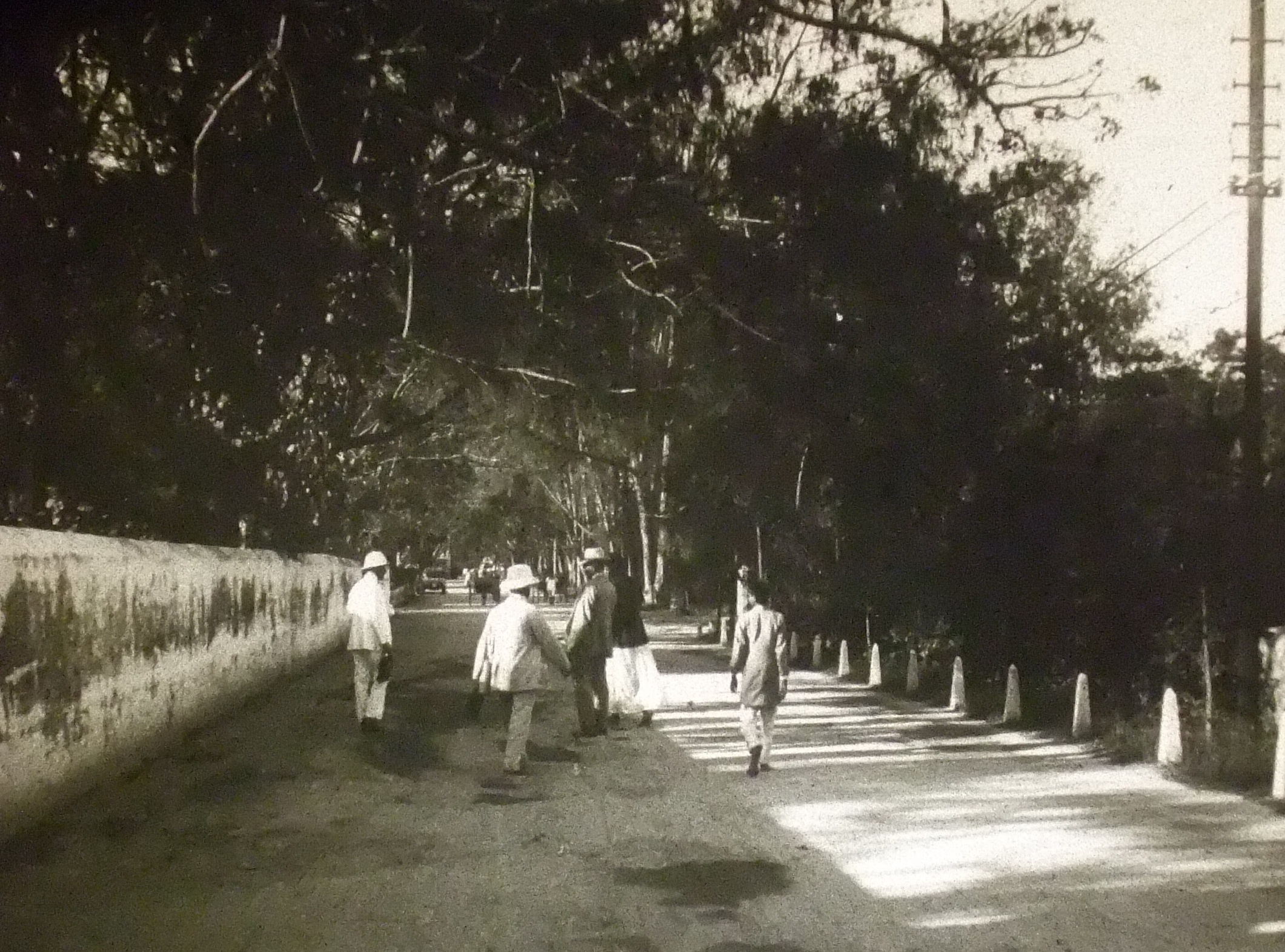
Well, this photo is only interesting to us because we drove along this very road on our way from the Zanzibar airport to our hotel in Old Stone Town! On the left is the fence in front of the palace (the same fence our taxi driver pointed out). We drove right by but only later realized we had this photo of that very road. On the right, take note—a pole with electrical lines in 1912 or 13 when this was taken!
Old Stone Town, Zanzibar City
Old Stone Town, sometimes referred to as the heart of Zanzibar is now a UNESCO World Heritage site, with its coral stone Arabic architecture, with Omani, Persian and Indian influences in design and traces of British and German buildings, narrow alleys reflecting its multi-cultural history.
From Omanis to Indians, Germans and Brits— all jockeyed for control here in a history that grew exceedingly complicated in the 19th century culminating in the Brits bombing the 16th (or was it the 17th?) Sultanate’s palace to force him to end the slave trade which flourished here in the 19th century along with spices.
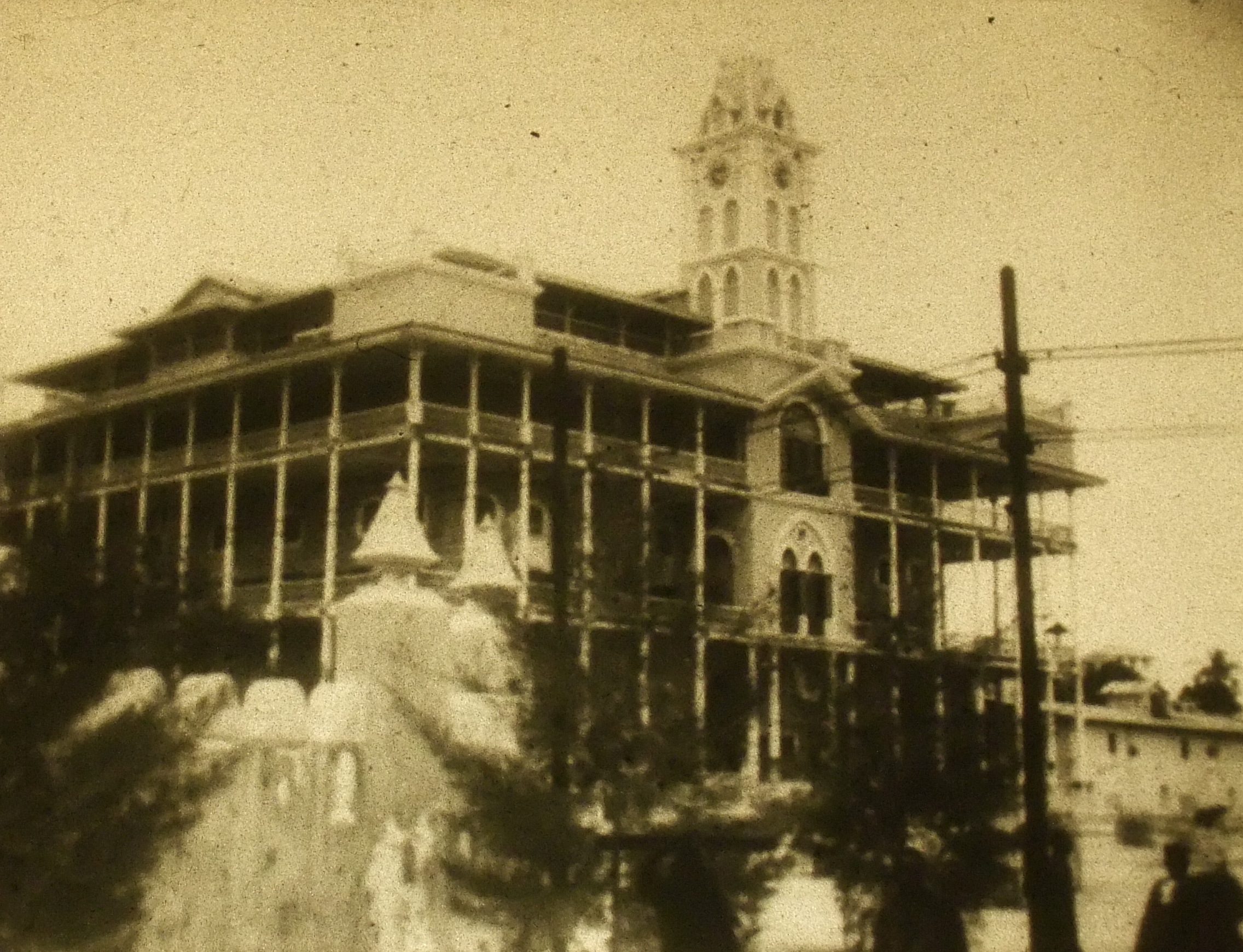
The House of Wonders (photographed by Nonno) built in 1883 by one of the last Sultans of Zanzibar for ceremonial purposes. It’s name derived from the fact it was the first building with electricity and an elevator on Zanzibar. It combined cast iron columns and Indian-Arabic crafted doors.
When Nonno took this photo in 1913, it was the tallest in Stone Town with its tower, but while it became a museum it is now closed. An expensive renovation project led to a collapse, the tower was removed and construction walls restricted visibility. So no photo by us.
The Scramble for Africa…
In the famous Berlin conference of 1885 known as the Scramble for Africa where European powers divided up the continent, Britain agreed that while it would control Mombasa, the coast and inland of what has become Kenya, the Germans would control Zanzibar and the mainland known then as Tanganyika. But then came WWI and the Omanis and Brits were back.
Today Stone Town thrives as a tourist sidebar for vacationers at beach resorts scattered throughout the island, archipelago and mainland.
We check into the Emerson-on-Hurumzi Hotel, in the center of Stone Town, an Arabic-style building with a dozen rooms. Now owned by a Frenchman.
Here’s the reception area of the hotel…
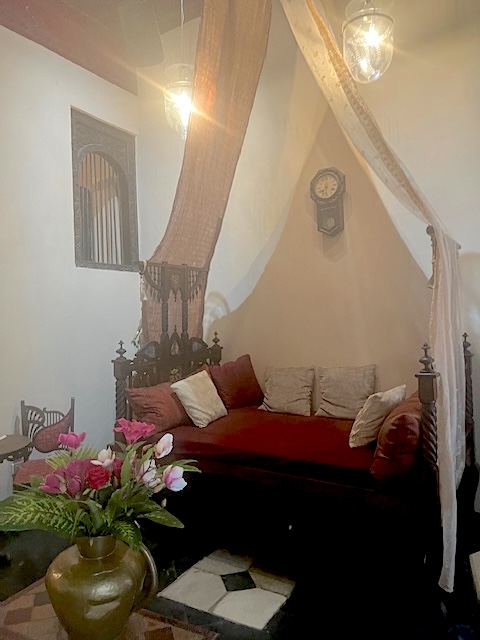
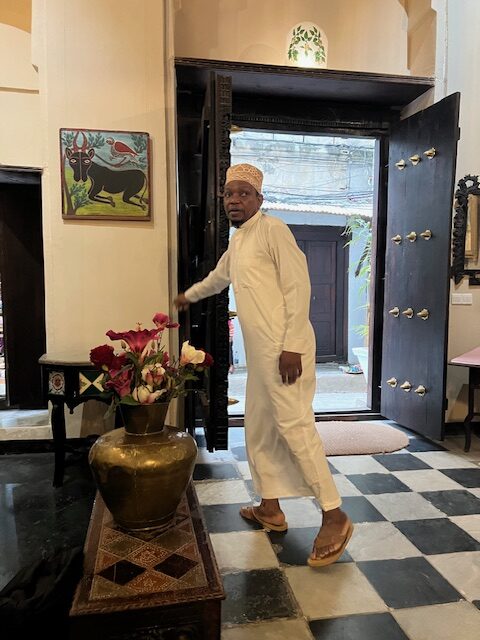
We climb 64 plus steep stairs to our room. Typical Arab style, high ceilings to deal with the heat.
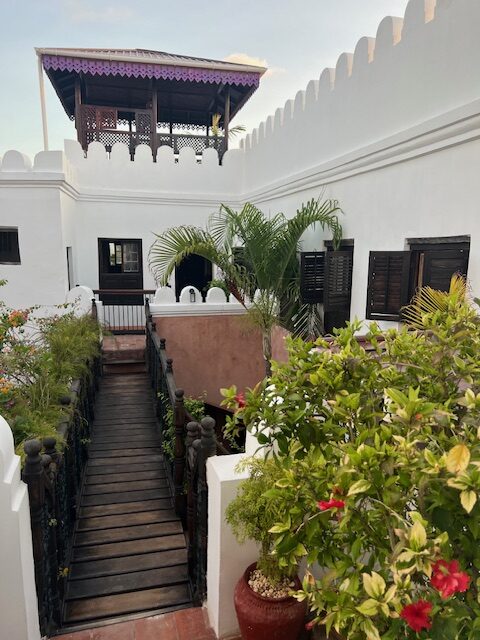
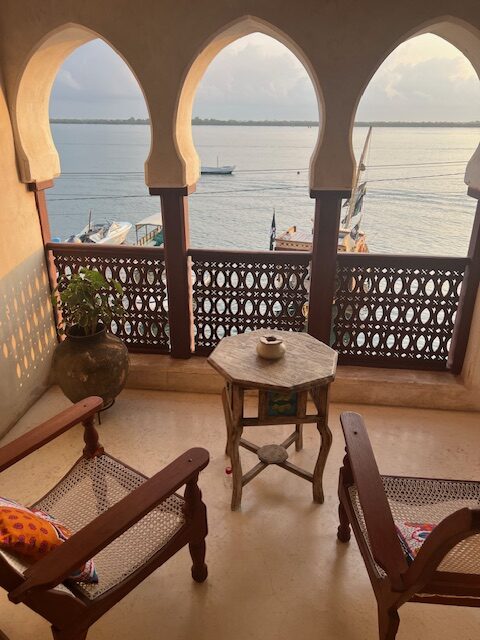
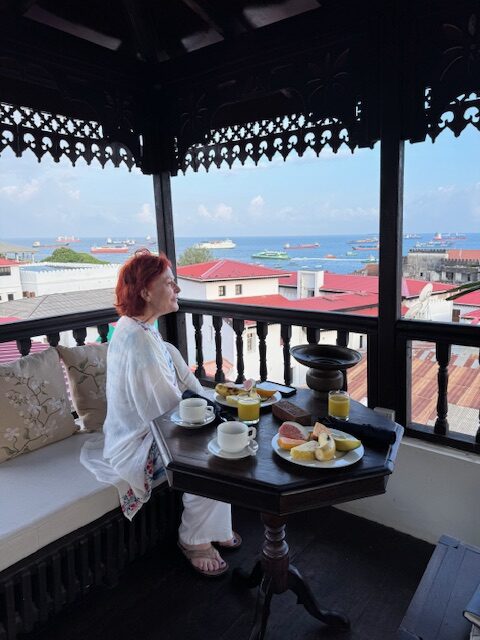
Then another fifteen very steep stairs up to our private terrace for breakfast and splendid vistas of Stone Town’s busy harbor.
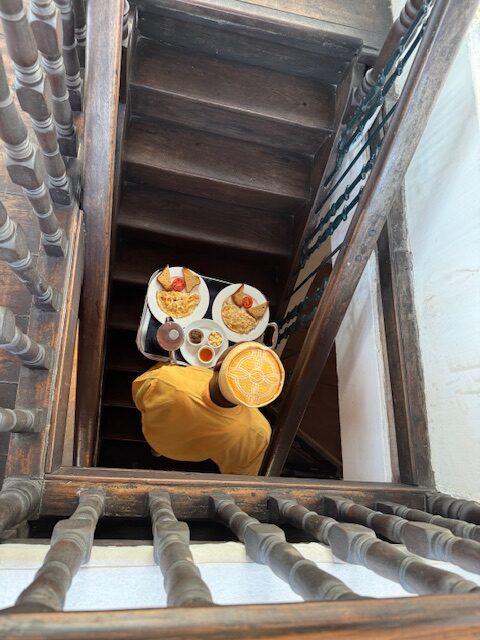
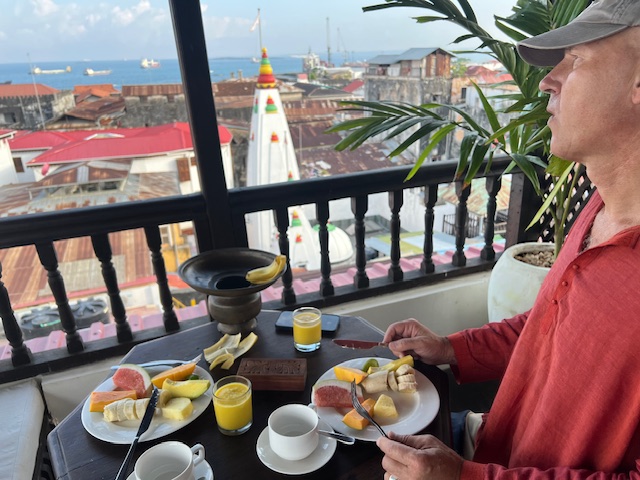
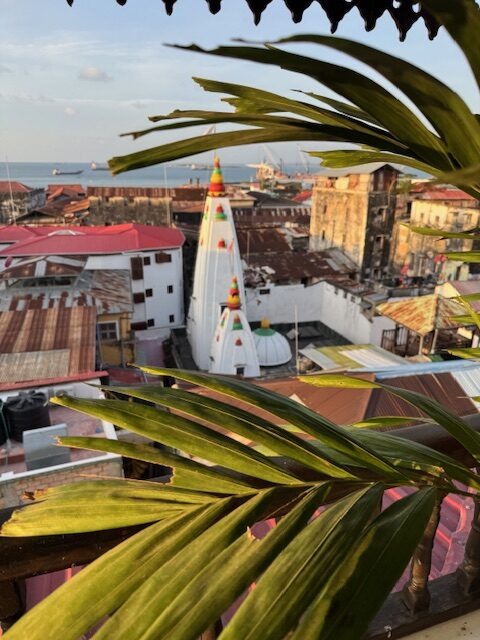
What’s that? A Hindu Temple! Cascades of bells sounded regularly to compete with all the calls to prayer from the surrounding mosques and churches.
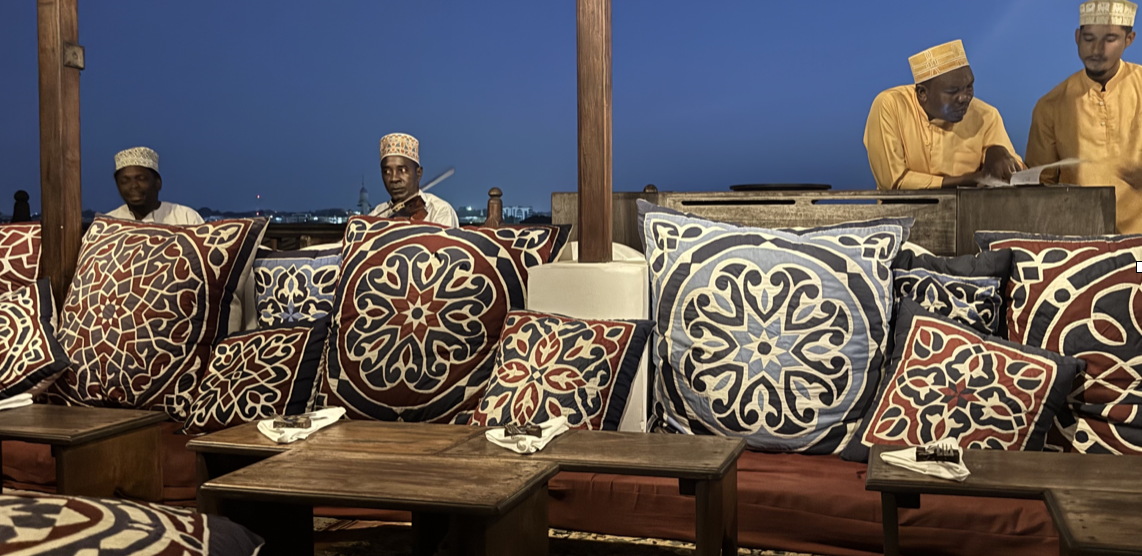
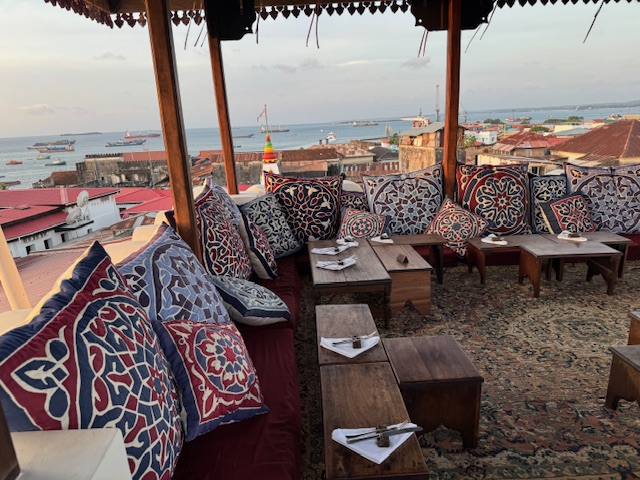
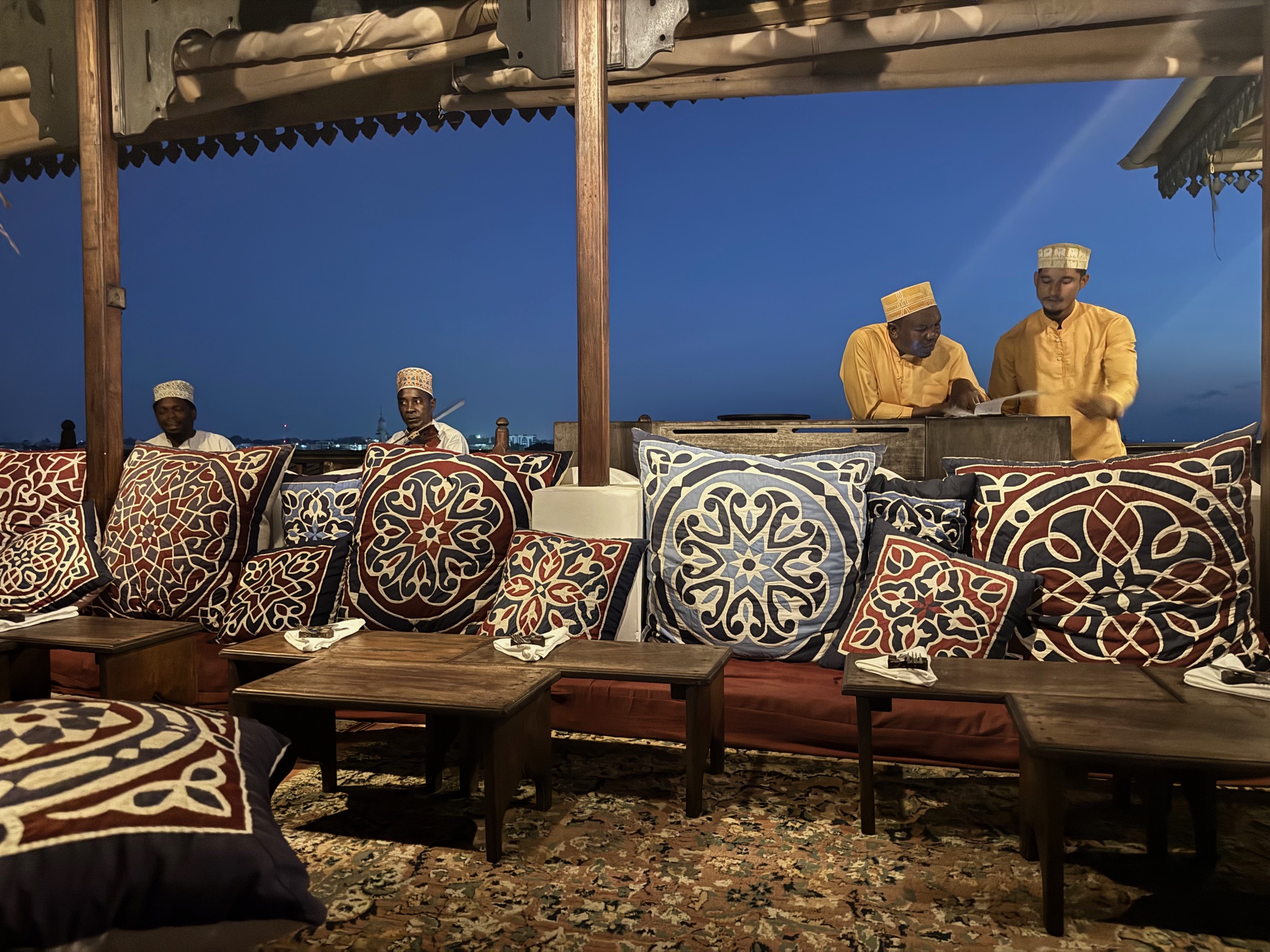
The hotel restaurant up even more stairs (!) with grand views of Stone Town and Harbor. If you can get beyond the psychedelic designs on the cushions!
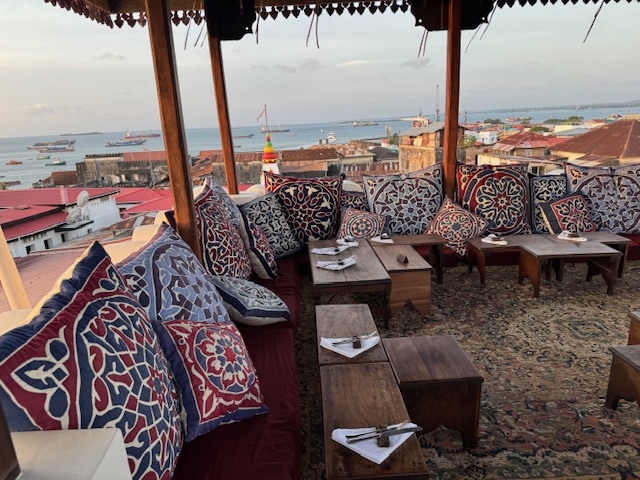
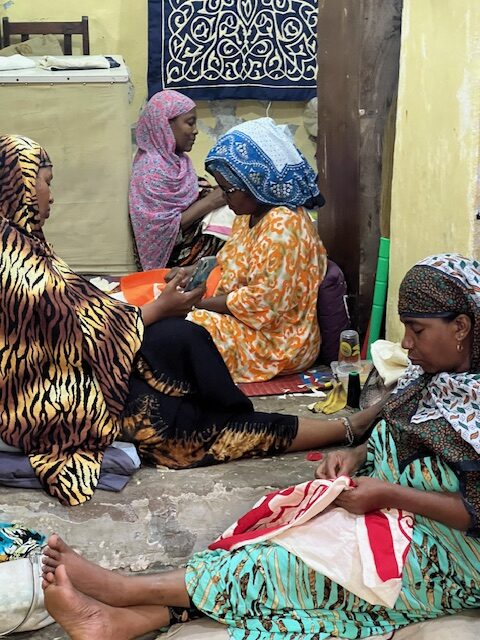
Out in the alleys we passed the shop where women were sewing them.
Architecture and Design: The Doors
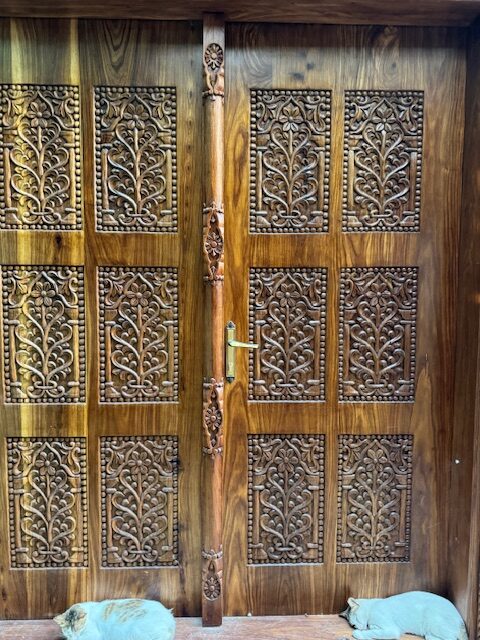
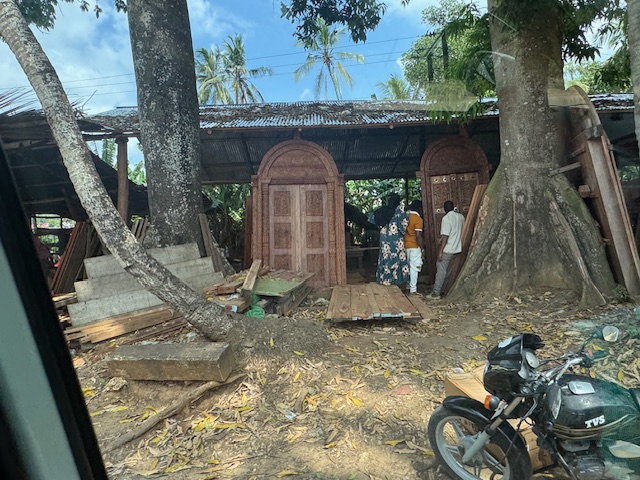
Starting in Old Town on Lamu Island we began photographing doors. Elaborately carved they are both art and architecture, signaling status, wealth and religious beliefs. An import from Gujarat and Cutch, India, Swahili artisans sculpted them from African Mahogany into distinct local styes such as Lamu, Omani and Zanzibar Town.
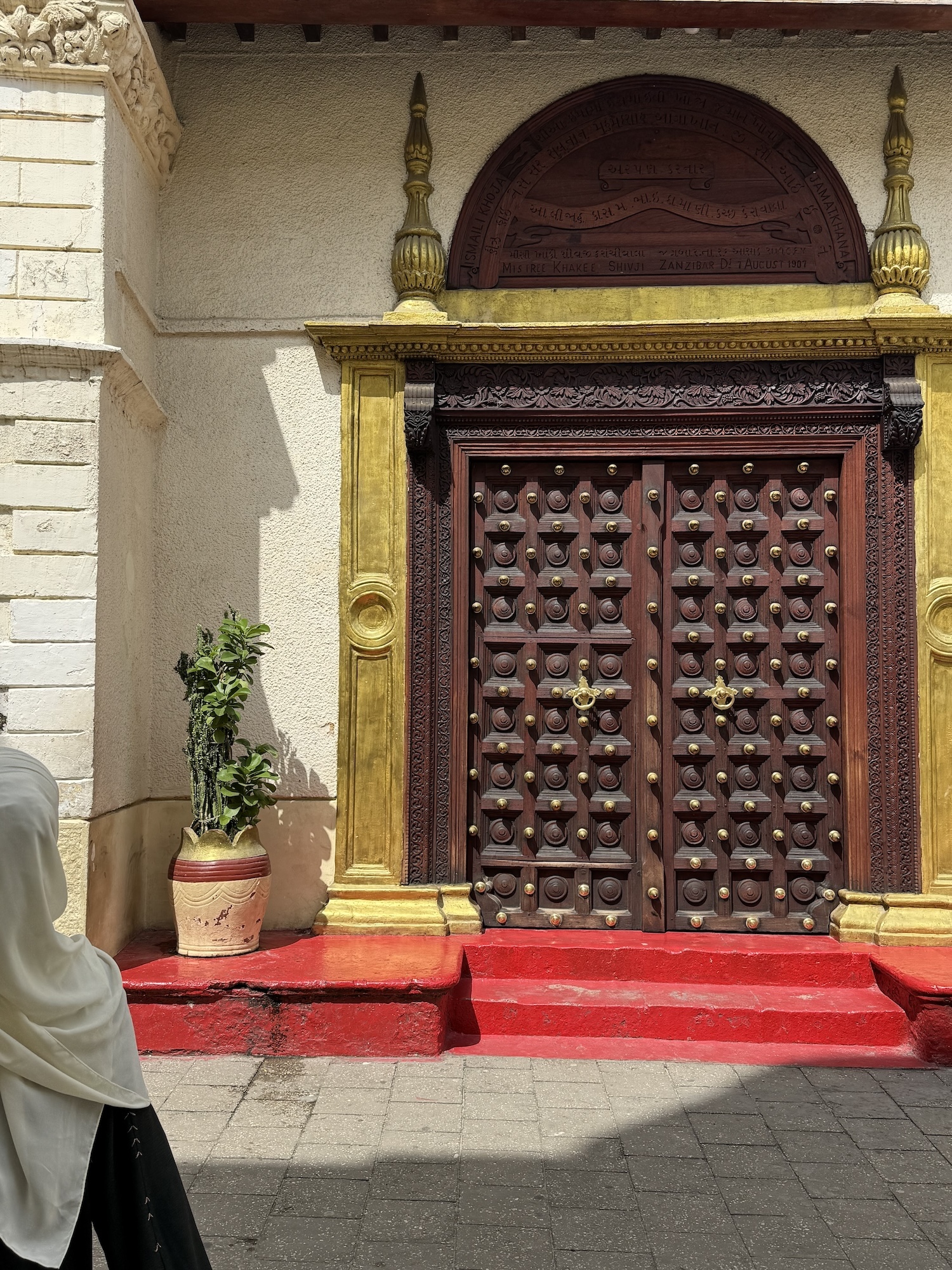
Beginning in the 1890s new Omani-Arab and Indo-Arab fusions emerged.
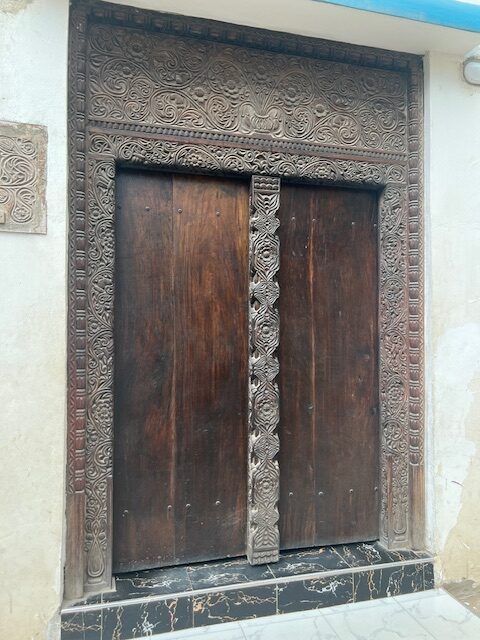
Door frame motifs use designs of chains to symbolize protection, Quoranic inscriptions for faith, and floral rosettes for landownership.
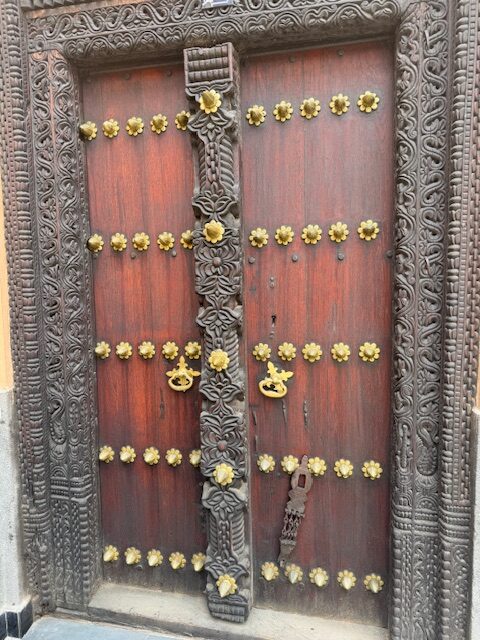
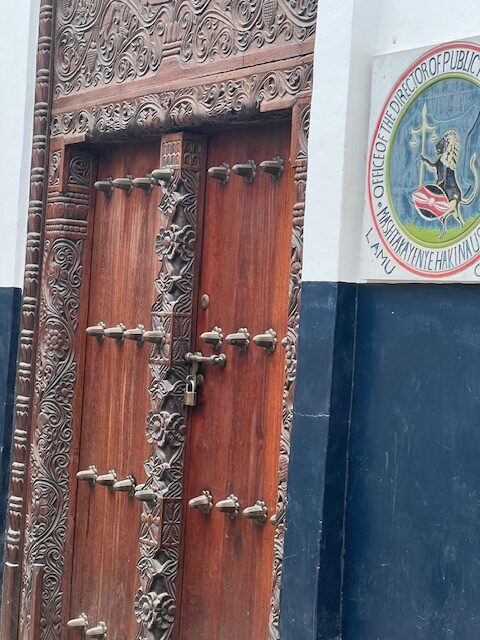
The corbels — spikes— are designed to protect against war elephants breaking down your door. A decidedly Indian tradition.
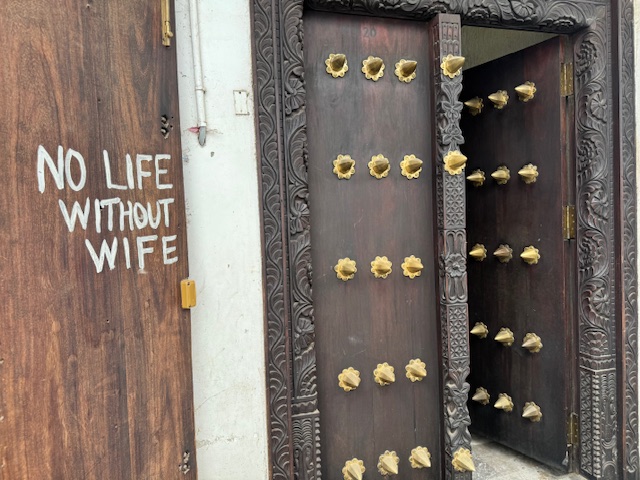
Second Wives
No Life Without Wife, reminds us that we had two enlightening conversations with local men about second wives.
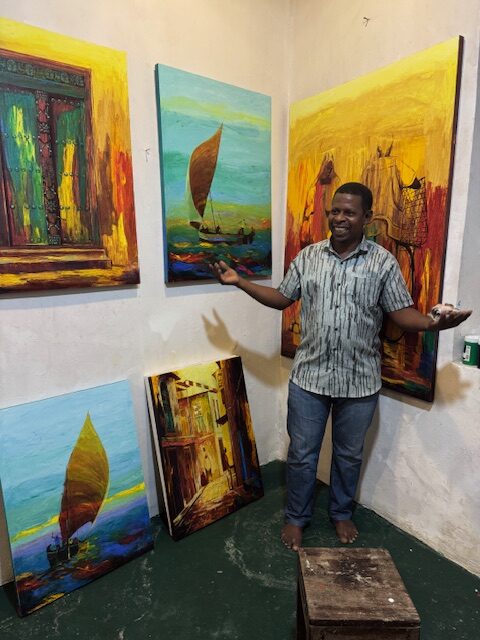
The first, a tourist artist, Ramadan, with a studio on one of the main alleys, complained that after he took on a second wife, his first wife decided to go back to school, get a degree and a good job and divorced him. It seems she may have left him to raise their kids with the second wife. He seemed unhappy about that but smiled to promote his art!
Our other conversation was with a driver, Achbar, who took us out to find a local beach one day. He admitted that he once had “a serious plan” to get a second wife, but somehow that plan didn’t come to fruition. All about money.
But he also admitted that the problem with second wives—which the Imams are also concerned about these days—is the unhappiness, the jealousy, the bickering, the competition for attention. And if he had to work a second job to afford a second wife, he would have little time to divide between two families. He still felt unhappy because his “plan” didn’t work out.
Of course, Gail was completely unsympathetic and went into a rather restrained diatribe about women’s rights and patriarchy. Stephan invested time arguing for a good relationship instead of a second wife.
That night, Stephan began getting telephone messages from the driver’s number, saying “I want to talk to you about something” although it was in a different voice, not the driver’s. Could it be the Imam wanting to straighten us out? We had exhausted our thoughts on the subject. Or was he concerned or curious about the relationship between Stephan and me? Should we have called him back?
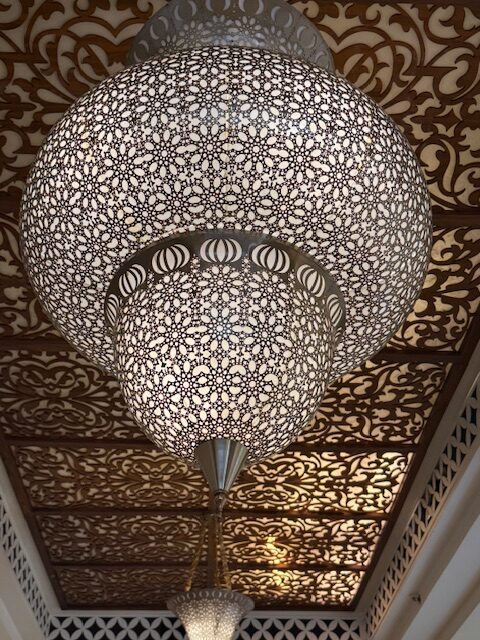
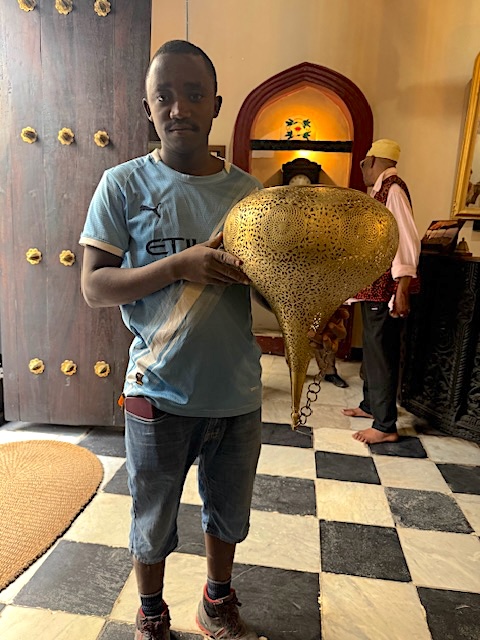
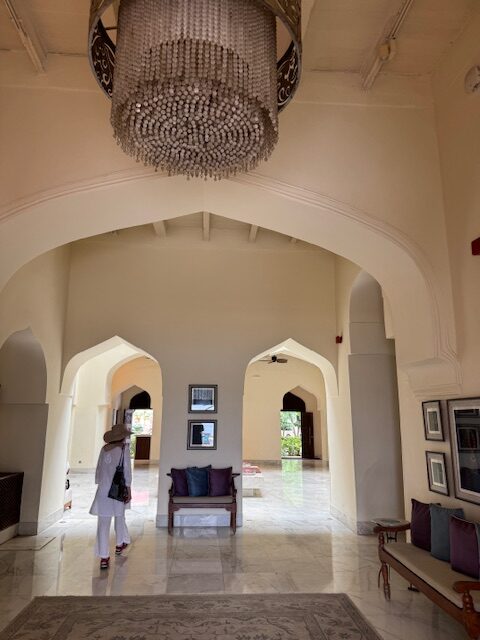
Back to less controversial subjects—architecture and design. This Persian-Swahili crafted lamp/chandelier was part of the extraordinary design of the Park Hyatt Hotel on the waterfront in Stone Town. Worth visiting to savor the craftsmanship.
Then one day a magnificent light fixture showed up in our hotel lobby as they were renovating.
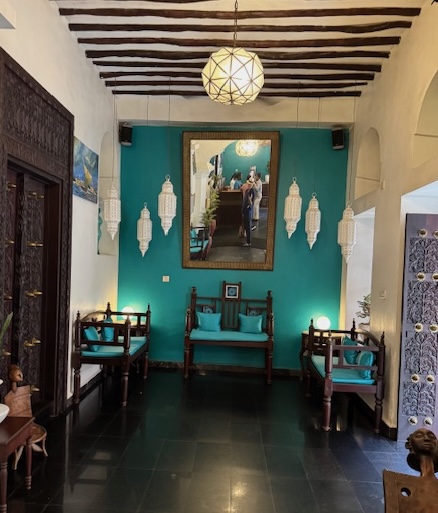
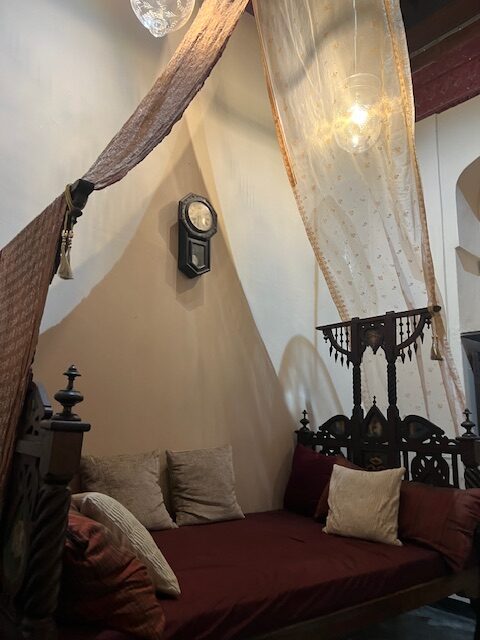
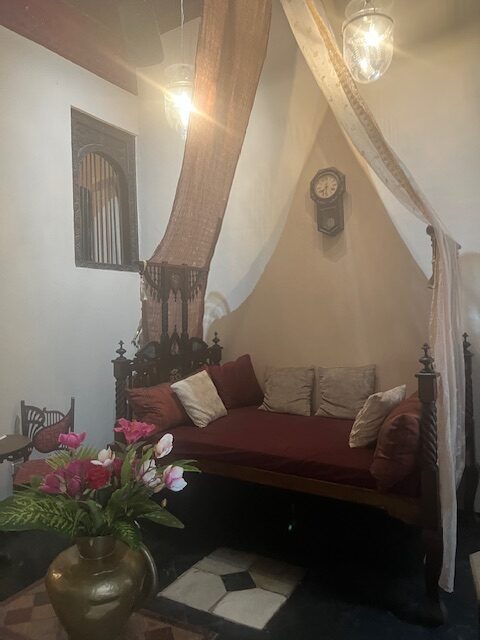
Another space in a small hotel lobby caught our eye: Indian, Arabic, Persian, African.
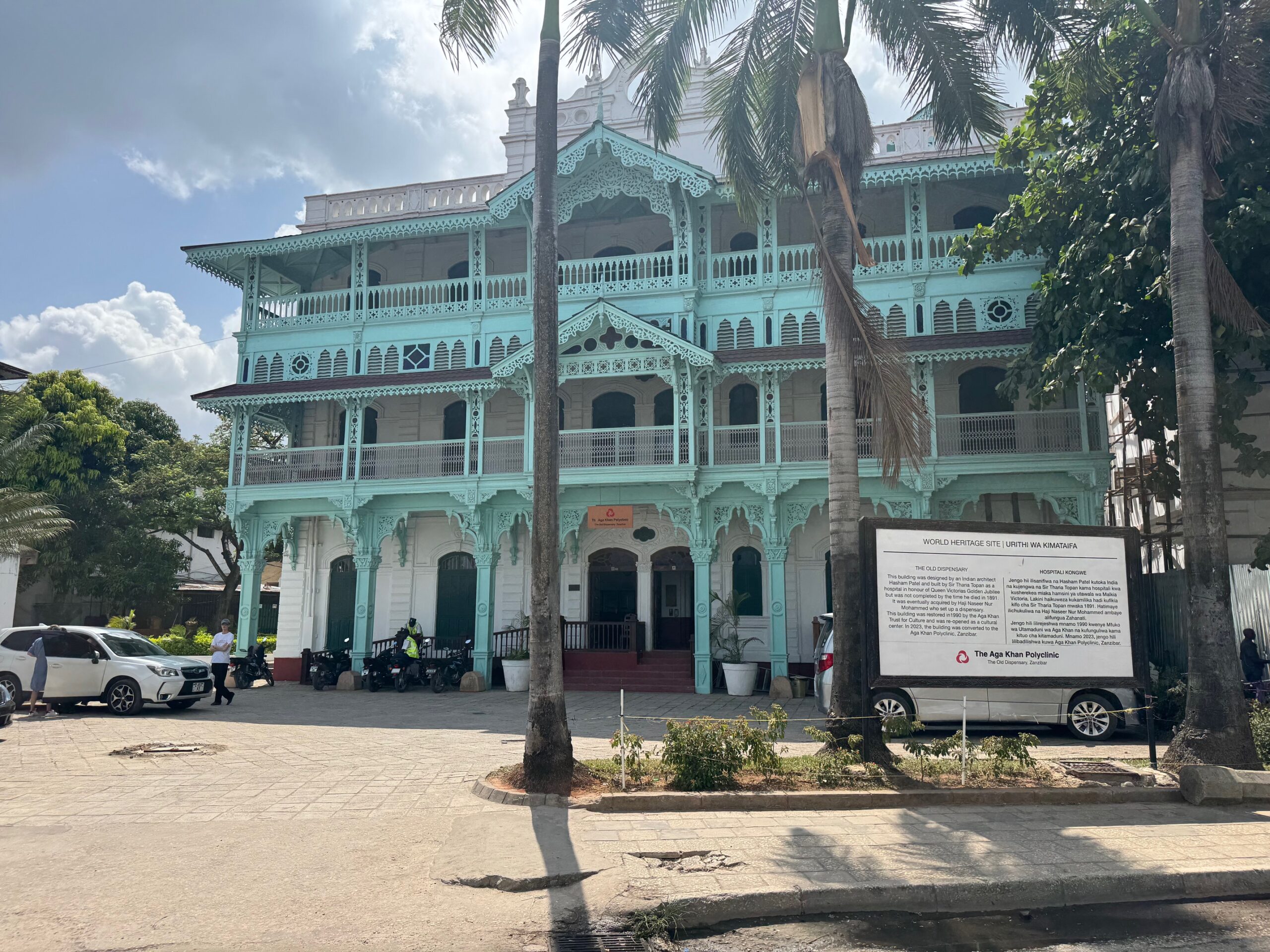
We headed off to see The Old Dispensary, a gorgeous 1894 gingerbread building, constructed as a medical dispensary and apartments by Indian owners. Made from local coral and limestone bricks, carved wood with stained glass elements.
During the Zanzibar Revolution in 1964, the Indian tenants fled with a mass evacuation of Indians from Zanzibar. Come again?
We had forgotten that the Zanzibar Revolution of 1964 features in Abdulrazak Gurnah’s novels! His stories steeped in exile, longing, displacement, and colonialism start creeping back into our consciousness. Novels we read after he won the Nobel prize for literature in 2021: Paradise, By the Sea and Desertion among others.
From Arabic Yemeni ancestors, Gurnah was born in Zanzibar during the Sultan’s dominance, with the overlay of British colonialism and ancestral memories of German occupation. Then came the violent African rebellion against Arabic and Indian dominance on Zanzibar during the battle for independence in 1964 when Zanzibar joined with Tanganyika to create the new country. Tanzania.
Estimates vary widely about casualties, but anywhere from 5,000 to 10,000 Arabs were killed. One scholar estimated that one quarter of the Arab population disappeared by violence or exile.
In 1968, at the age of 20, Gurnah fled into exile to London after the massacres. His writings are saturated with this history.
We returned to Nonno’s photos of buildings:
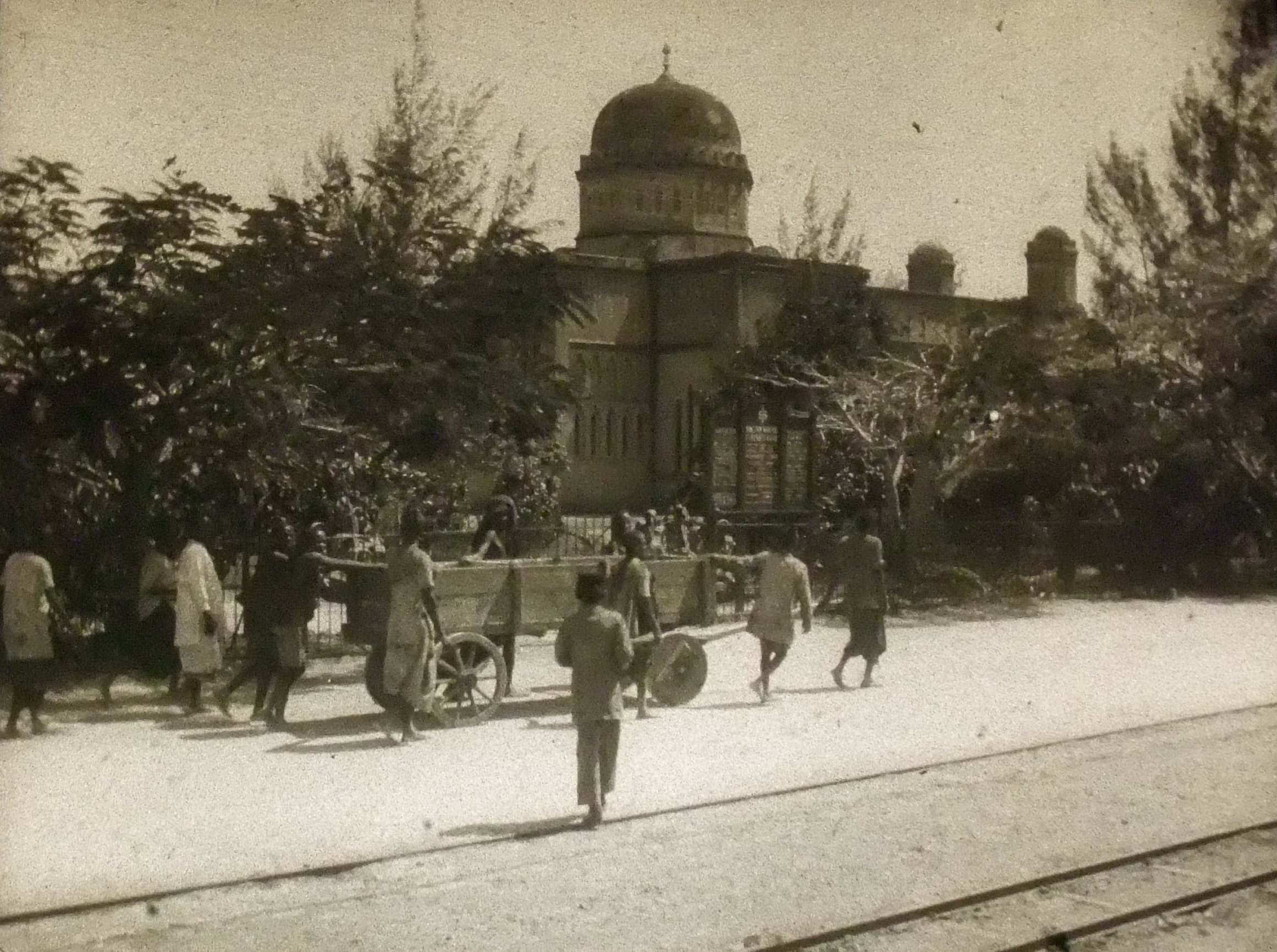
A number of buildings that Nonno documented were currently under renovation and invisible behind newer buildings or protective construction walls and guards. We thought we might have identified this one. But were still uncertain…
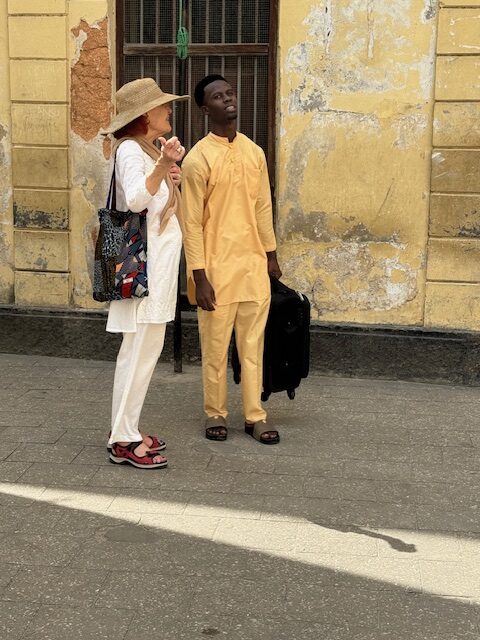
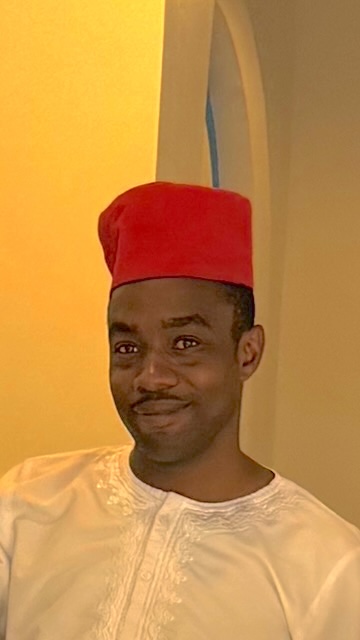
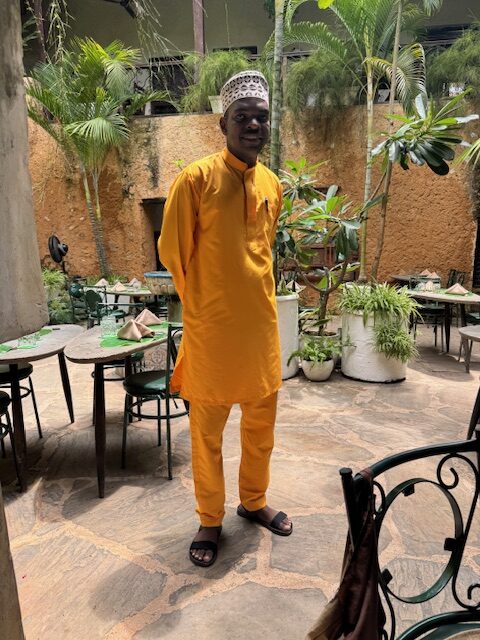
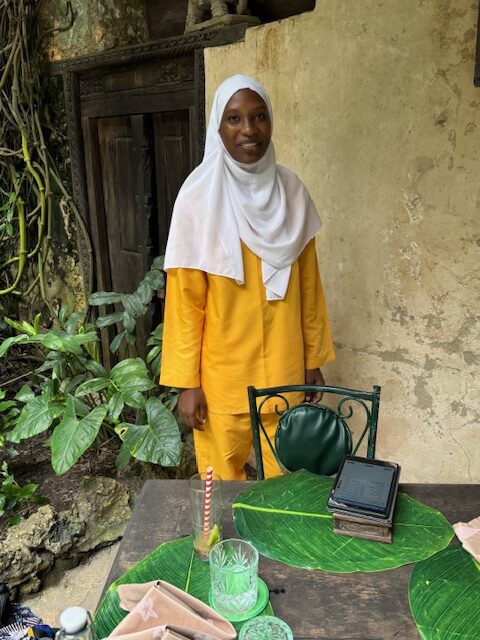
We were also constantly being distracted by the beauty and handsomeness of the men and women working at our hotel and in restaurants and their costumes.
Here is Omar.
And Farid at the Secret Garden restaurant at a sister hotel close by.
His co-worker Malika, who comes from the He-He (and speaks He-He) , a tribe from the southern Tanzania mainland.
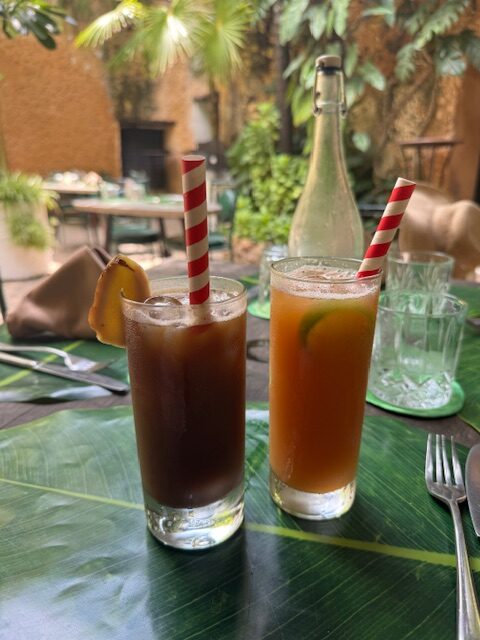
Okay, okay. The menu included: Coconut seafood or vegetable curry; Black pepper tuna; prawns; squid; spiced fish cake; cardamon rice. And the drinks? Ginger-Lime Iced tea, and tamarind-ginger. We’re trying to repress the social media tendency to photograph every food plate!
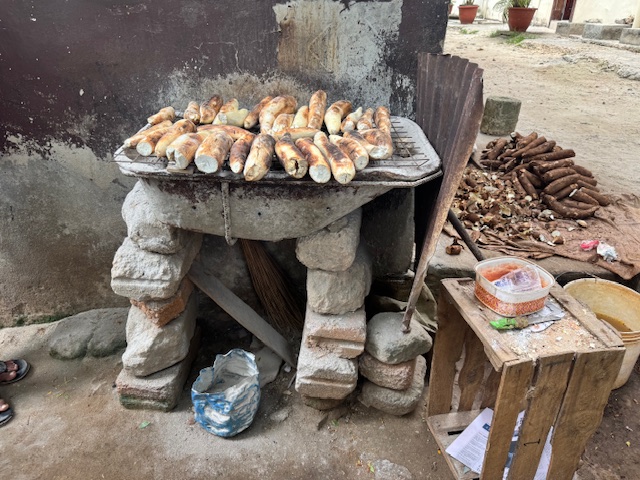
We are, of course, the privileged ones. There was also street food: cassava roasting! Very popular in Zanzibar. I hadn’t seen cassava root since doing documentry work in Haiti in 1978!
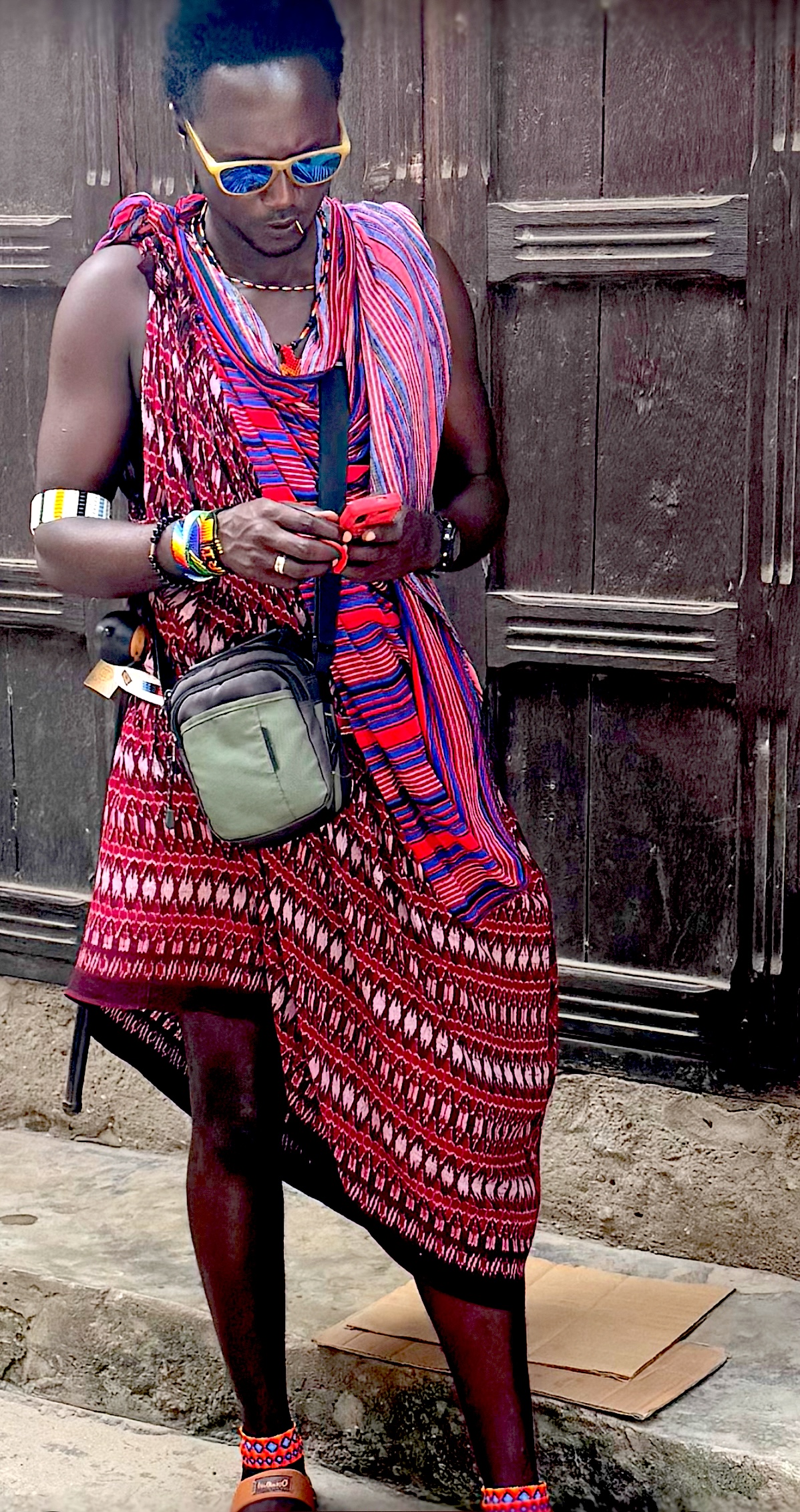
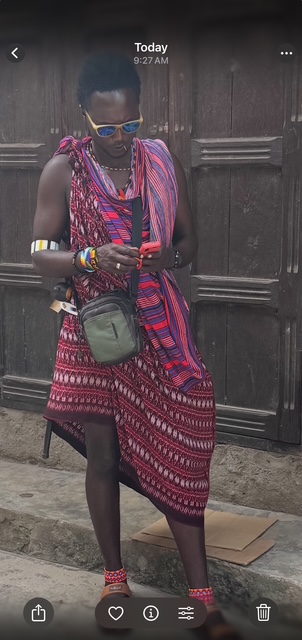
Back to men’s fashions:
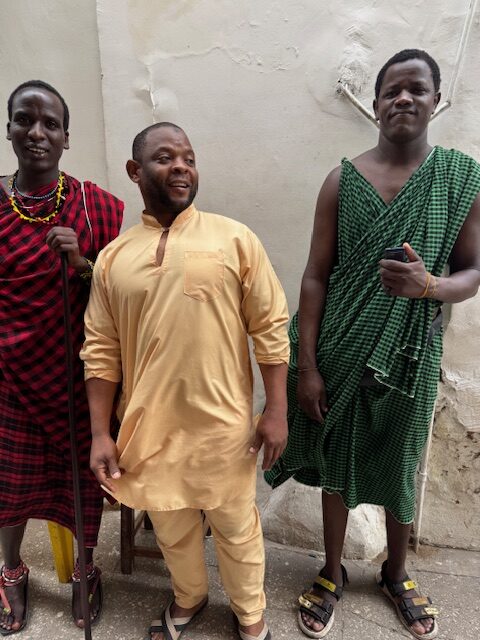
Ahmed from our hotel with two Maasai tourist salesmen who were identifiable everywhere on the coast by their iconic red robes.
The women who worked maintaining cleanliness and order in our hotel:
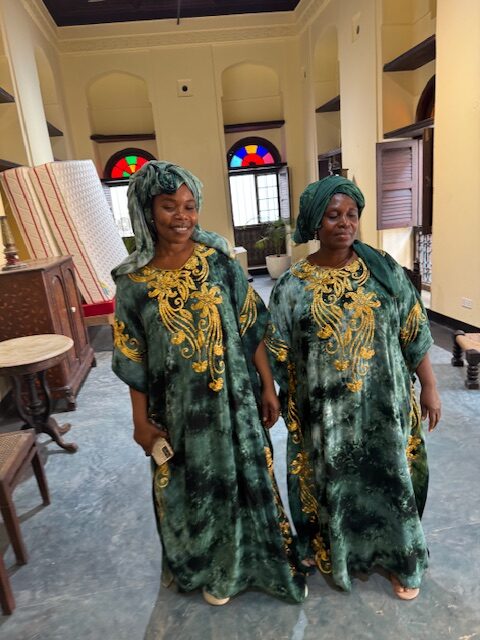
And more beautiful floating swans…would Edward Said accuse us of Orientalism? Not enough space here to dissect that but it’s an important question for us to ponder.
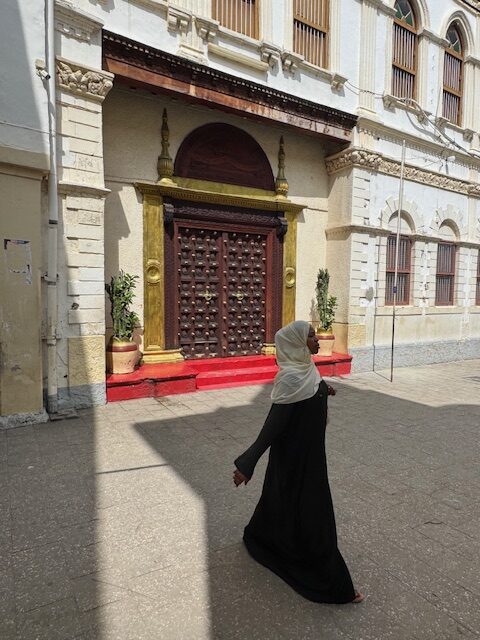
Then there’s the story of Princess Salme!
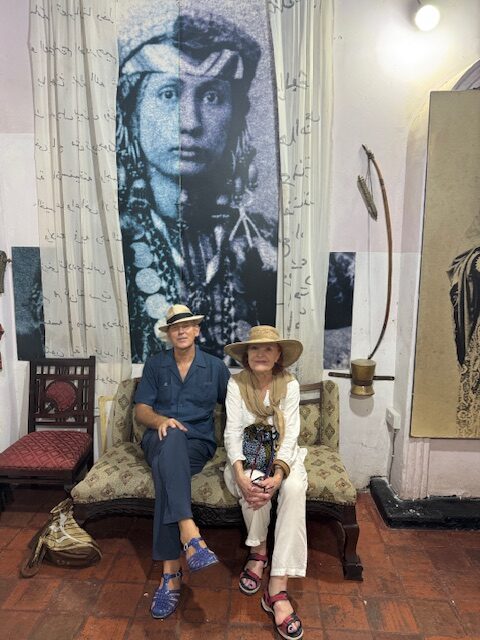
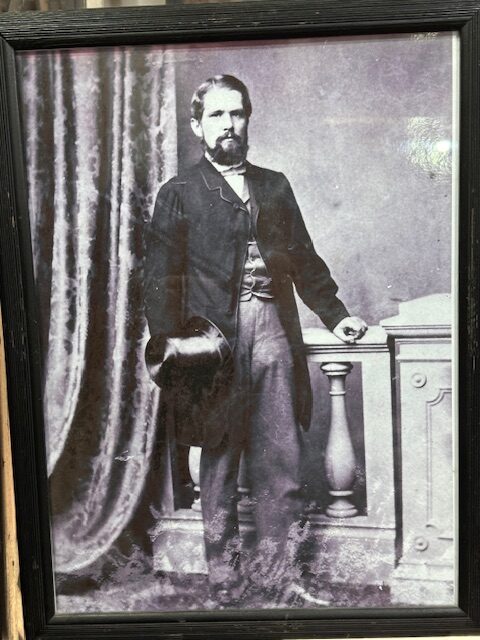
The Saga of Searching for a Beach!
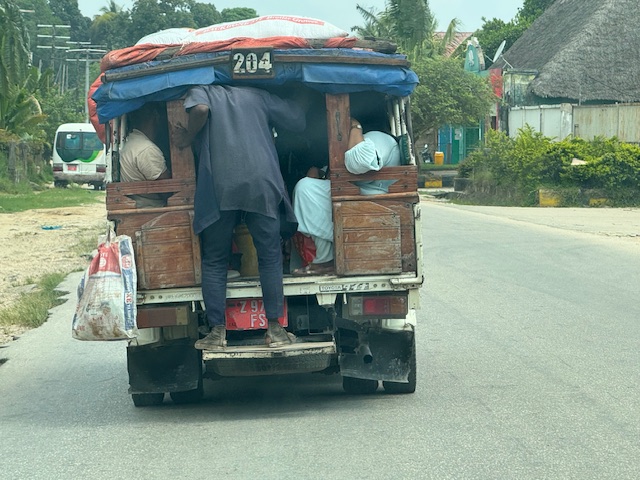
Our excursion with a driver to find a beautiful beach within a couple of hours of Stone town was an introduction to the urban sprawl and the economic divide between the conditions of people’s lives and the tourist beach hotels and resorts.
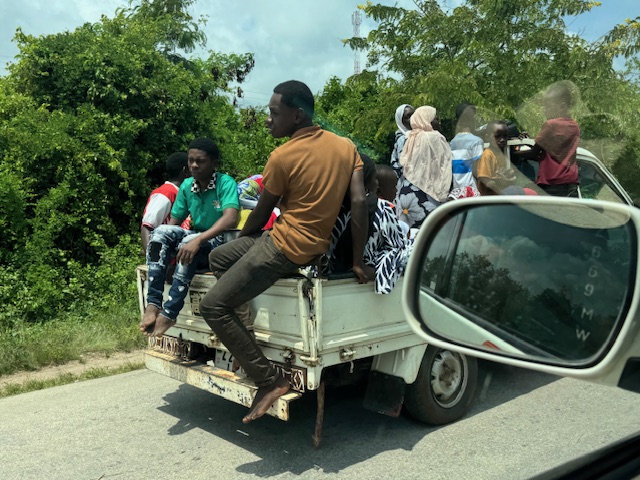
First we passed the Mao Zedong Soccer Stadium and the East German Housing complex reminding us that in the early years after Tanzania’s independence President Julius Nyerere chose socialism and independence from Western powers and capitalism. He stressed African independence and unity (he joined the Non-Aligned and Pan-African movements) and found inspiration in Chinese collective practices of that era. The U.S. wasn’t too happy about that stance at the height of the Cold War.
Gail remembers the Tanzanian students she met in Beijing in 1980 who were studying at the Railroad University on scholarships. In 1970 the Chinese had built a major railroad from Zambia to Dar es Salaam.
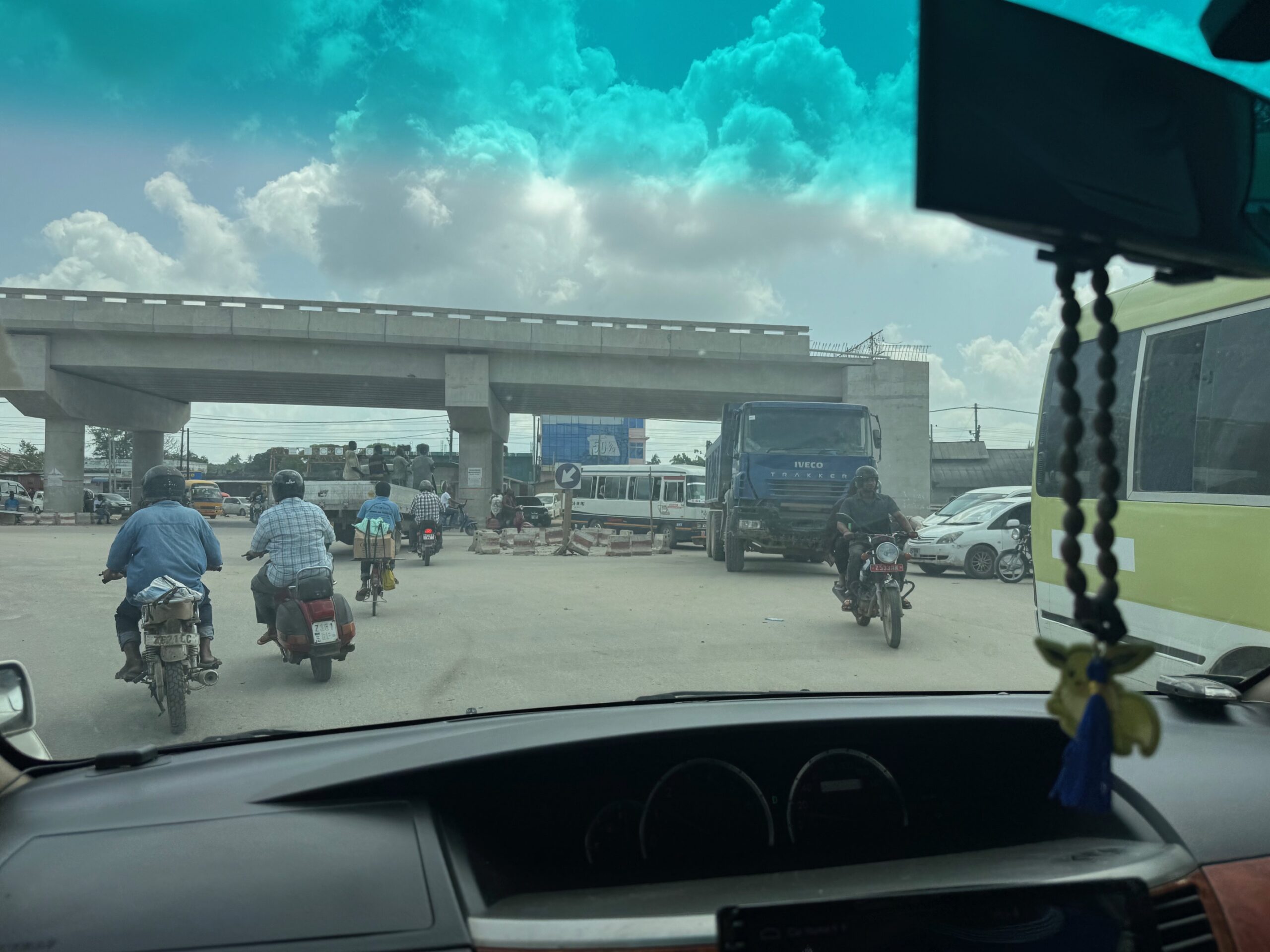
But here we are today with deforestation of a lush island to make way for urban sprawl (fueled by tourist dollars), agriculture and big Chinese infrastructure projects.
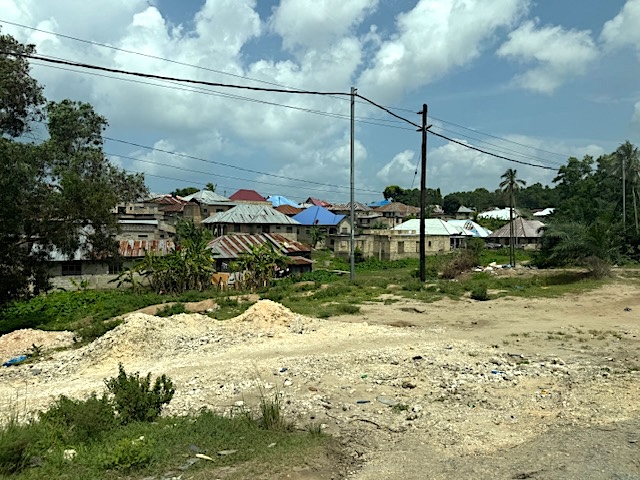
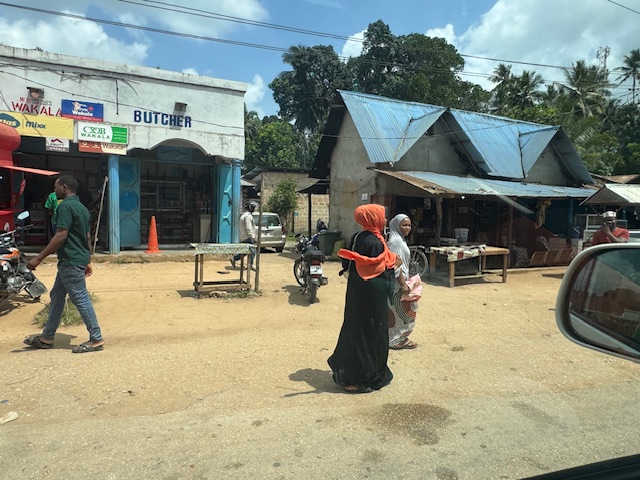
As we got to the beach road with it’s hotels on once side of the road, we discovered Chinese cement factories on the opposite side of the road.
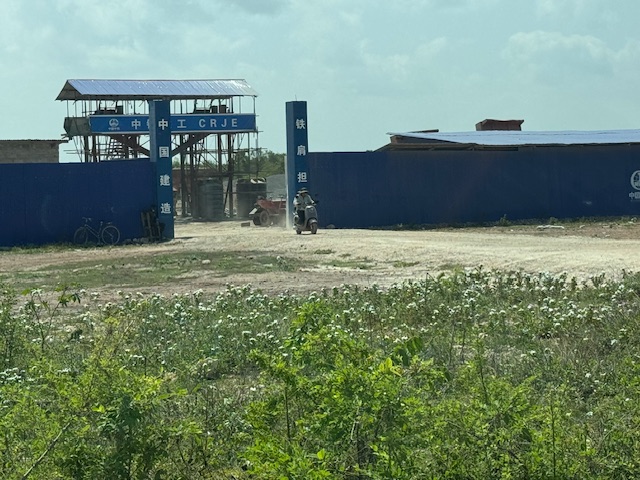
Later we discover this company’s name on huge construction projects in Dar Es Salaam on the mainland. Do they get all the sand and coral stone here on Zanzibar? We have so many questions.
And here was the public beach, shared by the hotels we passed some of which had gone bankrupt.
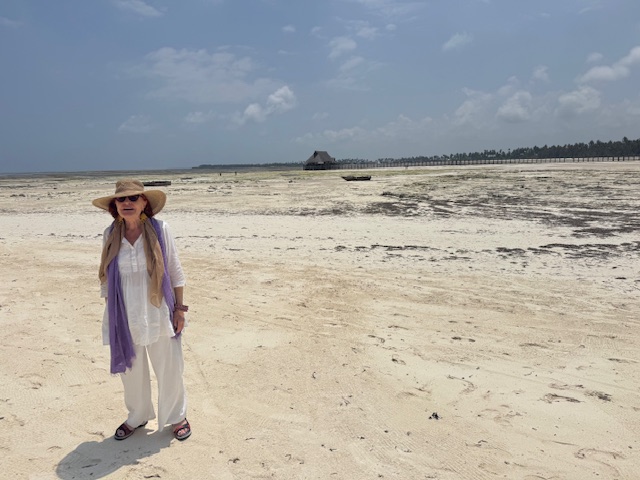
I guess our timing is off; the tide was out again. That may be water on the horizon. Too hot to think of walking a few yards that exposed.
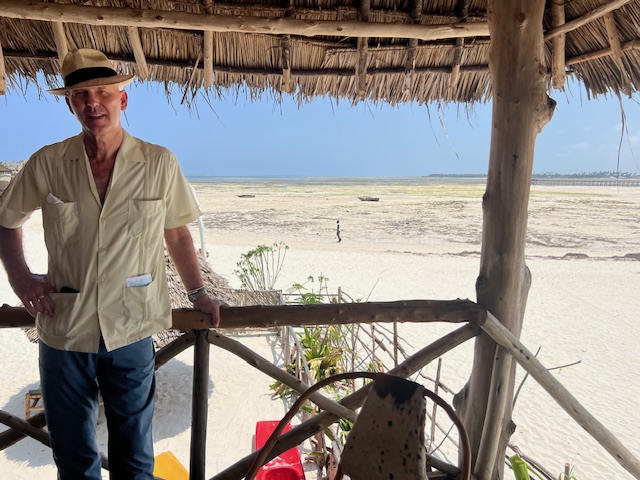
Our driver, Achbar, tells us that at least 35 of his fellow students from high school, emigrated to the UK or US and dream of returning to Zanzibar to buy a hotel and make a good living.
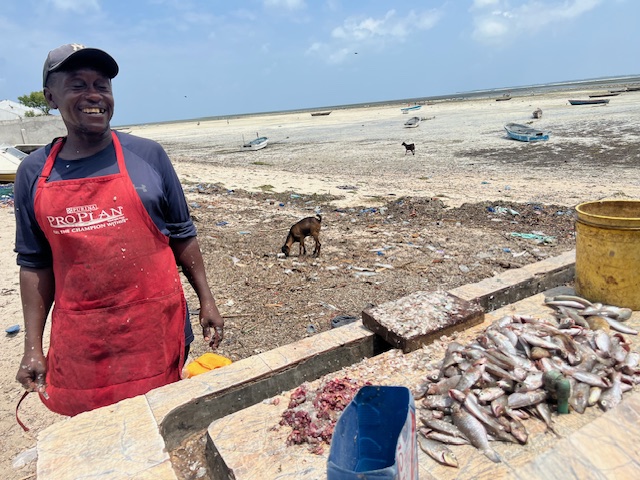
We did run into a small local market at the beach. Loved the goats roaming the sand. We guess all of those travel magazine exotic resorts with turquoise waters are father away on the island.
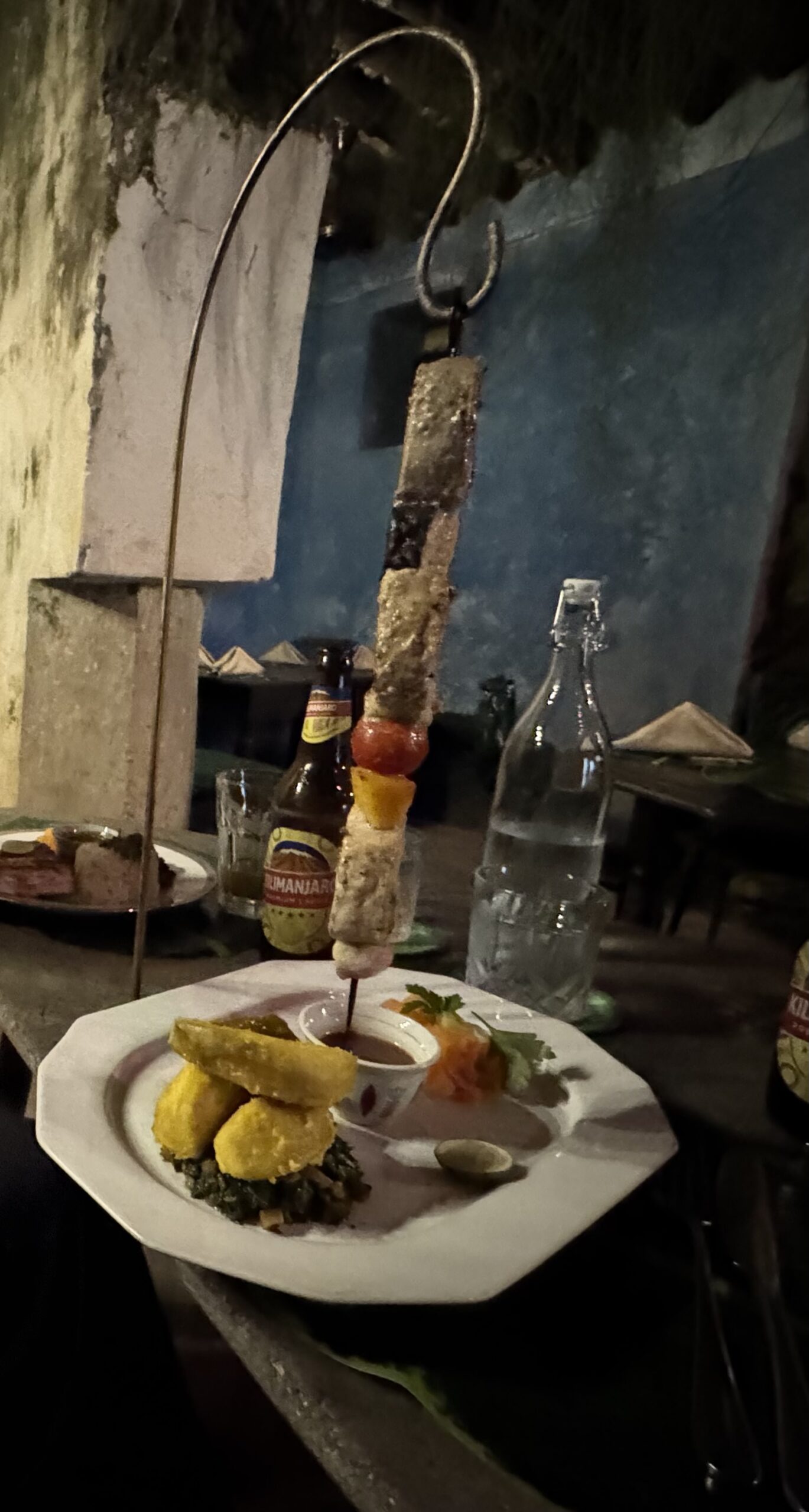
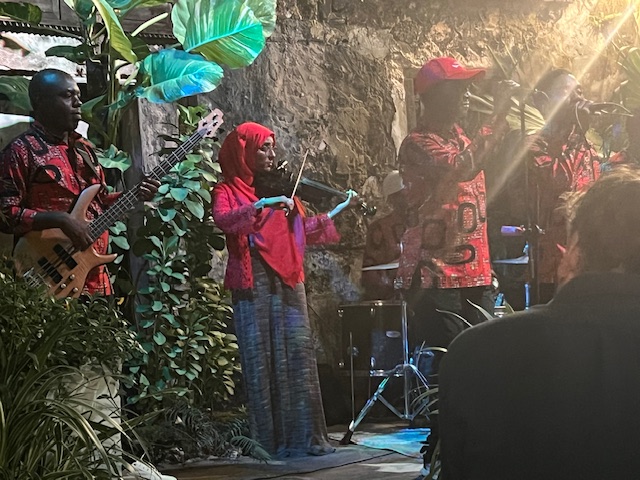
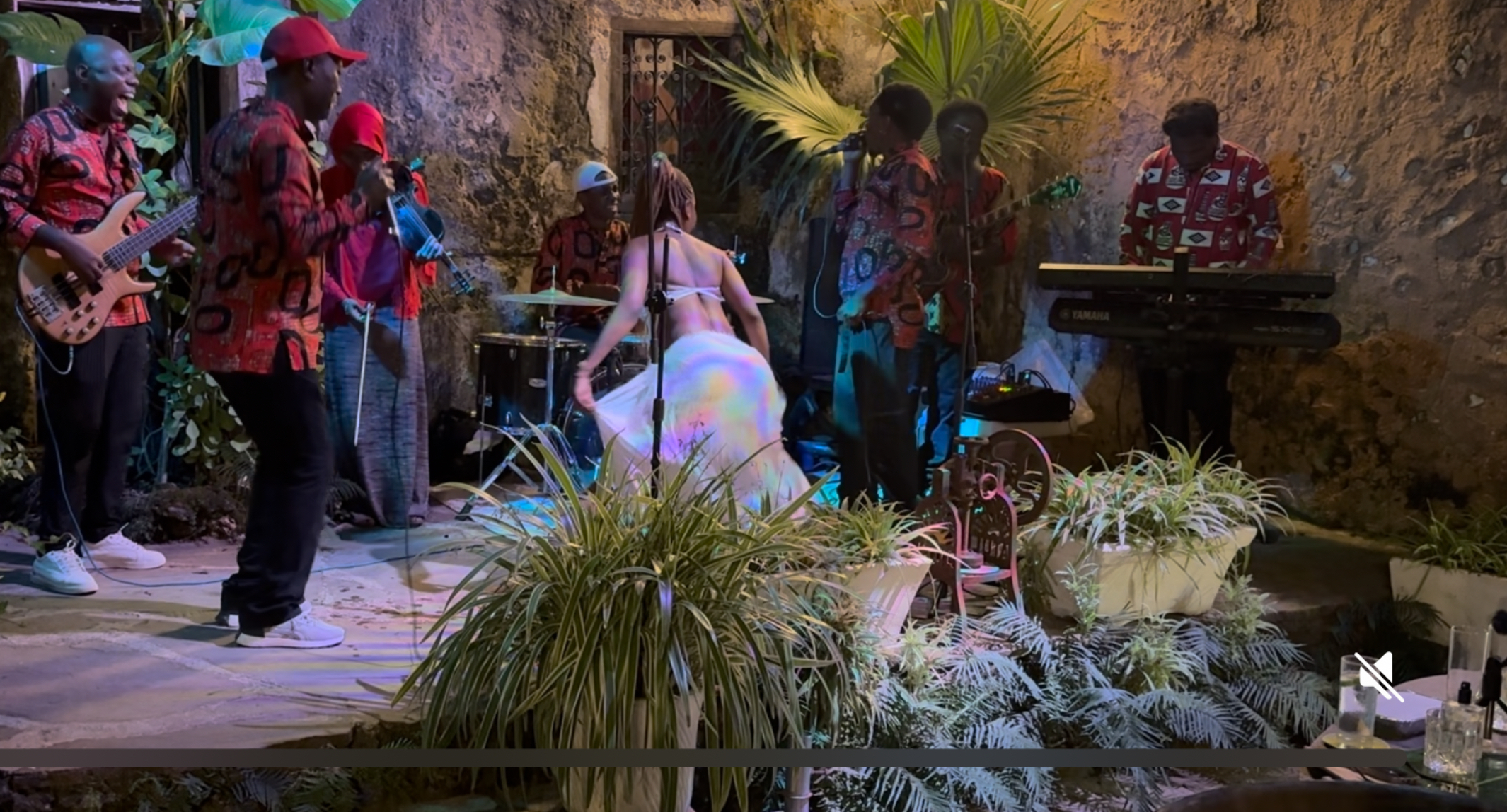
Back to urban life. Tuna steaks hanging from a skewer. A woman in hijab playing jazz violin and an African dancer teasing the crowd with isolated derriere moves.
Next: Dar Es Salaam
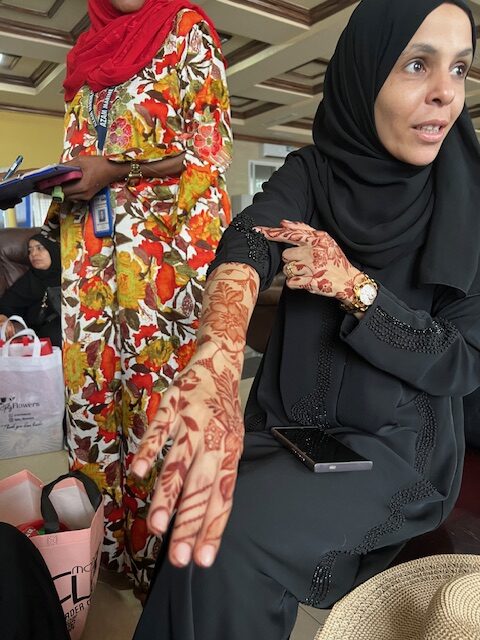
Wait a minute. Waiting for the ferry in Stone Town for the two hour ride to Dar harbor…a woman with magnificent hennaed hands—part of a group of women who had attended a wedding in Zanzibar City.
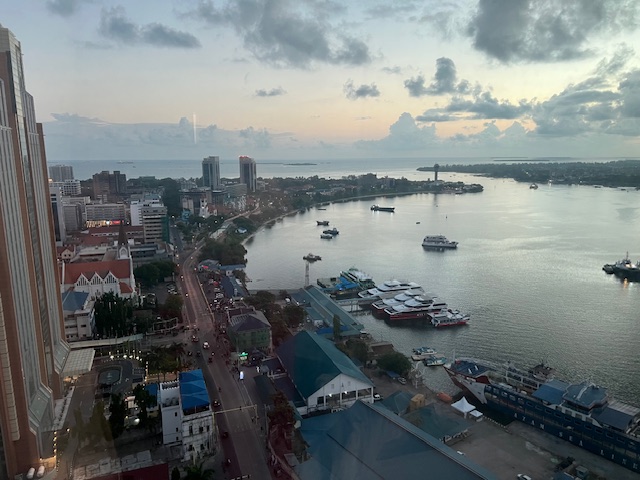
We choose an apartment hotel with a view of the ferry harbor in Dar Es Salaam (rather than the industrial harbor) to help pick-out buildings from Nonno’s photos.
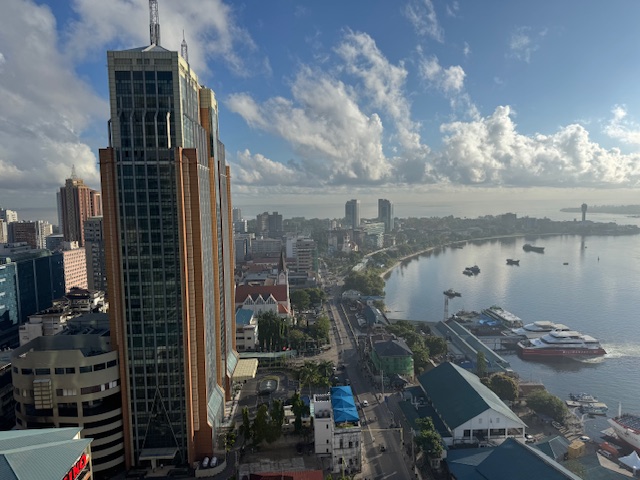
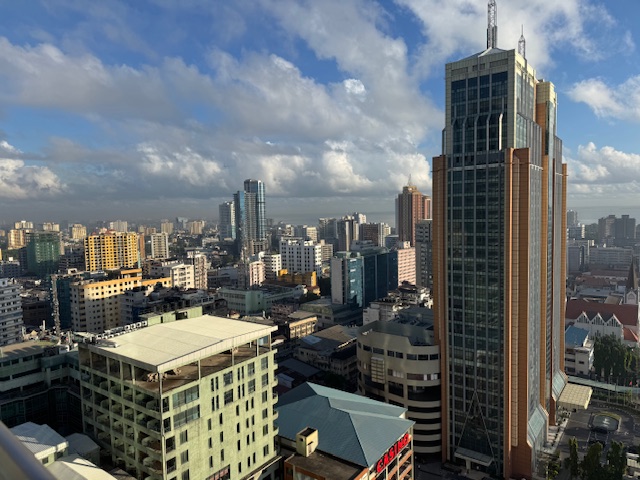
Dar es Salaam has grown from a city of 20,000 in Nonno’s time to a metropolis of almost 8 million today. And is running out of water!
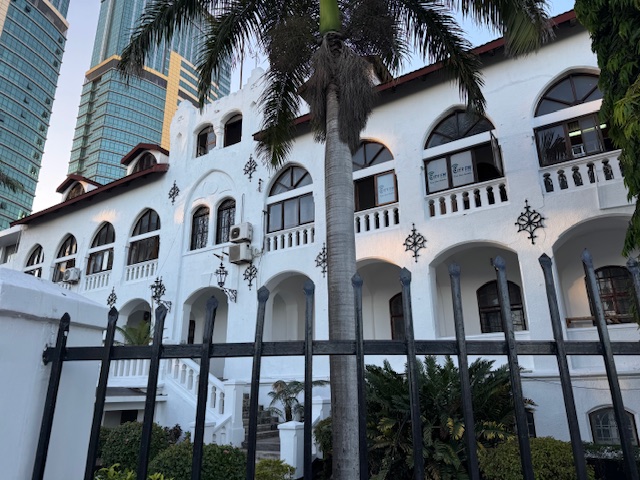
We find St Joseph’s church close by the ferry terminal. Built by Bavarians in the late 1800s, this was the Catholic cathedral that Nonno would have attended.
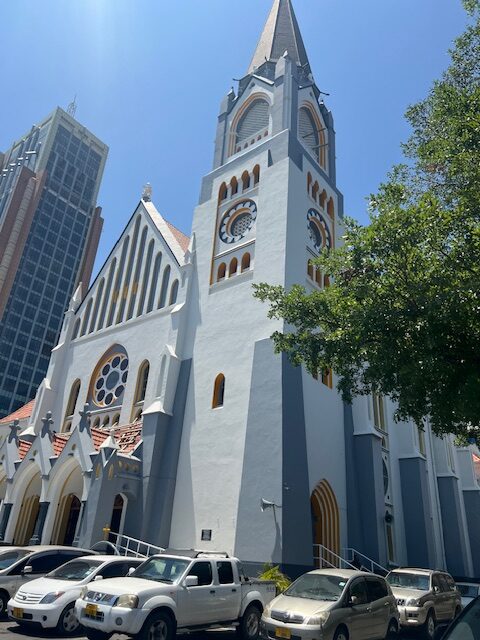
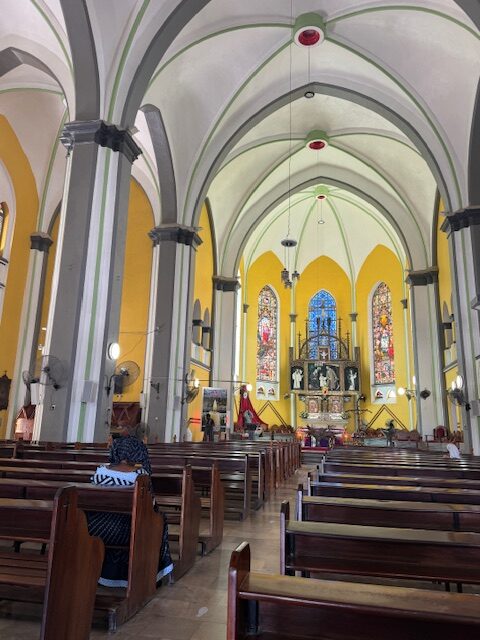
It was built close to the Sultan’s palace that would have housed his harem. Still standing squished between high-rises.
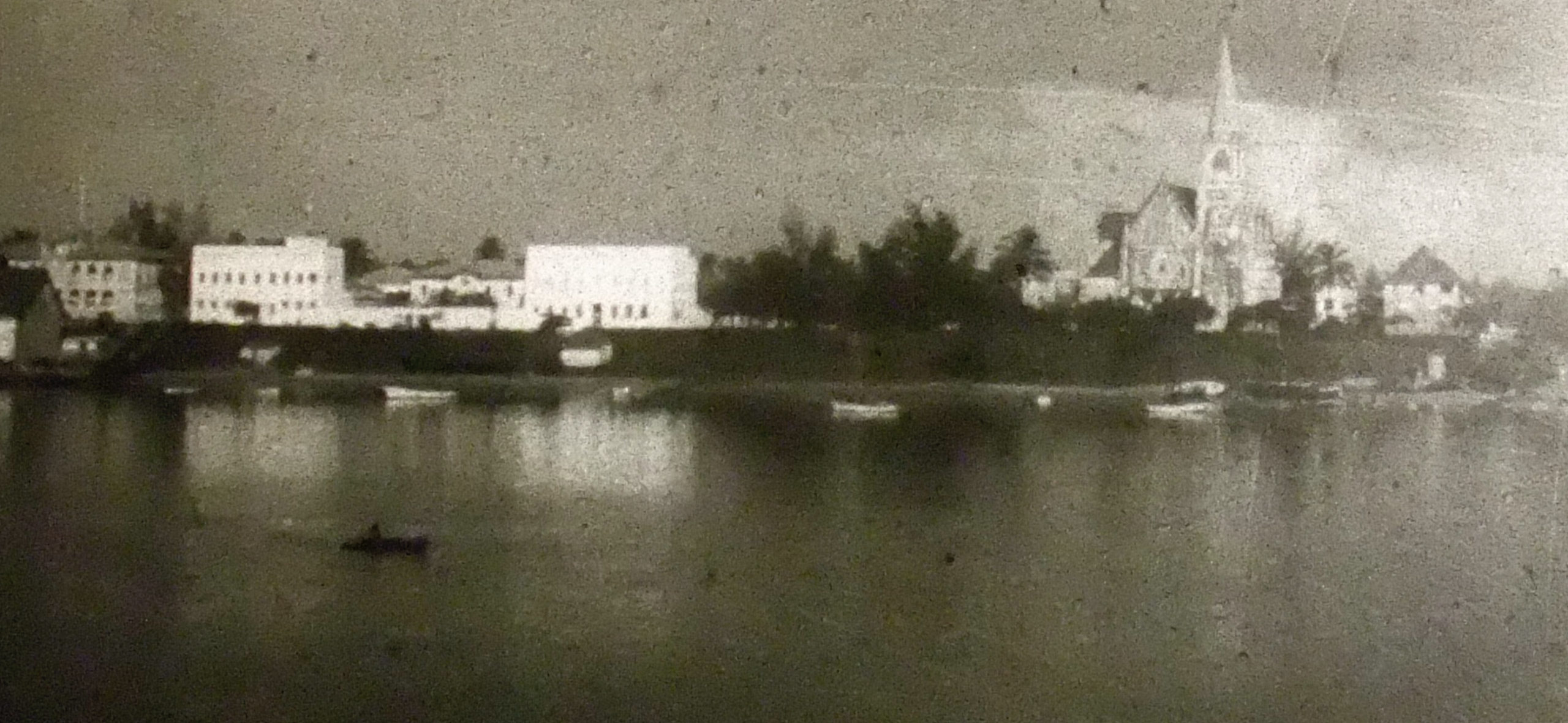
Here’s Nonno’s photos from 1912 or 13. Palace on the left. St Joseph’s on the right.
St Joseph’s Church and the White Fathers
While visiting St Joseph’s church and searching for its history in the bookstore we met a man who suggested we look up the White Fathers next door.
Stephan’s memory began to explode! He first heard about the White Fathers, a Catholic order founded in Algiers by a French cardinal in the late 1800s, because his great grandfather, “Biz Nonno,” Carl Muth, studied there in Algiers in roughly 1884-5.
Stephan explains:
“Carl was the half brother and father-in-law to Nonno, my grandfather, who married Carl’s daughter Lulu, his niece and my grandmother. This is why I am my own uncle. So, yes, incest in the family.”
The White Fathers were famous for “slavery redemption” —buying slaves their freedom at market rates then educating them with the goal that they become Catholic missionaries to compete against the more successful protestant campaign moving through Africa in the late 1800s!
Whether this might constitute “ethical colonialism” is a judgement we leave to the reader.
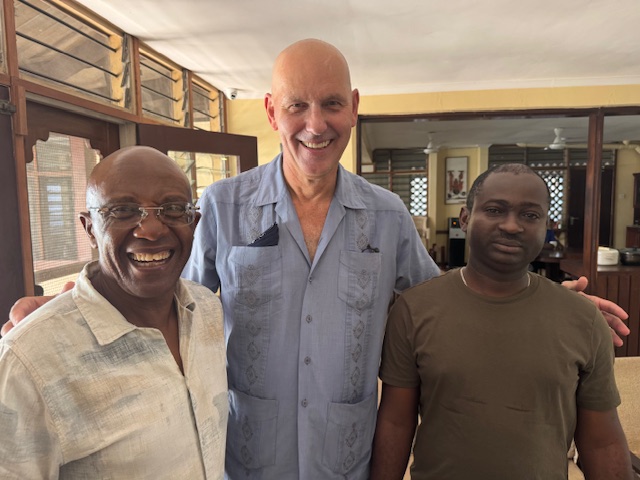
After arguing and pleading our way into the highly protected building that houses the White Fathers — who are all Black today (of course!) we had an energetic and informative conversation with Father Erasto Shayo on the left and Etienne Tchangue on the right.
Afterwards we realized that the current political crisis explained why their security was high. The church had criticized government actions against the opposition. We were so grateful that they allowed us, complete strangers with no appointment into their compound.
To escape the fumes and noise of traffic we explore a local botanical park and admire the local flora.
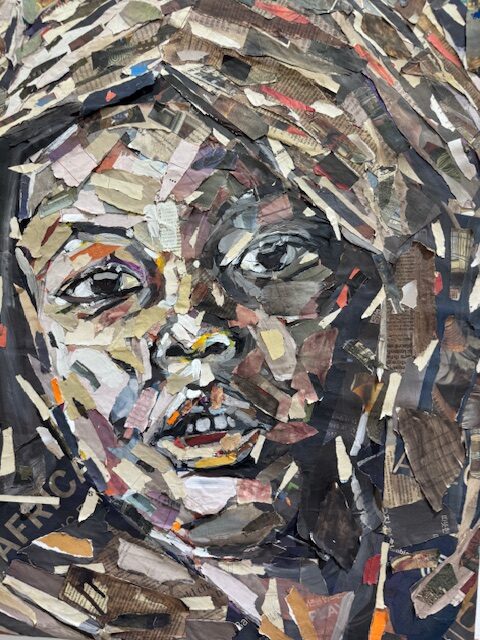
And we head to the Rangi Gallery in Oyster Bay (taking Barack Obama Drive) and discover a local artist working with recycled paper in his portraits, Erick Mzaki.
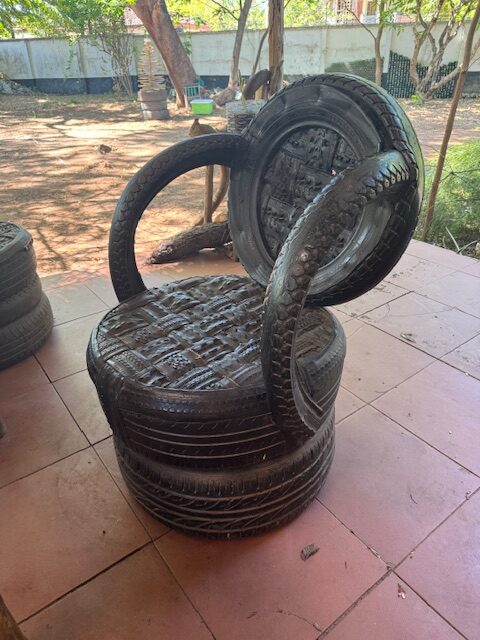
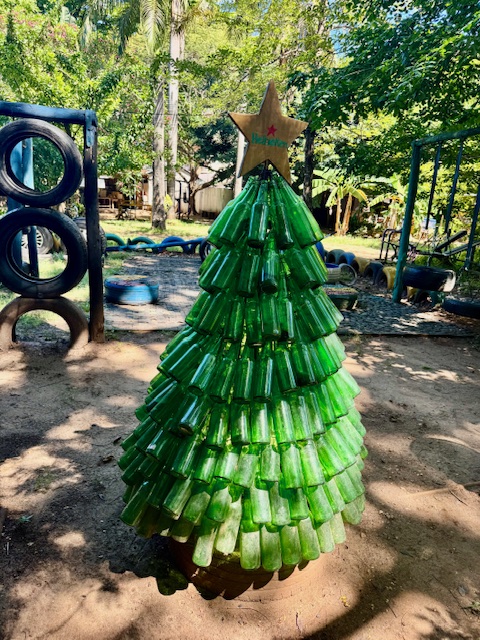
And we visit AfriCraft an artisan center that up-cycles new and useful products from waste—like furniture from discarded tires.
After learning about the water crisis in Dar we are embarrassed or ashamed to be staying in an apartment/office/business hotel with a pool!
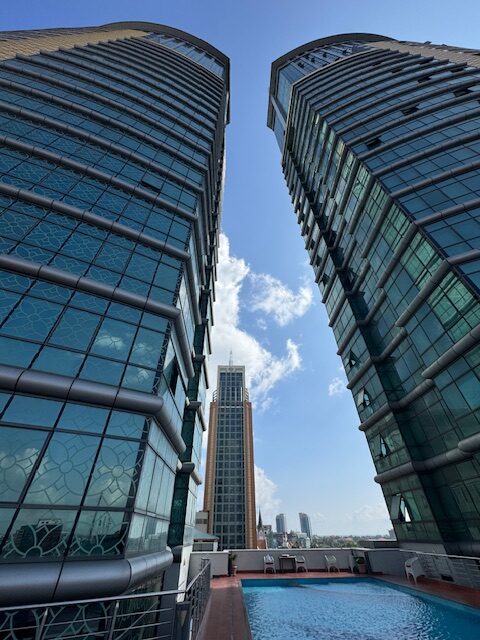
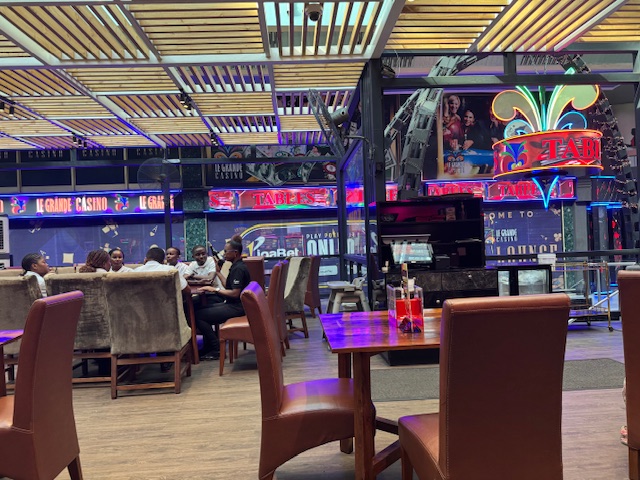
So we focus on the wildness of having the complimentary breakfast in the Chinese Casino across the street.
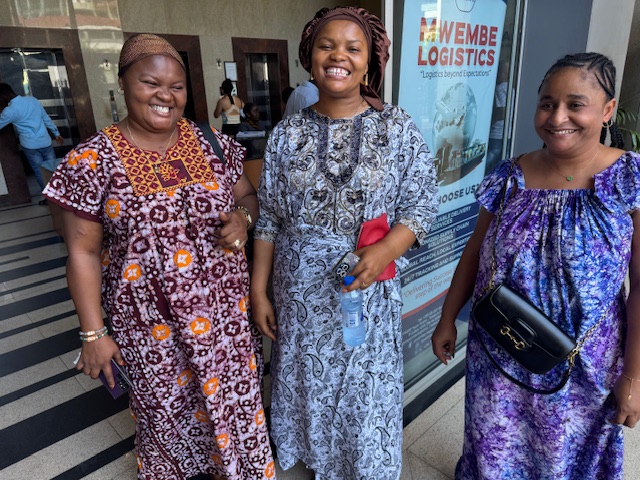
As we wandered the streets we became aware that we seemed to be the only white folks in town, most likely because of the recent unrest. Meanwhile, we have had some wonderful encounters with African travelers staying at our hotel (here and in Mombasa and Nairobi). We learn so much about the rest of Africa. Here’s three ladies from the Congo! Just mention Koffi Olomidé (Congolese God of music) and most Africans from East and Central Africa to Congo melt. These smiles followed our mention of his name!
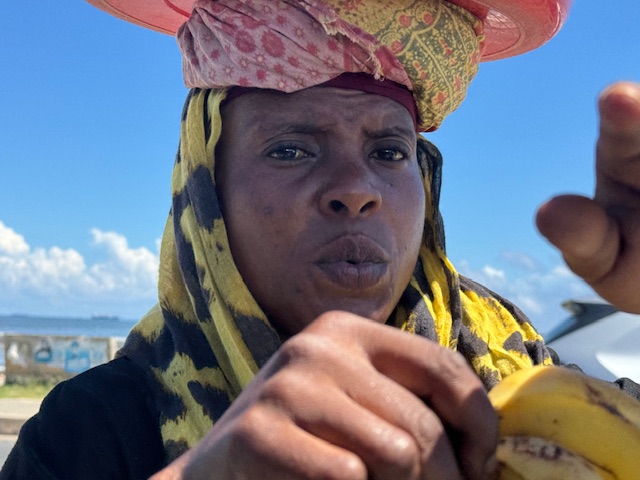
There were other fun encounters like the woman selling bananas through out car window!
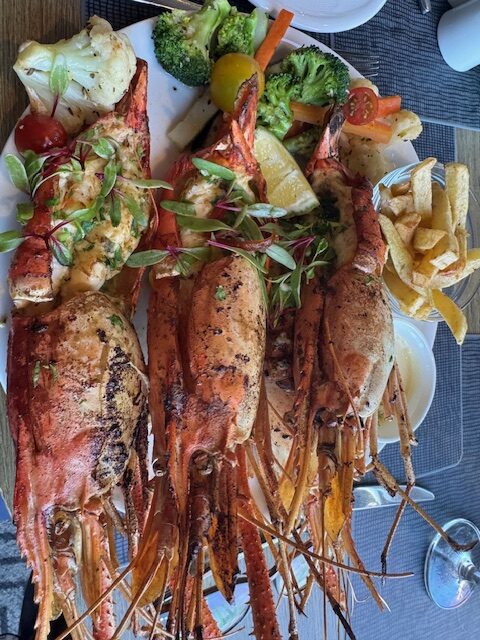
After a final great meal of prawns we realized how the heat, the humidity, the traffic and the immensity of what we were learning was knocking us out. We need to return home to absorb all of the lessons.
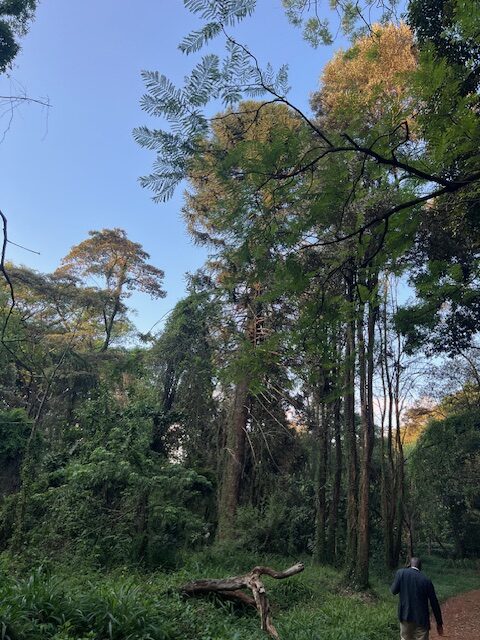
Back in Nairobi we choose to forego a visit to the National Park in the City that features elephants and giraffes, instead opting for a day in the Arboretum next to our hotel to avoid the worst traffic we’ve ever witnessed (worse than Mexico City, than Bogota, than New York city).
This Arboretum is one of the many conservation and restoration projects promoted by Wangari Maathai, who won the Nobel Prize in 2004 for her work in sustainable development, democracy, peace and work with women’s empowerment. She was the first African woman to win a Nobel.
We met three inspiring local environmental and social activists taking a break from their work in what is considered the largest “slum” in Africa—Kibera—with estimates of residents from 200,000 to one million!
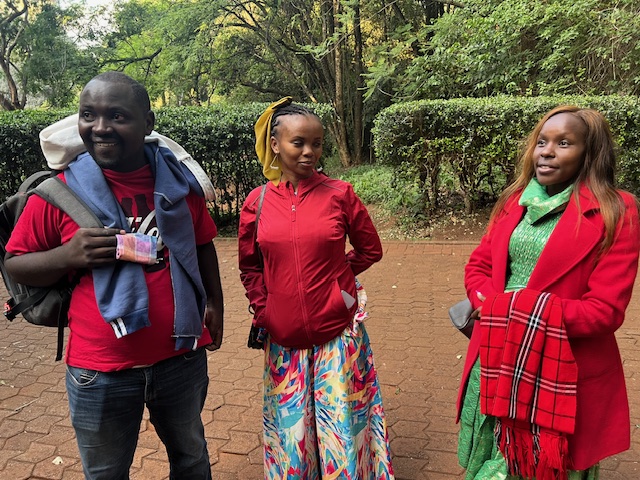
From left, Pastor Francis, Karamusa and Sally, are doing the angel’s work: helping to build sanitary bathrooms while also helping to feed street kids from their “church” kitchen. They told us they were very much influenced and inspired by the work of Wangari Maathai.
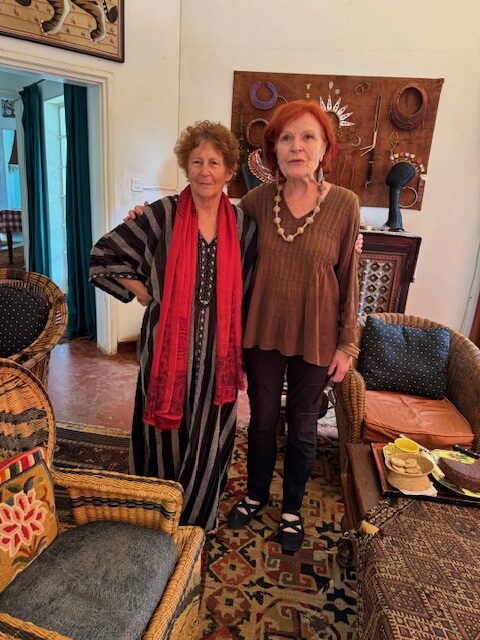
On our arrival in Nairobi at the beginning of our journey we were grateful to accept an invitation to visit Rhodia Mann, the sister of our dear friend Kenny Mann. Their parents were refugees from Nazi Poland and became ranchers just outside Nairobi. So Kenny and Rhodia were born and raised in Kenya.
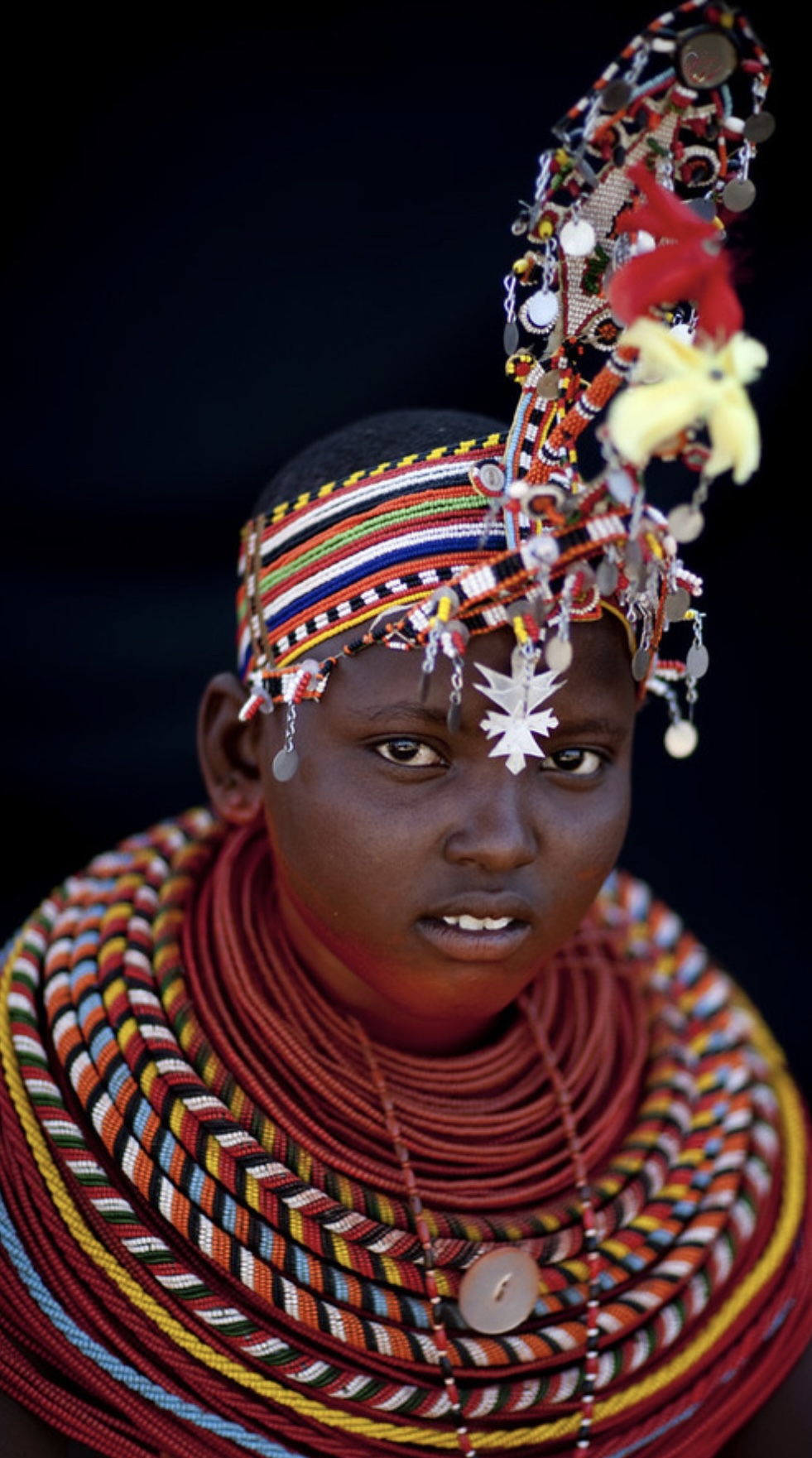
Today Rhodia lives in the “garden” suburbs of Nairobi. A major collector and expert on African jewelry, especially the Samburu and Borana tribes of northern Kenya. She has published six books and produced a documentary “The Butterfly People.” She was just preparing to inaugurate a new museum housing her famous Samburu collection in Laikipia.
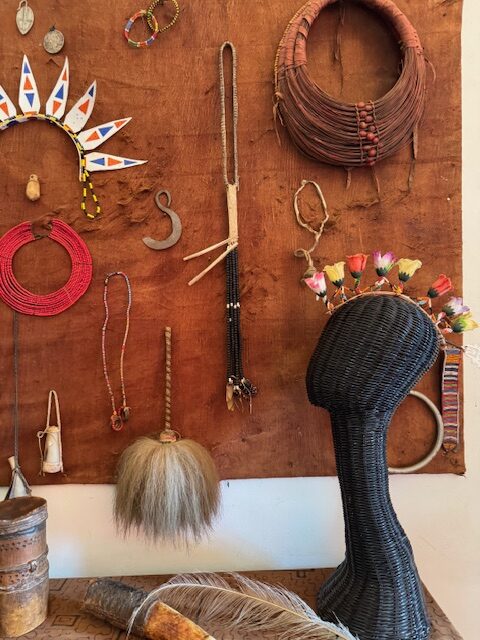
Below— just a hint at the jewelry traditions of the Samburus.
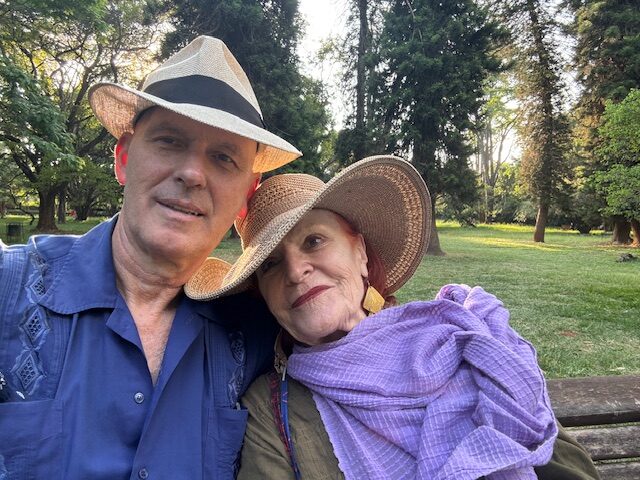
We are so privileged to be here! So privileged to be able to make this journey! So grateful for the hospitality of Kenyans and Tanzanians. And we appreciate the logistical advice of our friend, Kenny Mann. We have learned so much about our ignorance, our heads are cracking...did we use too much water?
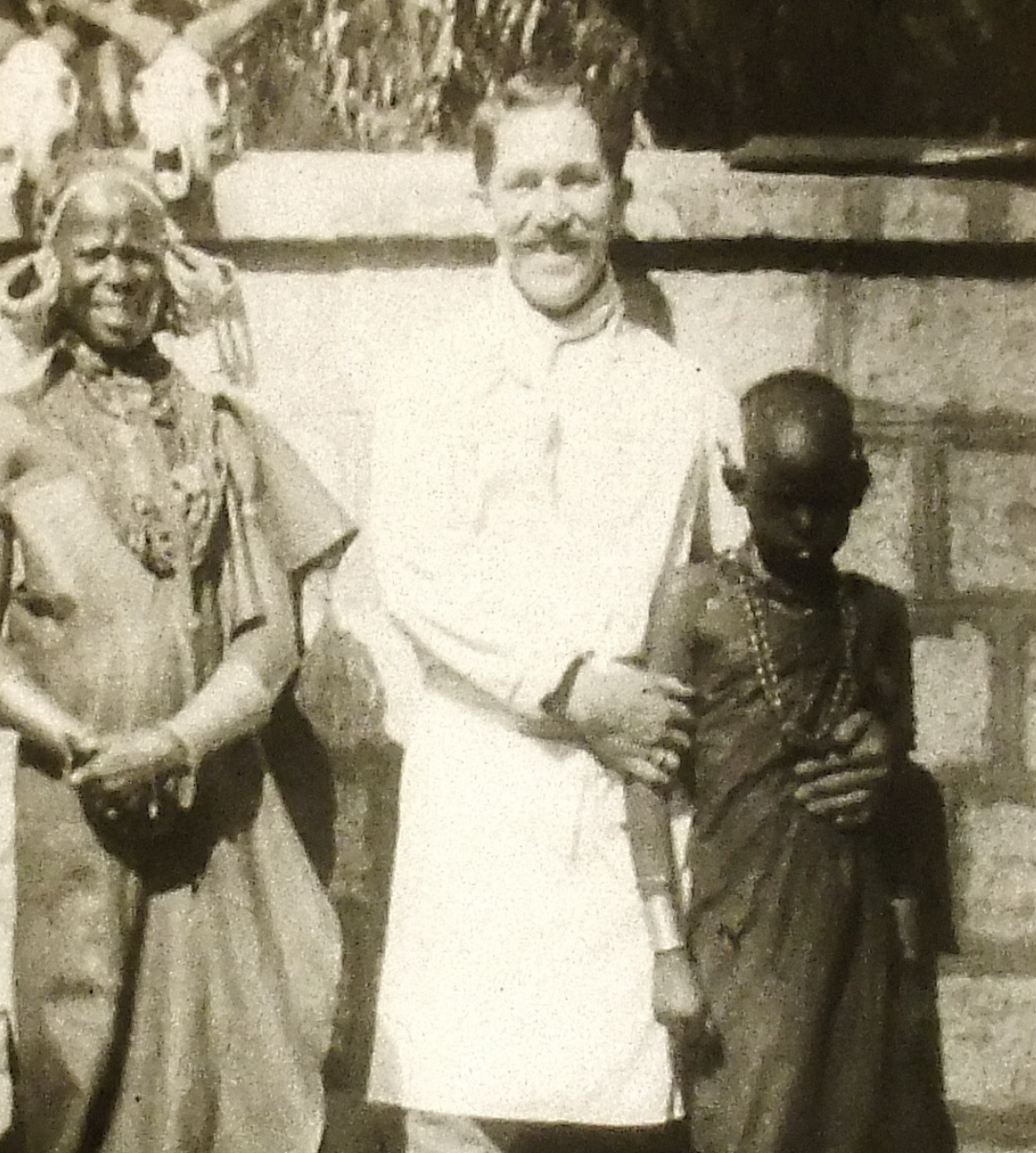
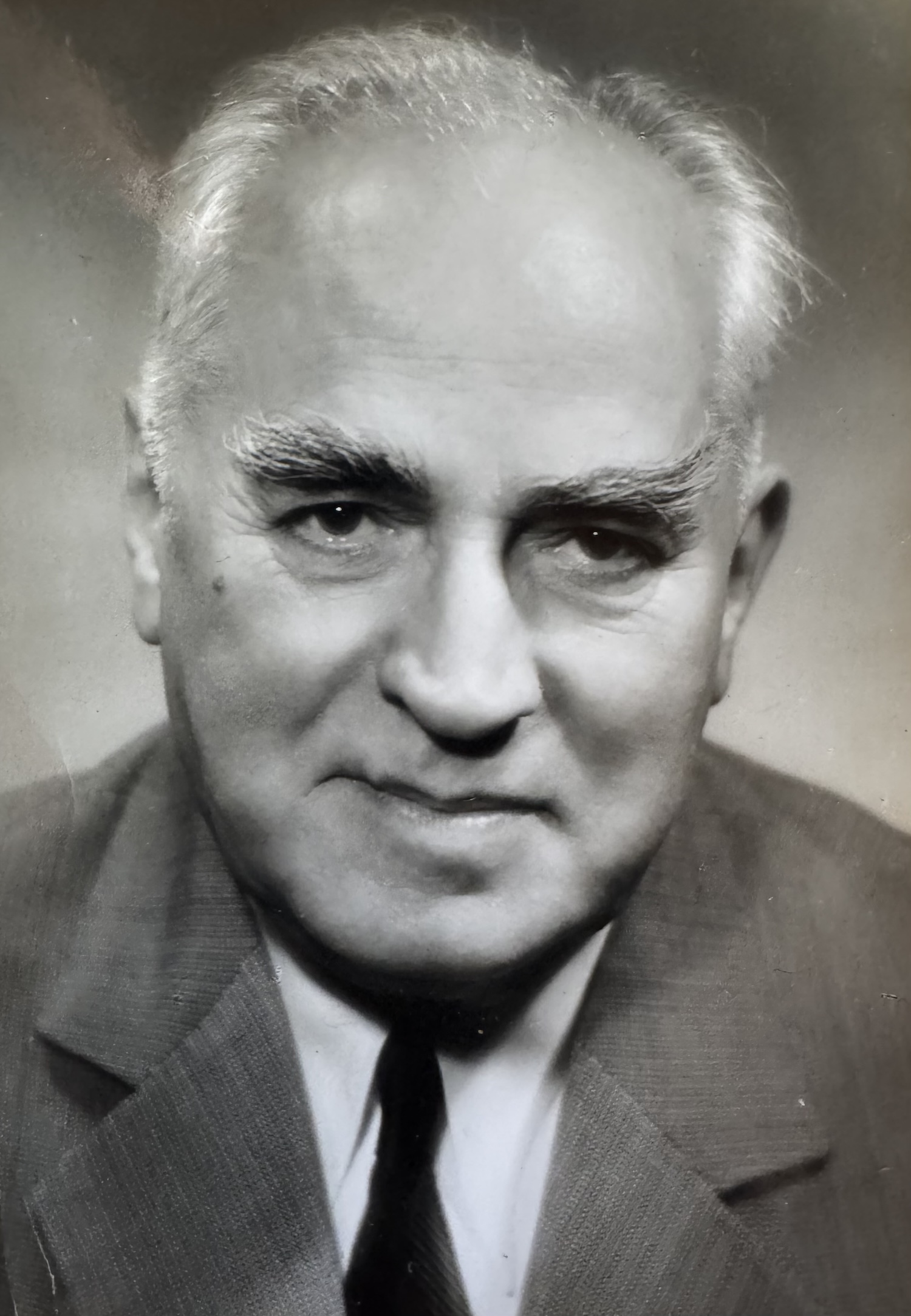
And we don’t know whether we’ll ever appreciate or understand the world that Nonno experienced here. But we can imagine. Here he is as a young man.
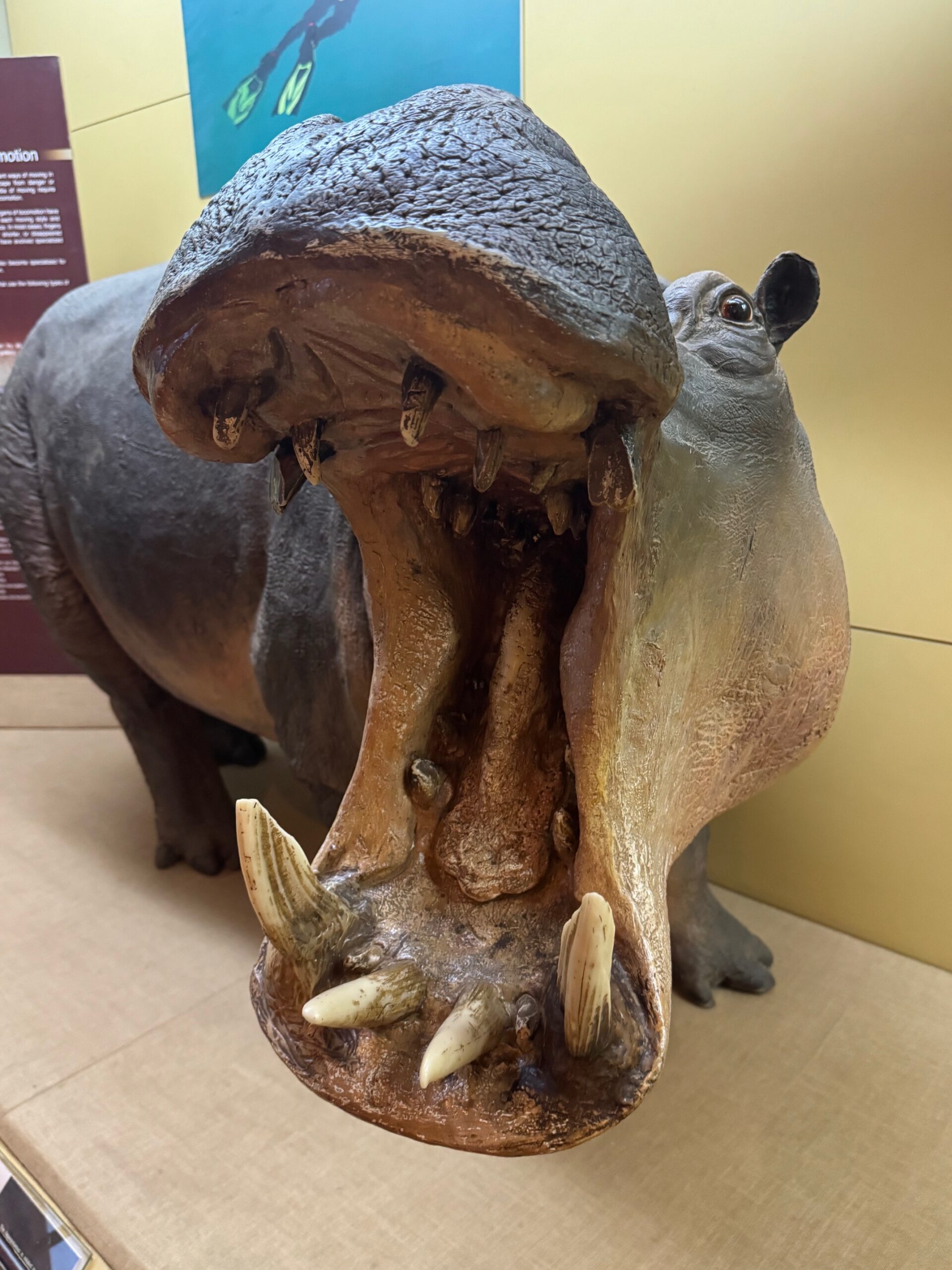
And we realize the closest we came to a big animal was in the Nairobi National Museum!


Thanks for sharing your wonderful travelogue!
you mentioned “mangroves (so essential in dhow making and trading)”
Mangroves (roots) are essential nursery grounds for commercially important fish species and essential habitat for many other marine animals. By cutting down mangroves they are reducing populations of the fish that they catch for food, and also the smaller fish and invertebrates that the larger fish eat! (They are the counterpart of our salt marshes, but more so) They need to be conserved for a healthy marine environment! Surely there are other sources of wood that could be used for making boats.
An absolutely wonderful journal with spectacular photos, contrasting the early 1900s with today. Bravo, Gail and Stephan, you are not old, just have more experience and ideas. Most tourists to that part of Africa will never see what you saw, as they sip their drinks by the hotel pool and follow long lines at the buffet.
Just travelled the Swahili Coast with you. Incredible journey. Thanks for sharing your travels, the backstory and your research and your musings
What a fabulous delight at wish to read your adventures I really enjoyed every text and every photo, so interesting – I learned a lot. Thank you for sharing this!
Hi Dear Friends, thank you for generously sharing your trip. What a magical voyage to those colourful, unusual places. The doorways are marvellous, the smiling faces, the the crumbling and new architecture — what chance to have found those phenomenal spots in a world so different from ours. My trips to Morocco and Egypt when a child, so many years ago, we’re brought back by your photographs, and remind one of how the world changes — and does not change. How clever of you to have put together that phantasmagoric trip.
Thanks again for sharing it all with us.
All the best,
M
Gail & Stephan, What a head-spinning and magnificent journey with such a fascinating personal connection. Thank you for opening up this world—of people and culture and art—to me and showing me a great model of deep travel. A visual and textual feast. Now I have a million questions about Carl Muth and Nonno . . .
What a treat! Not only is the text informative & entertaining, the pix are superb!
! I traveled with you today, and so many memories came back to me of past trips to Kenya and Tanzania! There seem to be so many more hijabs today than in the 80s when I was there – and much more development and devastation. Yet – Your spirited journey on the heels of “Nonno” is a pleasure for the Trump-tortured mind – thank you for sharing this wonderful adventure w us, your friends!
best trip report ever! such wonderful photos of beautiful people – I travelled along, all the way, enjoyed every day.
Thank you Judith for pointing out the critically important role of mangroves. Sadly that ecosystem is under great stress in that region as in many other parts of the world. Gail
Dear Vera, Thanks so much for taking time to read and reflect and respond. It’s a huge blog. But somehow we needed to lay it all out to grasp it! Gail
Dear MiLing: Thank you for taking the time to read and comment. Yes, to a special dinner to discuss Nonno and Carl! xox Gail
Dear Matthew: Thank you for taking the time to read this behemoth blog! I know you would have loved many parts of this journey. We’ll have to conjure a special get-to-gether to dive deeper into some of the parts! xoxGail
Dear Ingrid, You speak with much travel experience. We laughed out loud at your last bit. Hope your trek between Mauritius and SAfrica will offer up many insights and re-arrange your brain cells. xoxGail
Hey Wendy! Well, you were an early inspiration for me to venture off to China to live and work in 1980! And encouraging me to improve my Spanish for my Mexican part-time life. We have been adventurers—you and me. And what to make of it is always the challenge. Thanks so much for reading our massive blog. There was just no way to turn it into a few cryptic memes on Facebook. xoxGail
Dear Fritz: Thank you SO much for reading and commenting. It was such a privilege to make that journey. But now we have three African journeys blogged on this archival site: Ethiopia, Senegal and the Swahili Coast. Hopefully it will be an inspiration for our traveling friends to venture beyond Paris and Tuscany. xoxGail
Gail and Stephan, thank you for sharing your trip! I’m impressed by how much you’ve researched in books and conversations along the way, your wonderful narration, and your photographs. What a great idea to travel with Stephan’s grandfather! I remember my father speaking of Mombasa. He lived and worked in Egypt and loved traveling in Africa.
Mariette
Dear Mariette: Thank you SO MUCH for taking time to read and comment about this essay about our investigative journey down the Swahili Coast. We knew you especially would enjoy the photographs by Nonno and our spinning off on them. Best, Gail
Dear Gail and Stephan, Such intrepid travelers! I just went over this whole blog for a second time, with Wayne, as we read it aloud to one another, and I will send it to my Kenyan friend who took me on a two week tour of “her Kenya” several years ago (including a thee day safari to see the wild animals in Masai land) Then we streamed some gorgeous, sexy Koffi Olomide music… did not know of him… we always learn new music from you two. An incredible, adventurous and thoughtful journey full of imponderable injustices and also great beauty and humanity. THANK YOU! It took a lot to make this journey and blog! Sending love… D and W
Querida Deirdre (and Wayne): Thank you for raking time to read the blog so carefully. So glad you discovered the pleasures of Kofi Olemmide. Yes, the injustices of our world. Seemingly never-ending…although we all work towards that long arc. Thanks again. xxg